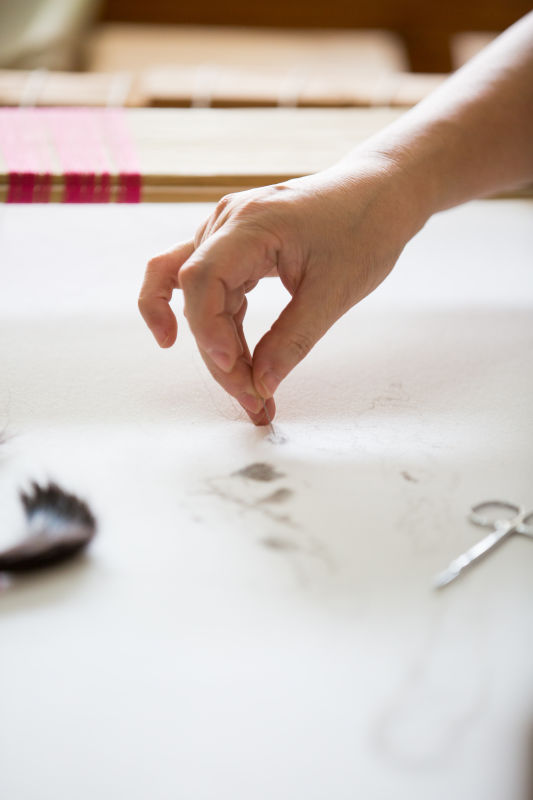
What We Do
Our work connects research, long-term practice, publication, teaching, conservation and restoration, and public interpretation. Each activity is defined according to the evidence, object, and expertise required.

Why Chinese Embroidery Matters Today
Chinese embroidery carries a long conversation between silk, thread, imagery, hand discipline, regional memory, and cultural meaning. Studying it today shows how traditional knowledge can continue through teaching, conservation and restoration, artistic practice, publication, public education, and cultural exchange.
• A living tradition shaped by material, image, and hand practice
• A cultural language connected with regional memory and historical continuity
• A field for teaching, preservation awareness, and contemporary cultural work

Frequently asked questions
What is the Chinese Embroidery Institute?
An independently operated professional institution focused on Chinese embroidery, related woven-textile traditions and kesi. In China it uses the name 北京邵晓琤织绣研究院. Its work combines long-term hand practice with research, publishing, teaching, conservation and restoration, public education and cross-cultural exchange.
Who is Shao Xiaocheng?
The Institute grows from Shao Xiaocheng's long-term research, hand practice, teaching, publication and artistic work in traditional Chinese embroidery. She wrote the 2014 English-language book Chinese Embroidery: An Illustrated Stitch Guide.
Who is Yao Xiao (Martin Xiao)?
Yao Xiao served as responsible editor for Shao Xiaocheng's The Illustrated Art of Embroidery (图说刺绣艺术) and contributes research, writing, editorial development, visual documentation, digital publishing and English-language presentation for the Institute.
Does the Institute teach machine embroidery?
No. Teaching focuses on traditional Chinese hand embroidery rather than machine embroidery or general garment construction.
Which institutions has the Institute worked with?
For especially difficult conservation and reproduction problems, institutions including the Palace Museum, the National Museum of China and Beijing Institute of Fashion Technology have turned to the Institute for specialist solutions.