Chinese Embroidery Research, Practice, and Publication
Shao Xiaocheng: Research, Practice, and Publication in Chinese Embroidery
Shao Xiaocheng is a Chinese embroidery researcher, artist, restorer, and author. Her work brings together close study of historical textiles, practical knowledge of stitches and materials, field investigation, conservation and restoration, publication, and teaching. She is one of the principal creative and research contributors to Chinese Embroidery Institute, known in China as 北京邵晓琤织绣研究院 (Beijing Shao Xiaocheng Embroidery Research Institute).
Studying Embroidery Through Objects and Practice
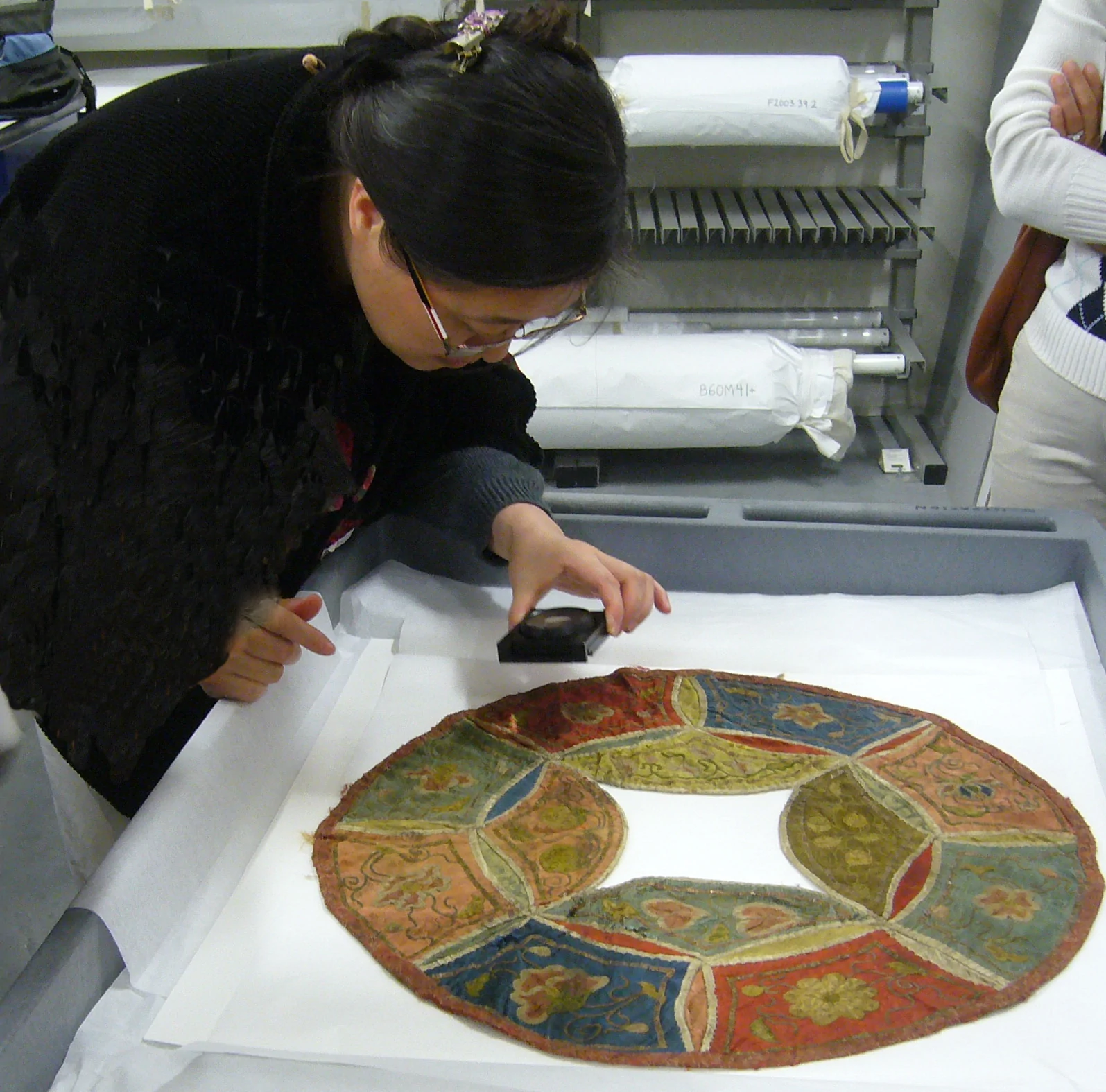
Shao’s research begins with the object: its ground fabric, thread, stitch structure, colour, damage, later alteration, and traces of use. She compares what can be seen in the textile with historical images, written records, and the knowledge gained through making. This method runs through her work on Chinese embroidery stitches, regional practices, kesi, raised embroidery, and embroidered objects requiring conservation or reconstruction.
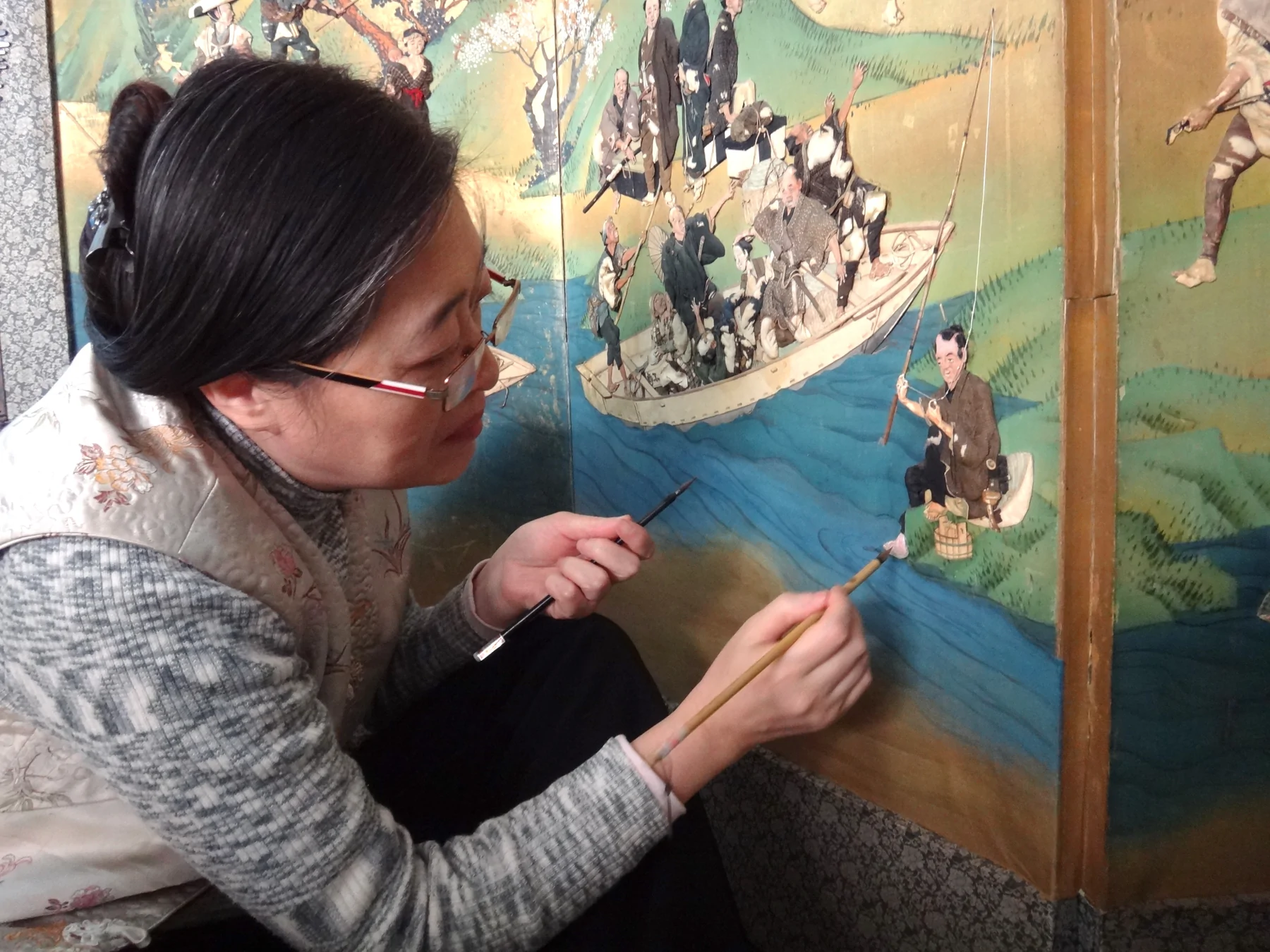
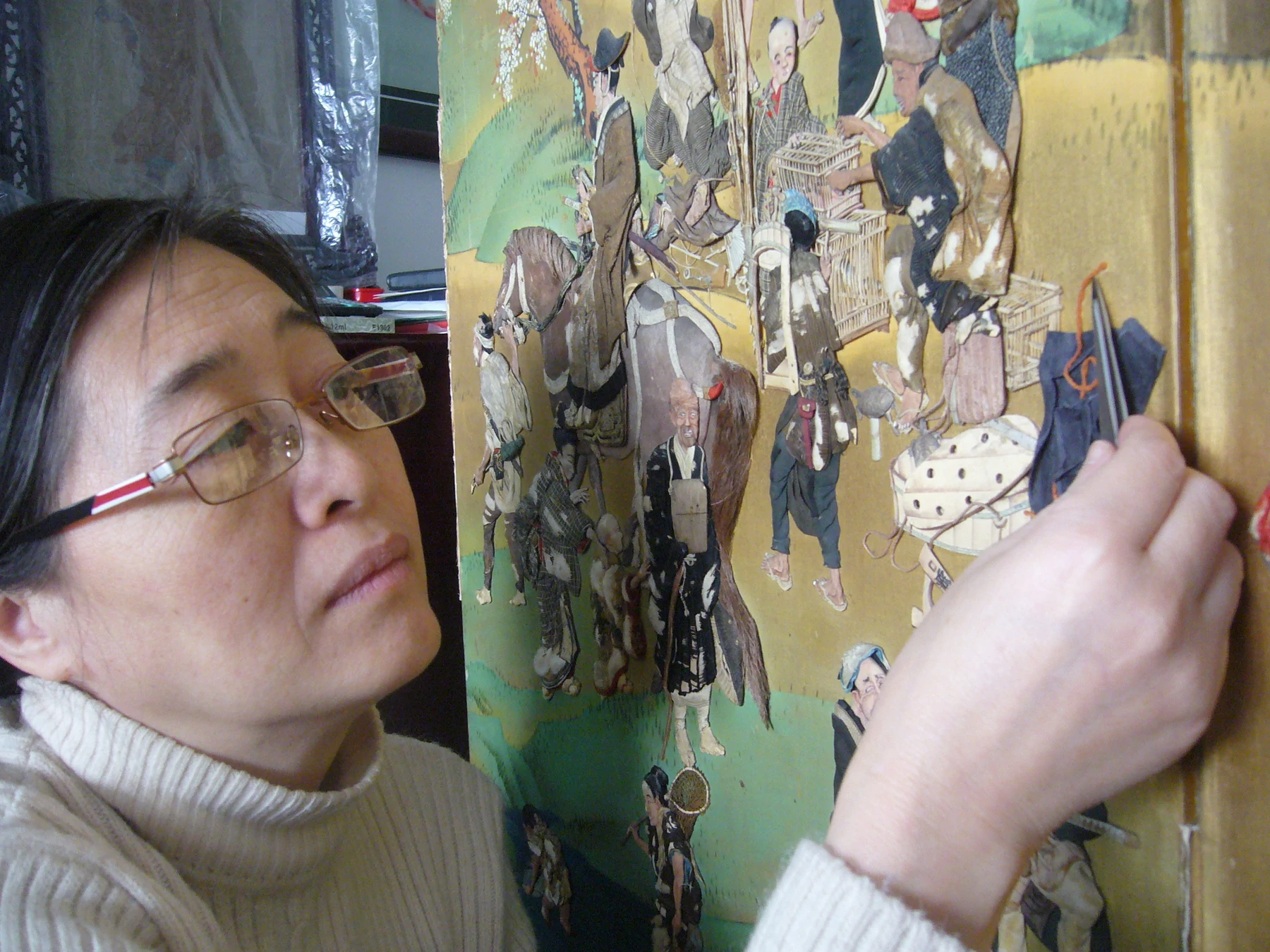
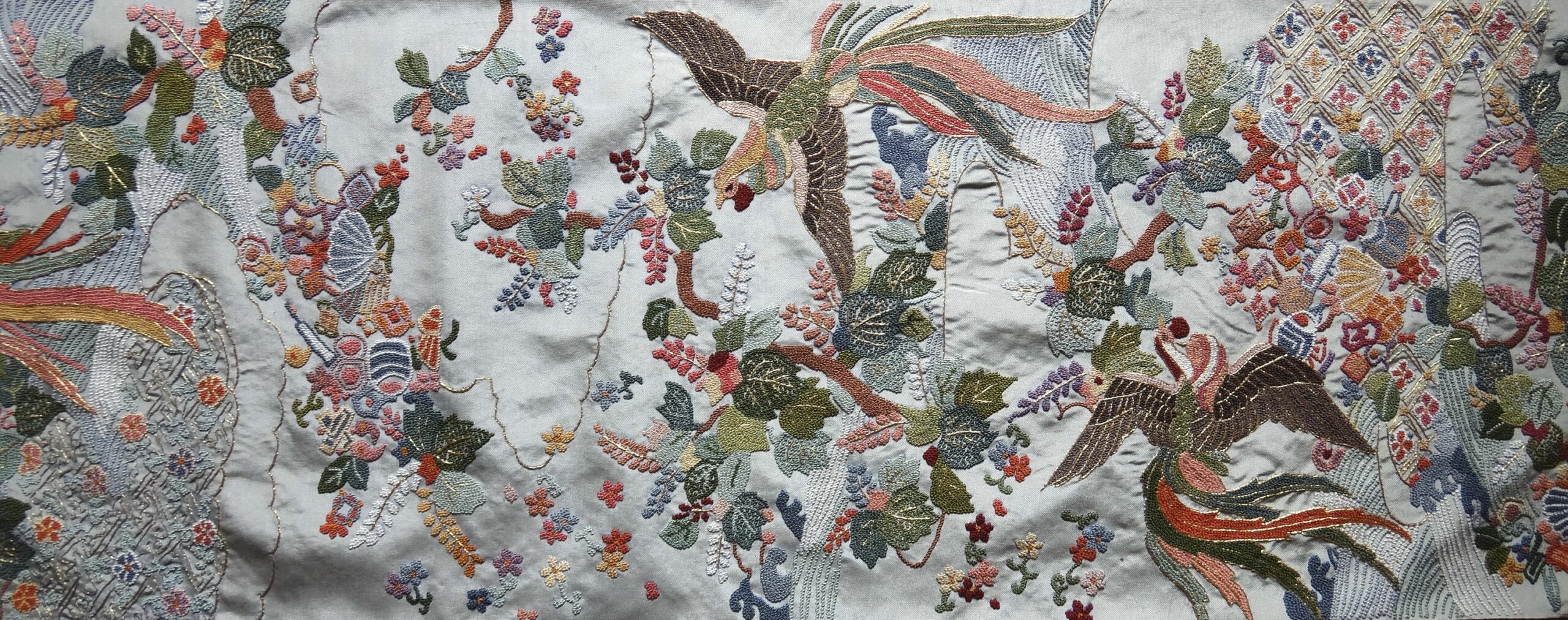
A 2012 report in Collection and Investment Review documented her conservation work on a damaged Japanese raised-embroidery screen traditionally associated with the Edo period. The report discussed the reconstruction of missing elements, the difficulty of sourcing suitable traditional materials, and her view that additions made for study should remain distinguishable from original material. In 2016, CCTV-1’s Wo You Chuan Jia Bao devoted a segment to her embroidery, restoration, and research practice.
Four Distinct Relationships to Historical Work
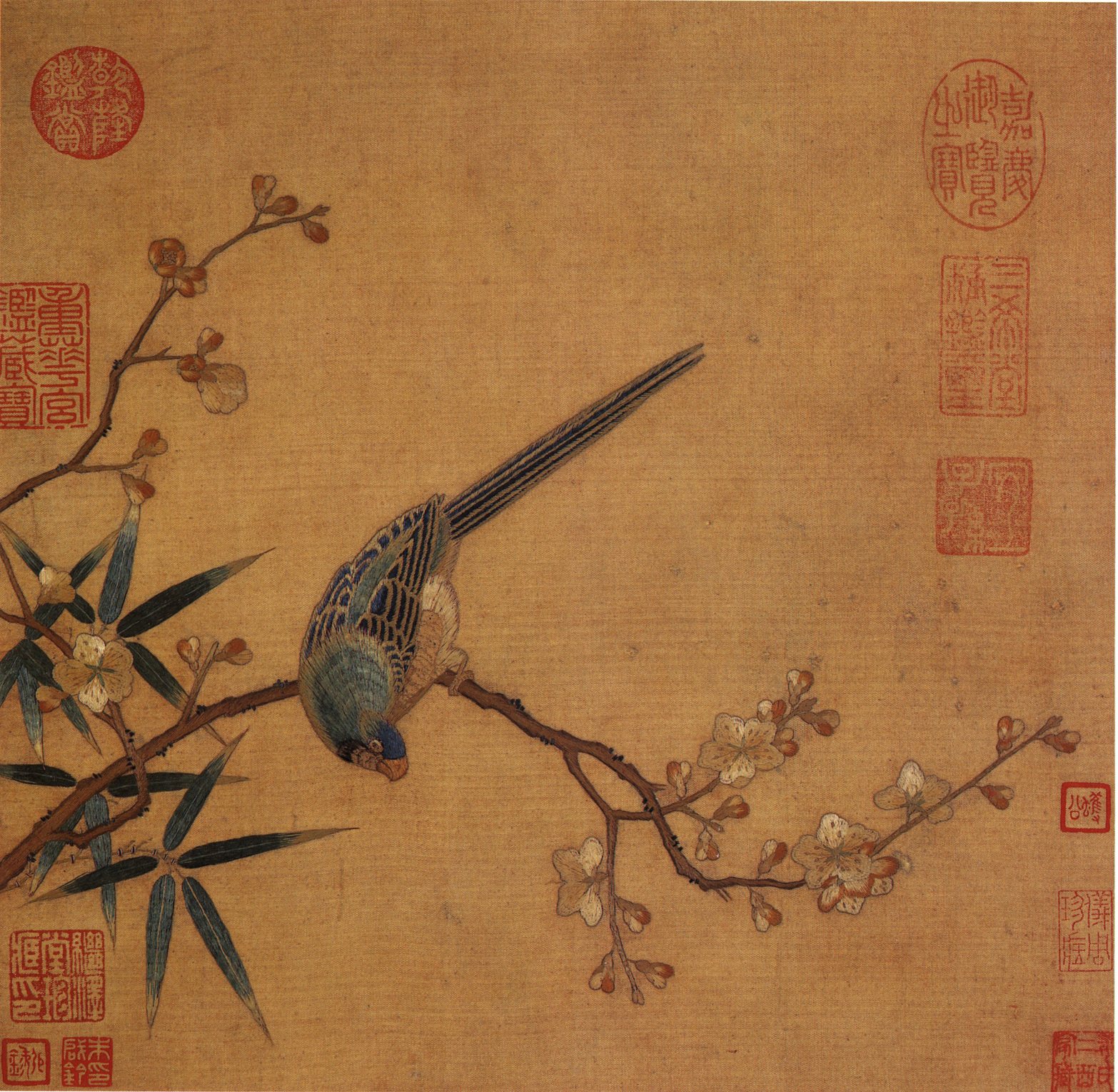
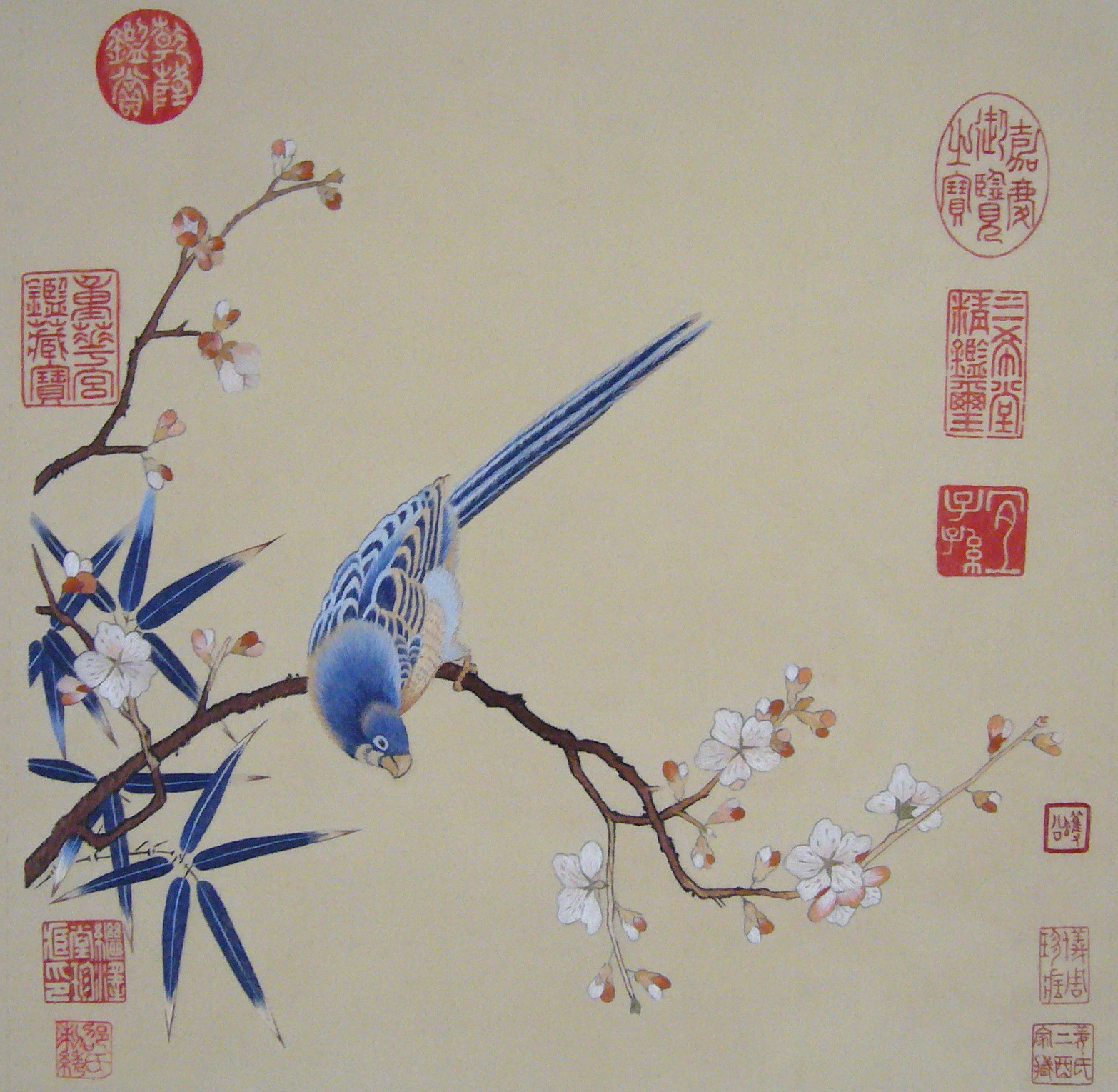
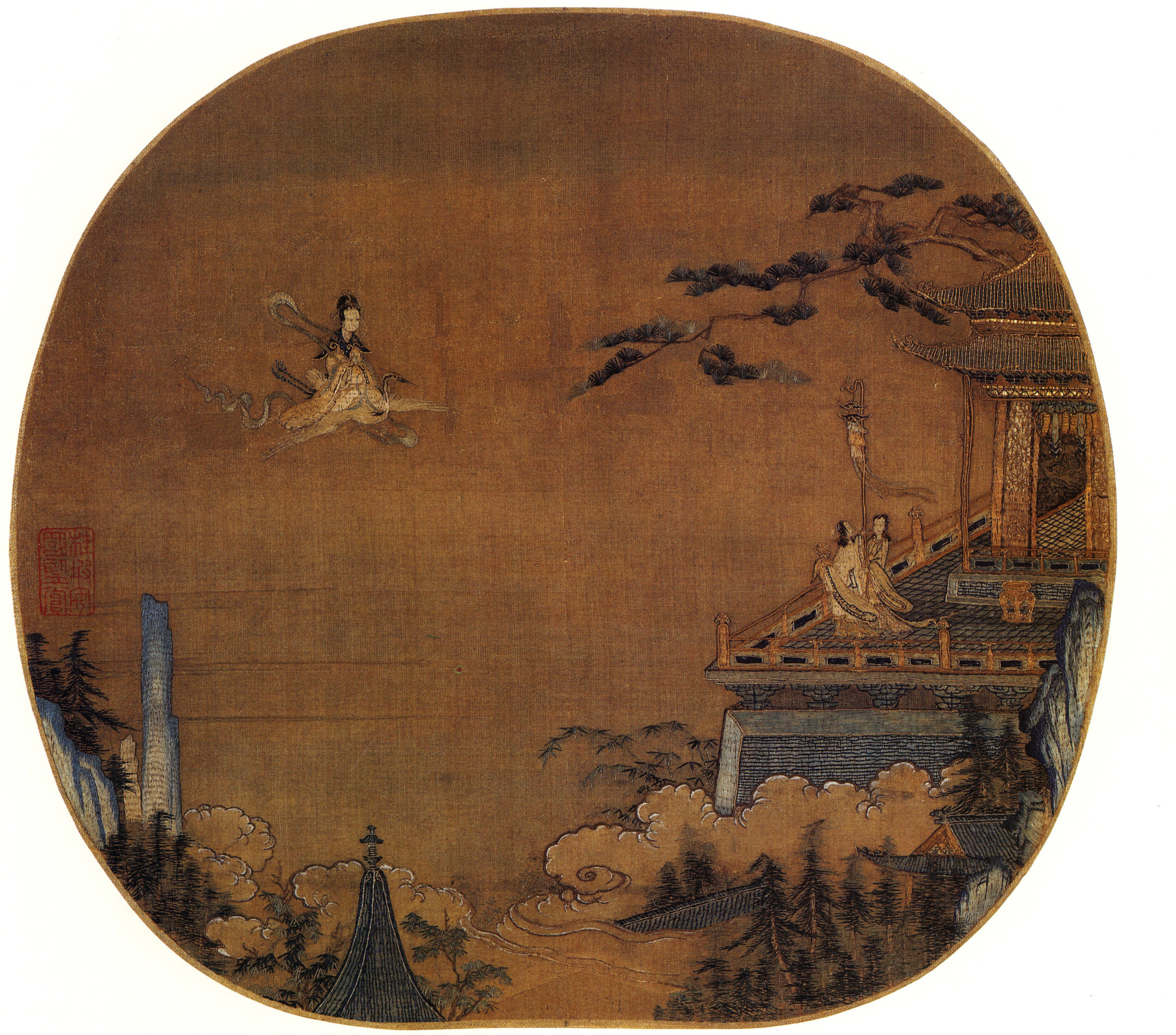
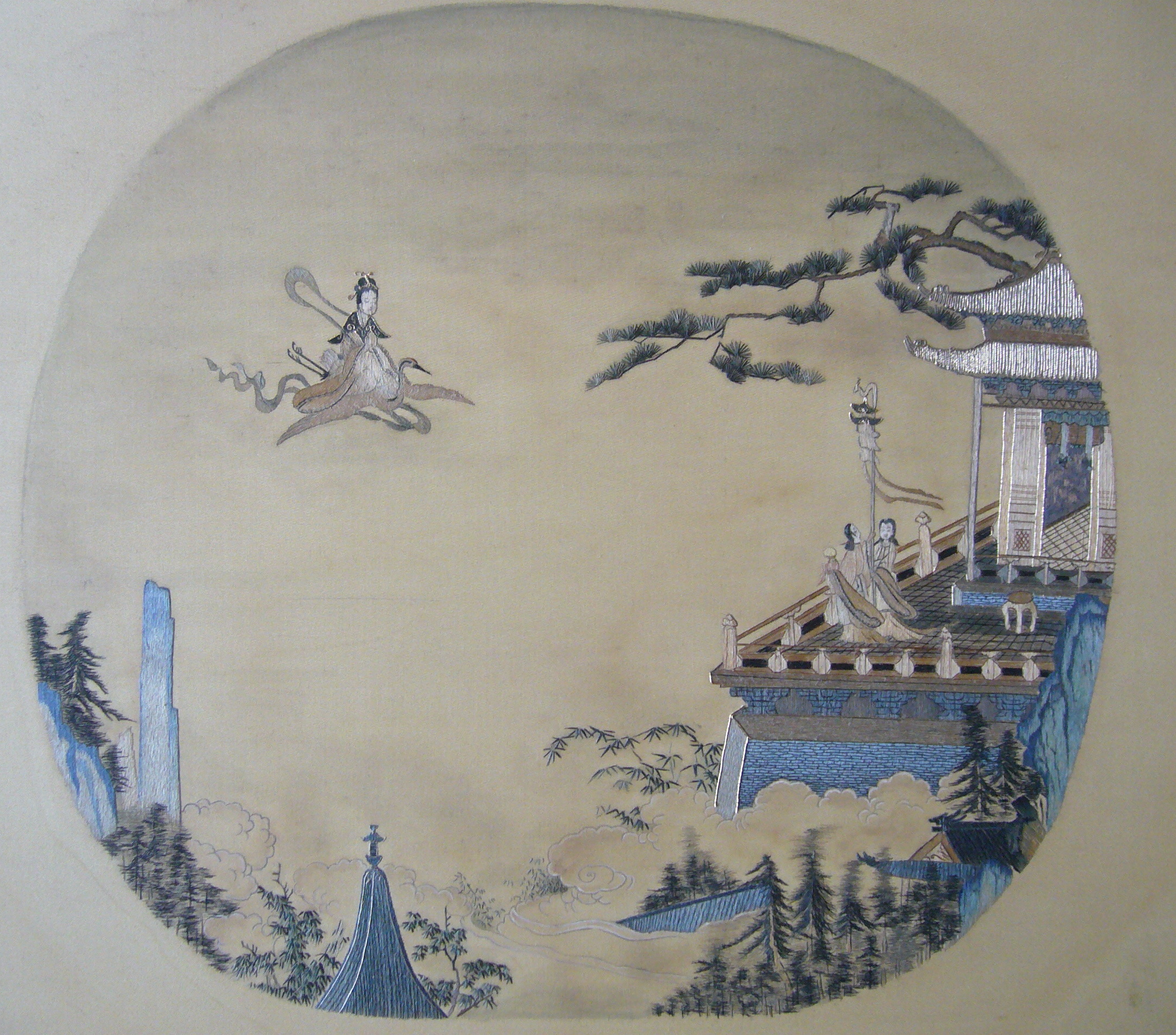
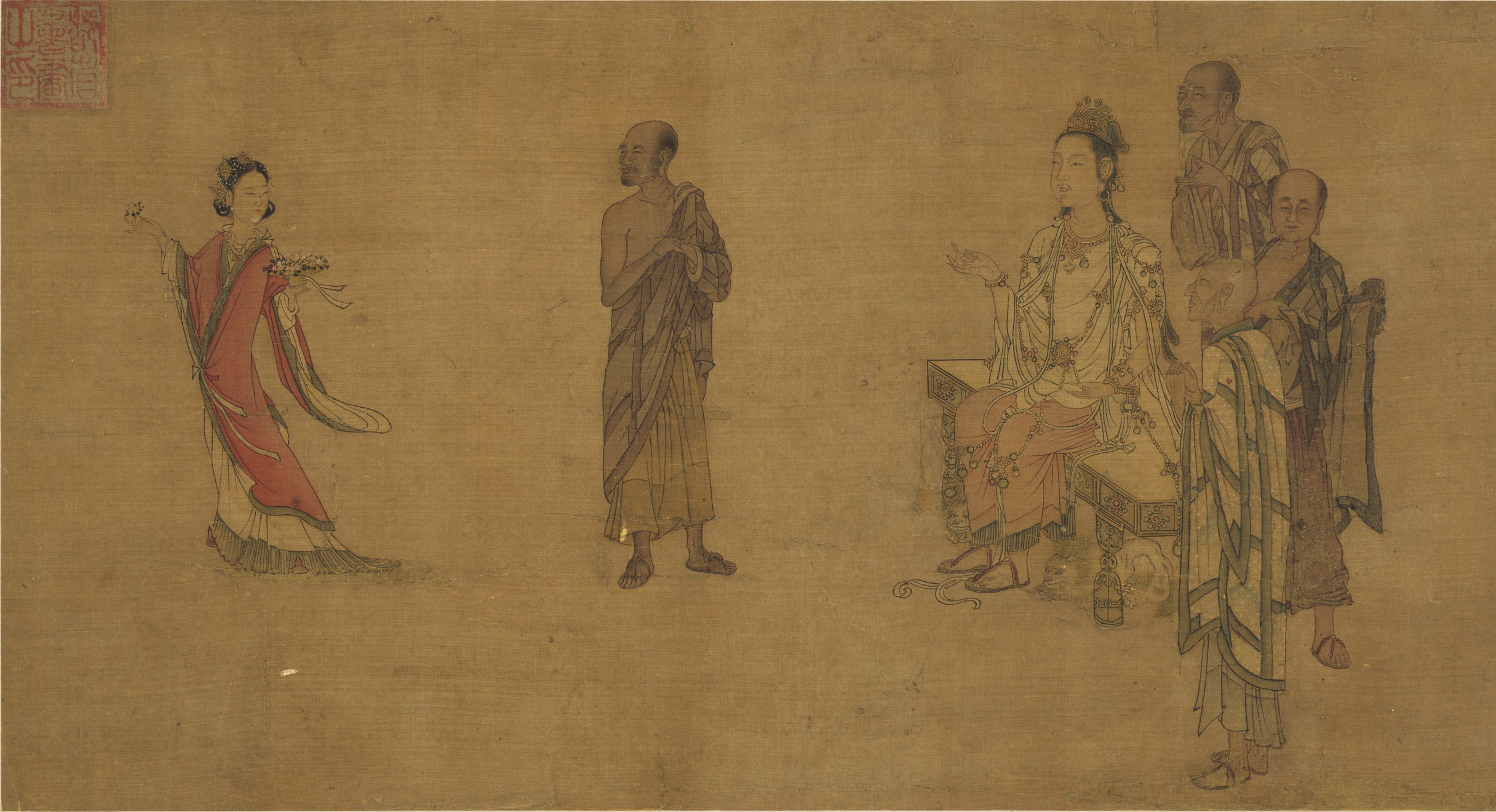
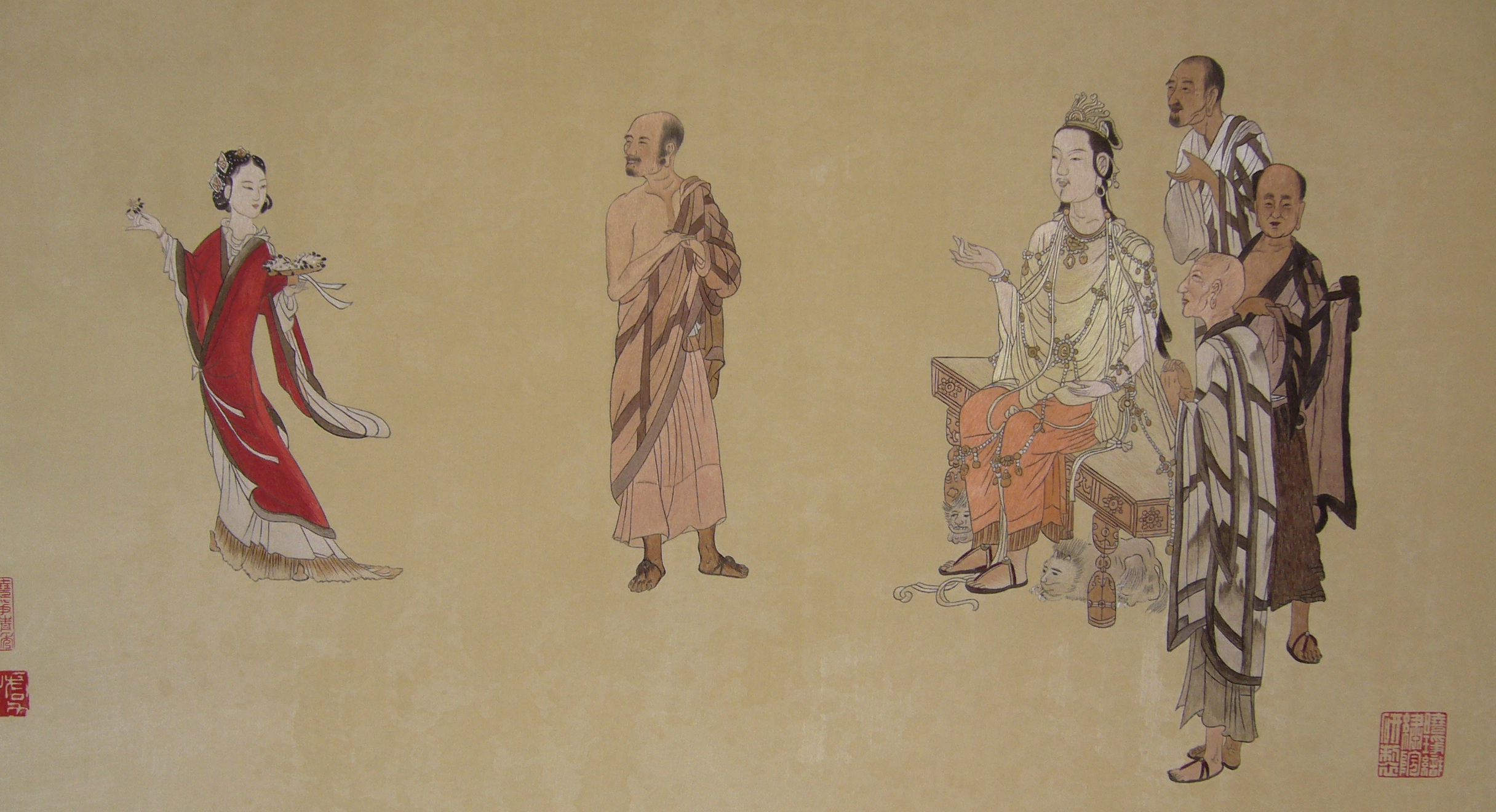
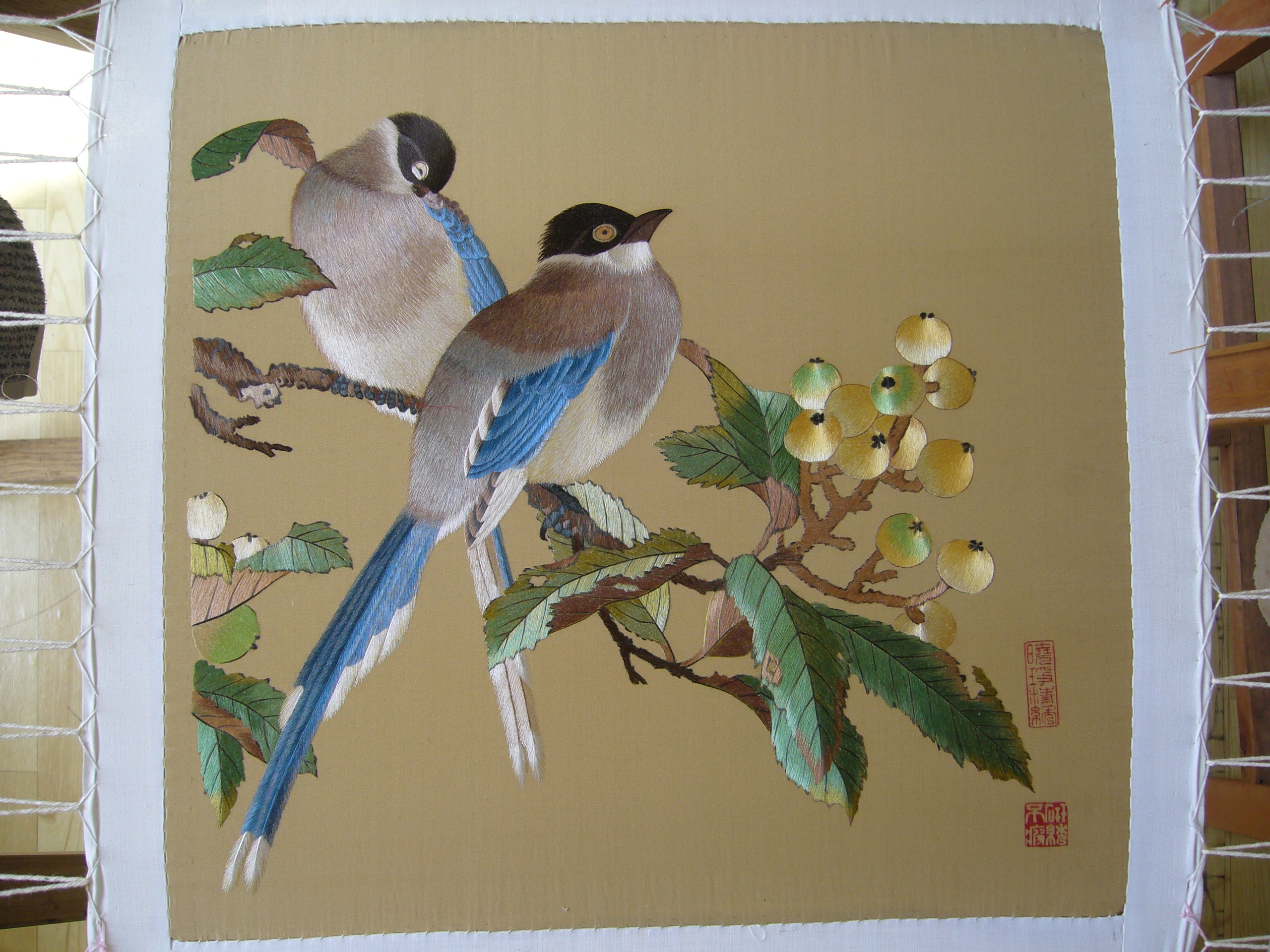
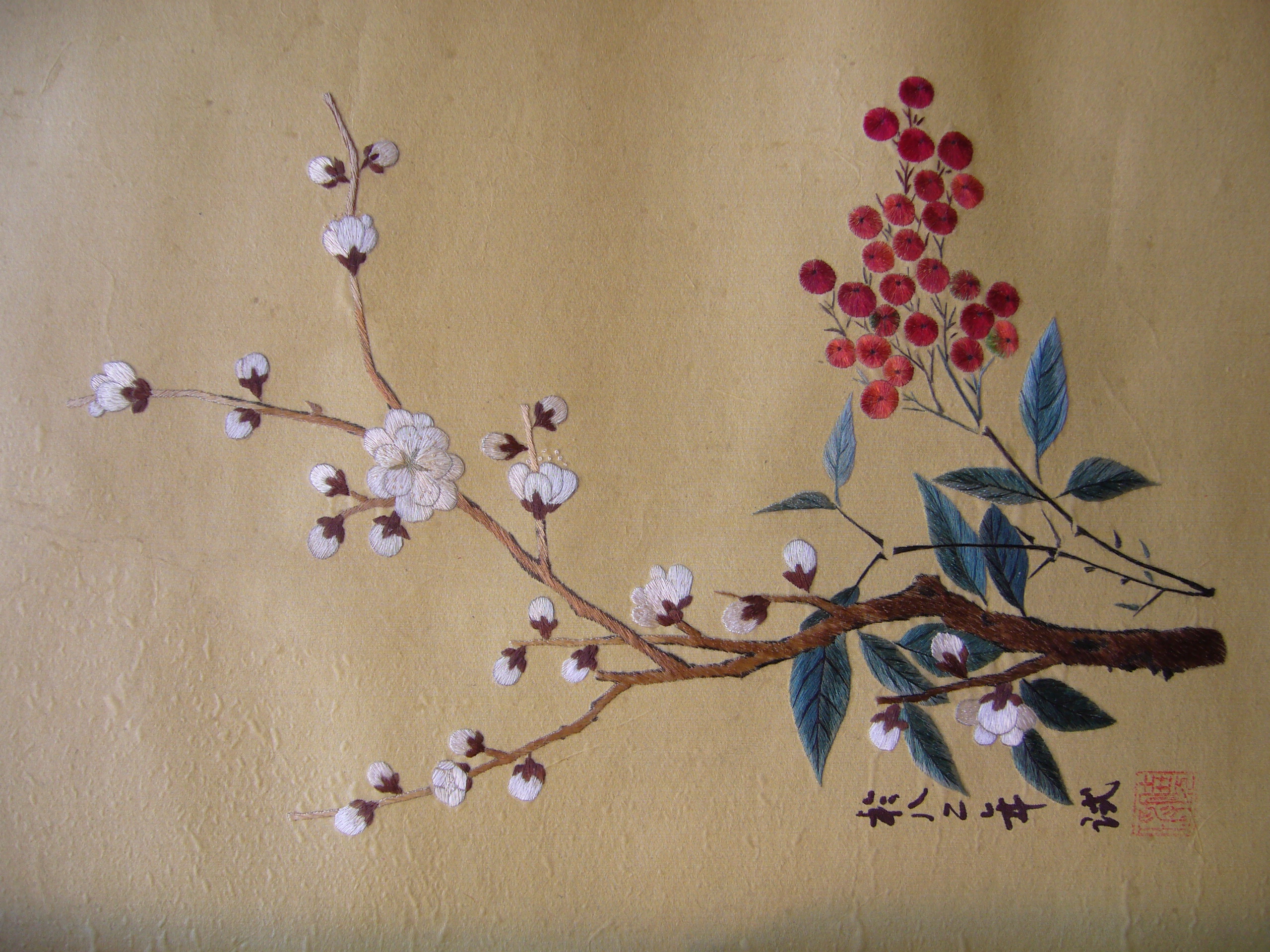
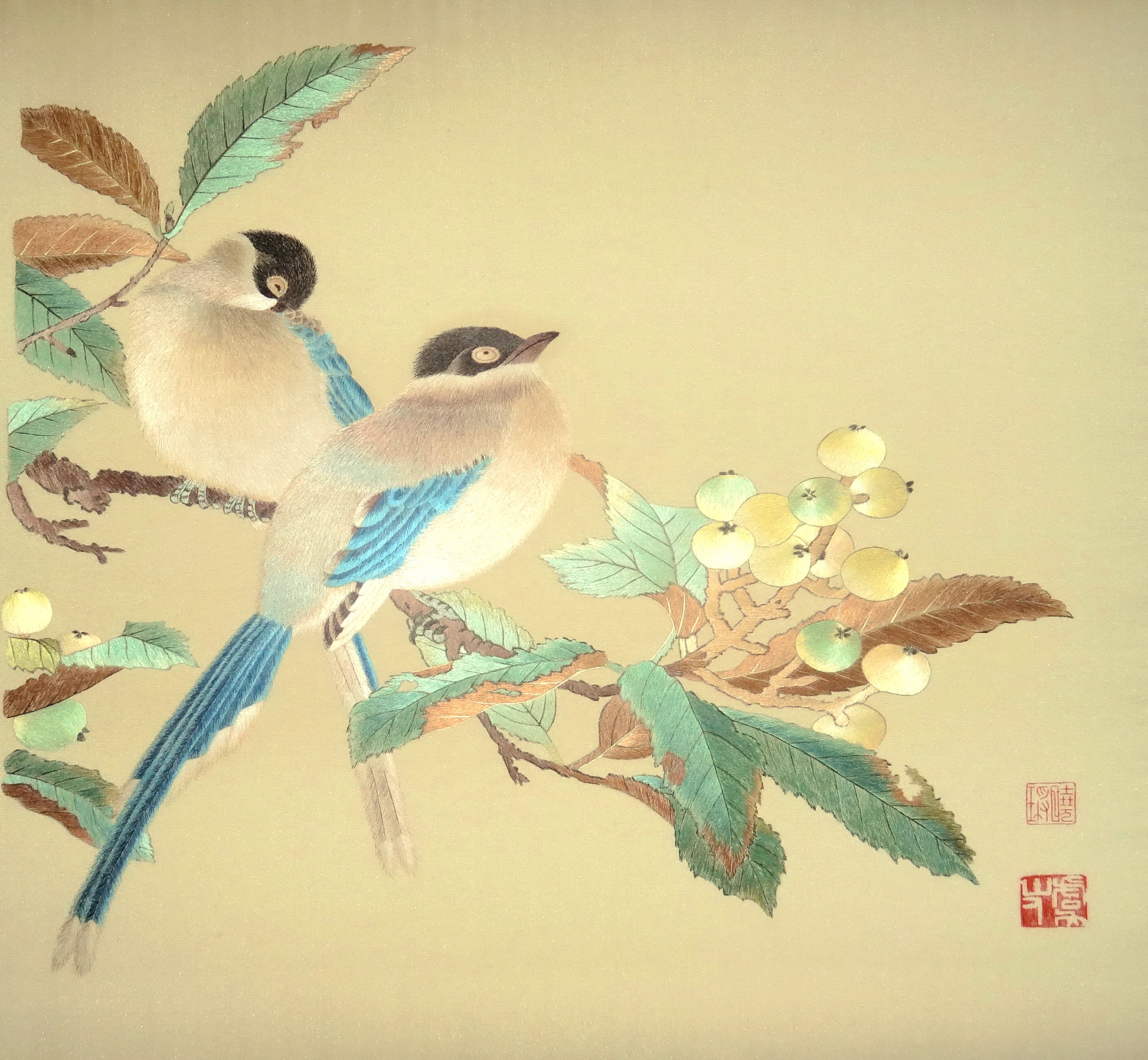
The Institute’s work includes several distinct modes of reproduction and historical practice. It has completed object-specific reproductions of two surviving Song embroideries, 梅竹鹦鹉图 and 瑶池跨鹤图. Tian nü xian hua (Deva Offering Flowers) represents a different mode: a painting-to-embroidery reproduction designed and embroidered by Shao Xiaocheng from the Southern Song album leaf catalogued by the National Palace Museum, Taipei, under Liu Songnian. It translates the painting’s seven-figure composition, gestures, line and colour relationships into the materials and stitch language of Song-style embroidery rather than copying a surviving historical embroidery. 山鹊枇杷图 is a contemporary Song-style embroidery developed from Song painting without being presented as an object-specific reproduction. 花卉 is a Song-style material and technical study using aged silk-paper support, made to test an approach relevant to the reproduction or restoration of silk-ground Song embroidery in museum collections.
These categories reflect different professional aims and should not be treated as interchangeable. The screen’s private owner and unpublished treatment details are not disclosed here, and its traditional association with the Edo period is not presented as a definitive date.
Object-specific reproductions of surviving Song embroideries
Painting-to-embroidery reproduction
Song-style creation and material study
Field Research and the Study of Regional Stitches
Shao has also worked from textiles still held in communities and private households. A 2023 profile in China Culture Daily reported on her research into Xing embroidery, embroidery from Yunxi, Hubei, and Miao braided-thread embroidery in Kaili, Guizhou. The report describes a process of visiting local communities, examining surviving objects, identifying stitch structures, and organising the material for teaching and publication.
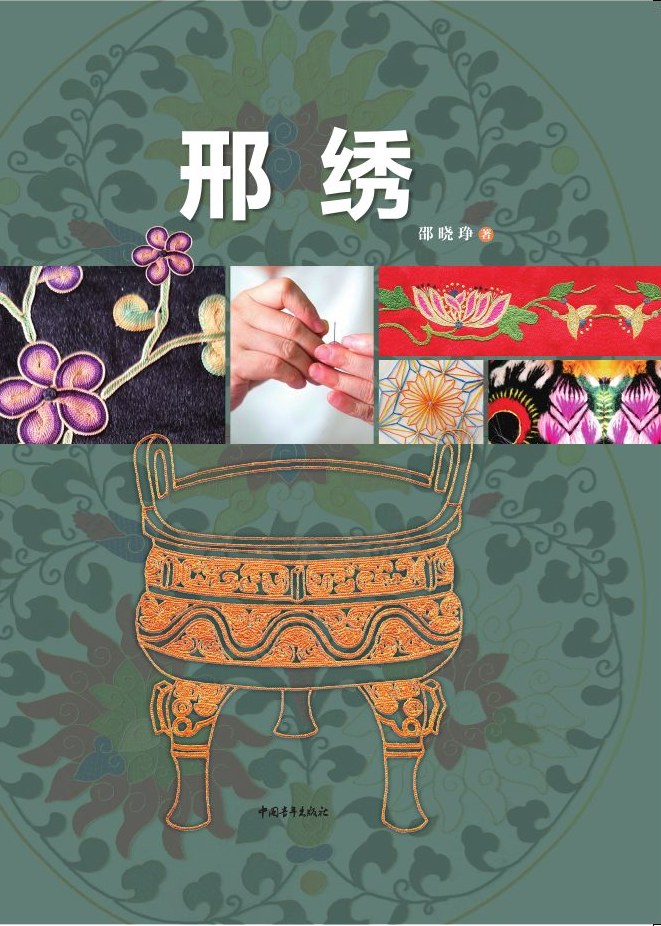
Her 2024 book 邢绣 (Xing Embroidery, working English title) presents this work in detail. The book records research begun in 2011 and connects historical and local materials with field photographs, stitch identification, diagrams, samples, and teaching projects. When EmbArts refers to the book’s historical arguments or classification of stitches, those conclusions are attributed to Shao rather than presented as an external scholarly consensus.
Museum Writing and Public Education
Shao’s public education record includes work with museums in China and the United States:
- In August 2008, the Asian Art Museum in San Francisco listed
Shao Xiao-Chengwith Chen Hong-Ying and Qian Yue-Fang as the three Chinese embroidery artists leading a two-day Gu Embroidery Workshop. - In October 2012, the Museum of Ethnic Costumes at Beijing Institute of Fashion Technology invited her to give a lecture titled “The Evolution and Development of Embroidery.”
- In May 2022, the Fine Arts Museums of San Francisco published her signed article, “Guo Pei’s Embroidered Universe: Stitch by Stitch”, in connection with the Legion of Honor exhibition Guo Pei: Couture Fantasy. The article examines stitches, materials, and visual language in selected garments.
These entries record a jointly led workshop, an invited lecture, and a museum-published article. They do not imply permanent employment, curatorial responsibility, formal consultancy, peer review, or a restoration role in the Guo Pei exhibition.
Books
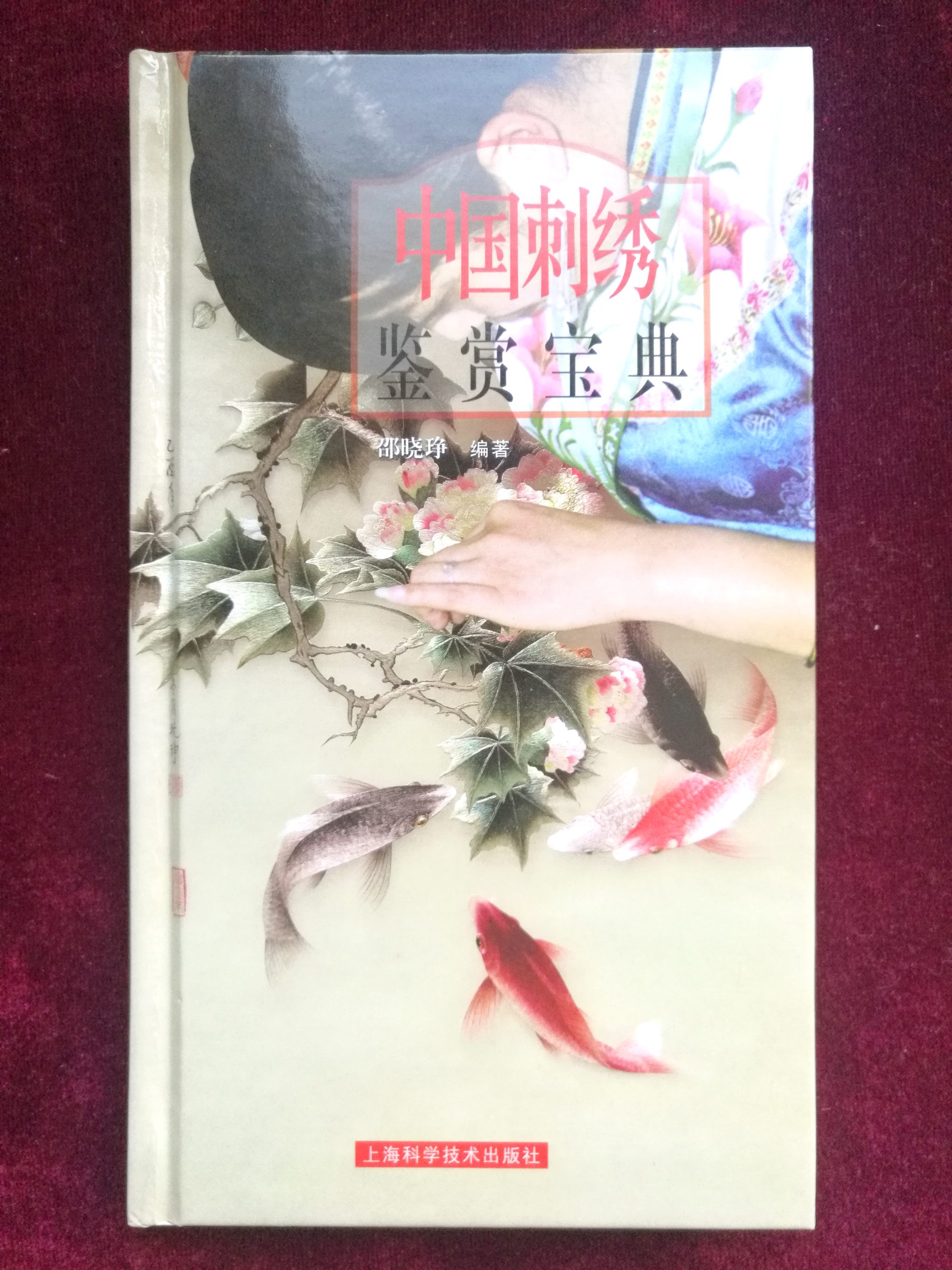
- 中国刺绣鉴赏宝典, compiled and written by Shao Xiaocheng; Shanghai Scientific & Technical Publishers, 2011; ISBN 978-7-5478-0866-5.
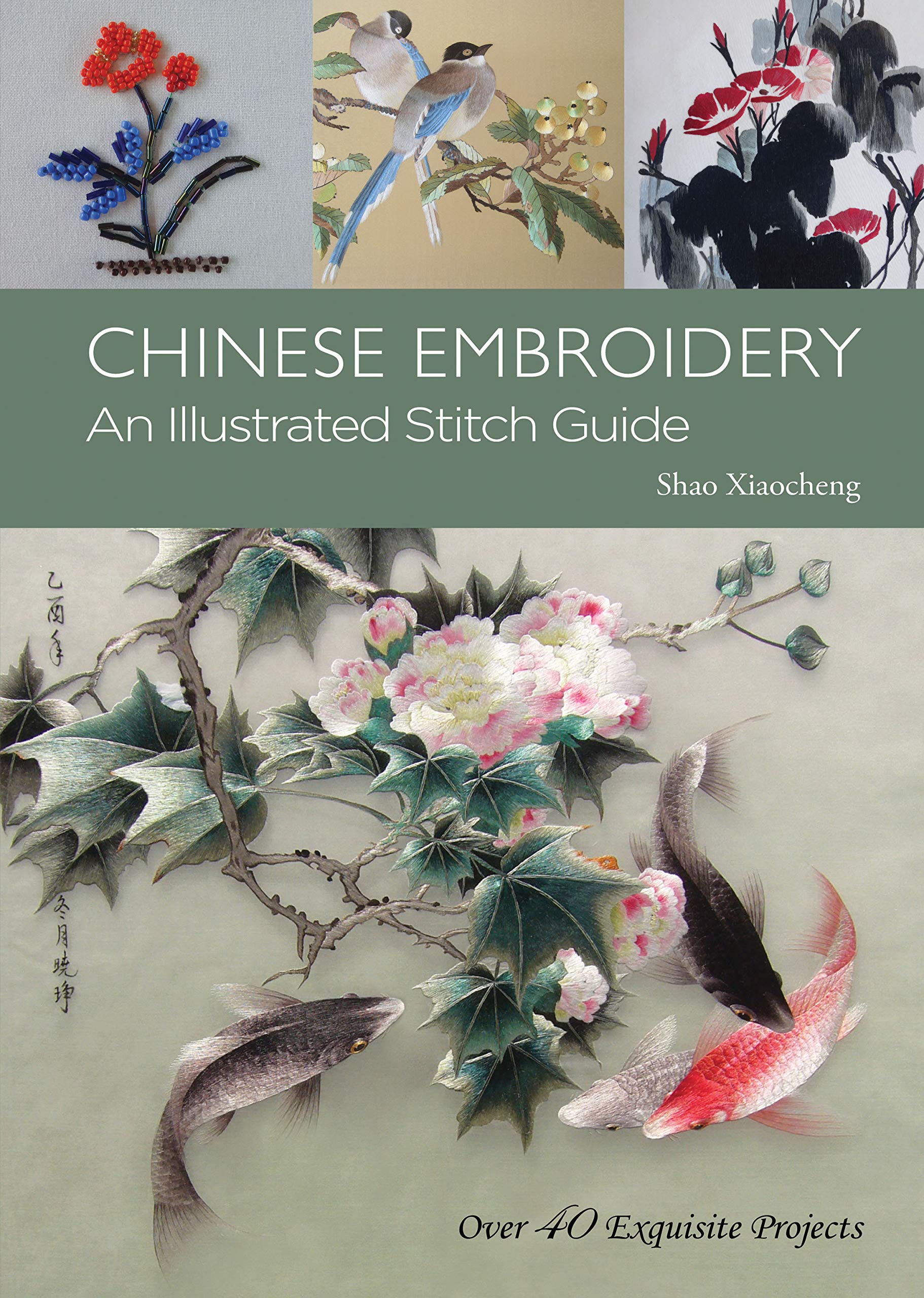
- Chinese Embroidery: An Illustrated Stitch Guide, co-authored by Shao Xiaocheng and Xiao Yao; Better Link Press, 2014 hardcover, ISBN 978-1-60220-015-9; 2018 paperback, ISBN 978-1-60220-159-0. The interior credits specify
Text by Shao XiaochengandWorks by Shao Xiaocheng, Xiao Yao. - 中国刺绣经典针法图解:跟着大师学刺绣, compiled and written by Shao Xiaocheng; Shanghai Scientific & Technical Publishers, 2018; ISBN 978-7-5478-4027-6.
- 中国刺绣经典针法图典——跟着大师学刺绣, written by Shao Xiaocheng and Xiao Yao; Shanghai Scientific & Technical Publishers, 2022; ISBN 978-7-5478-5829-5.
- 邢绣, written by Shao Xiaocheng; China Youth Press, 2024; ISBN 978-7-5153-7100-9.
English renderings of Chinese titles should be treated as working translations unless an English title is supplied by the publisher.


Selected Exhibition Records
Public institutional records currently confirm 梧桐绶带图 in 2011 and 2012, the kesi work 多景楼(米芾书法) by Xiao Lin and Shao Xiaocheng in the 2014 biennale record, and 锦绣年华 by Shao Xiaocheng and Xiao Yao in the 2018 biennale record.
The Institute’s exhibition files provide a fuller biennale sequence:
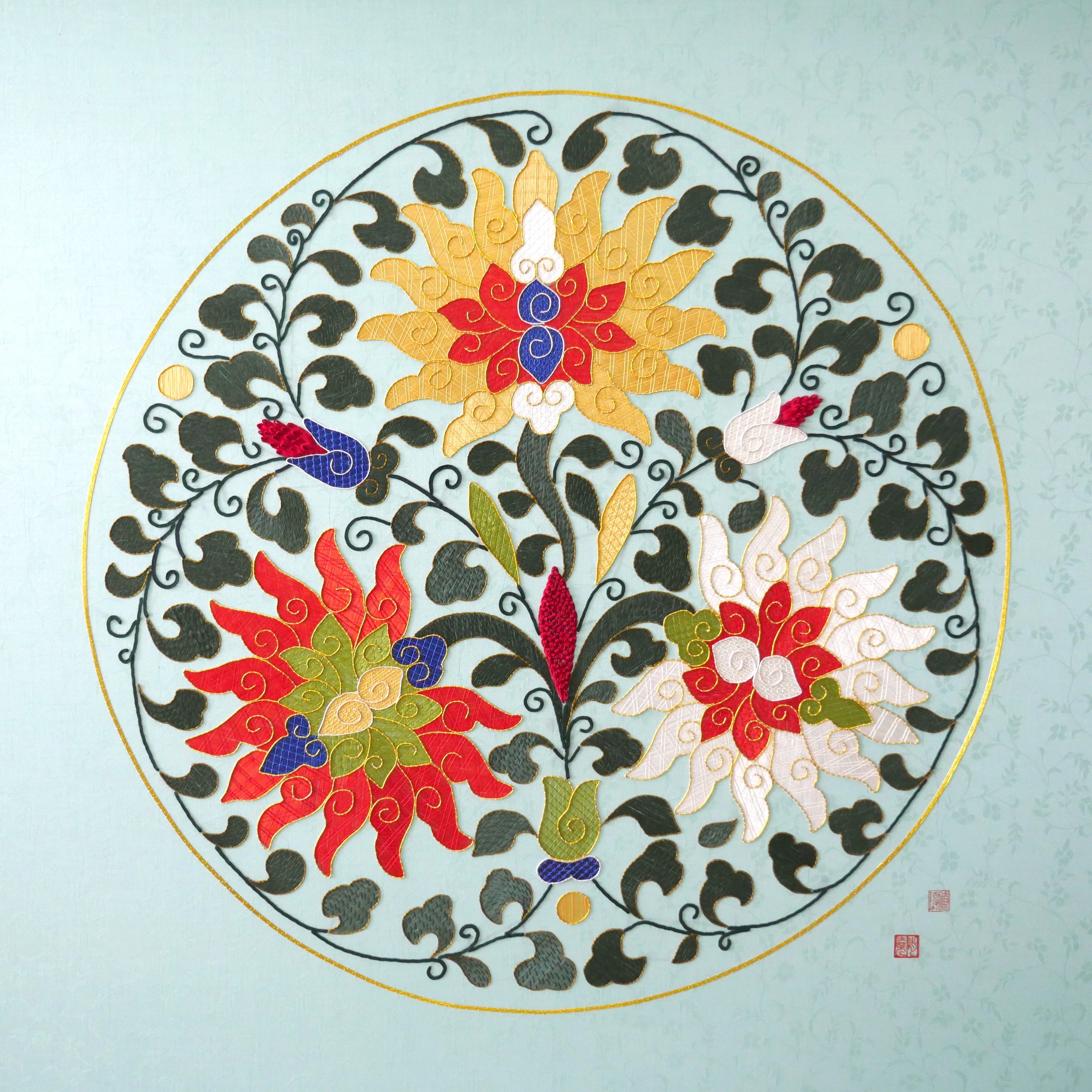
- 2012, First China Contemporary Arts and Crafts Biennale: 繁花凤舞, 唐花图案, and 牧牛图.
- 2014, Second Biennale: 西施, 蓝鹊枇杷图, and the kesi work 米芾书法手卷·多景楼.
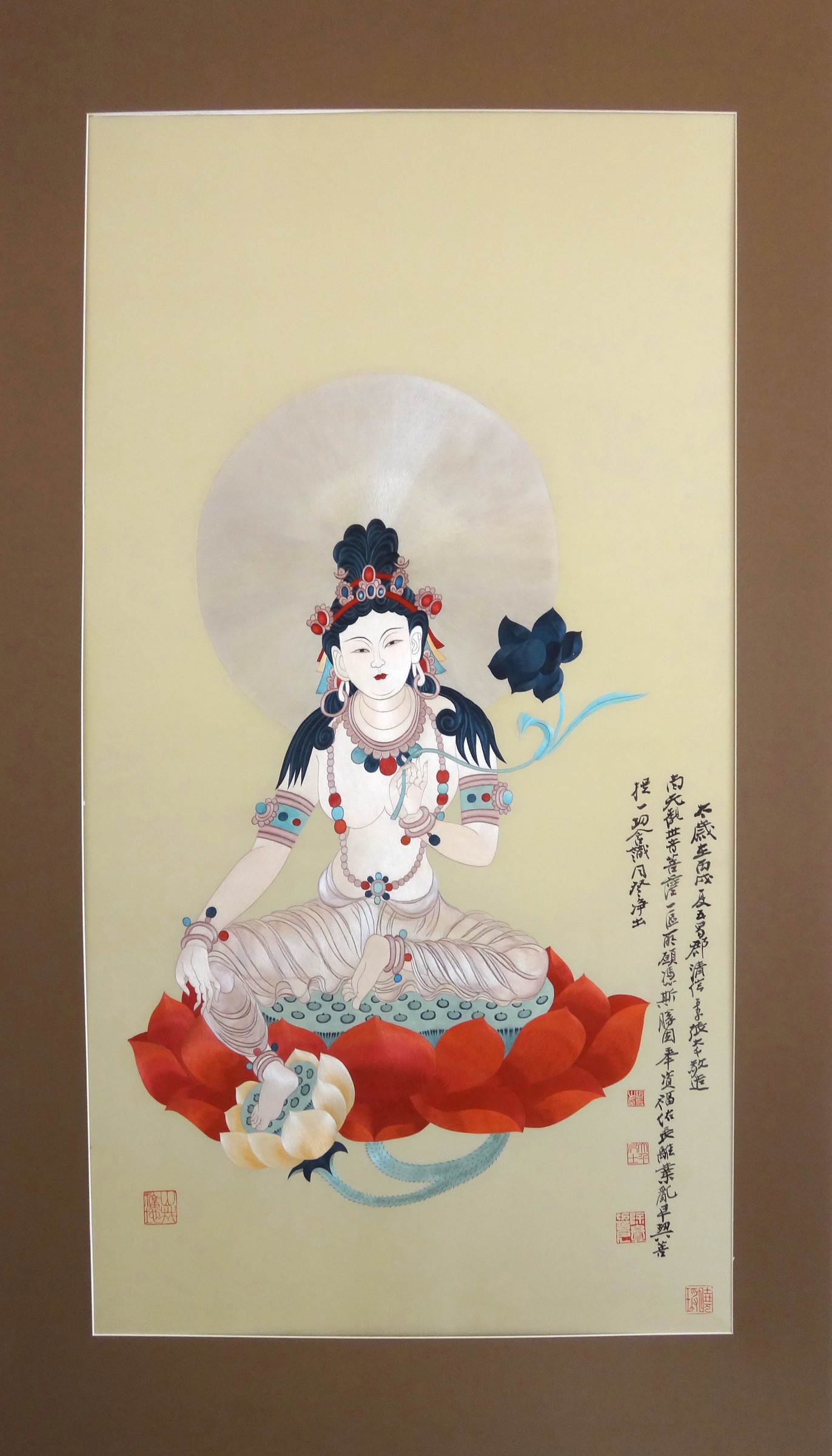
- 2016, Third Biennale: 大千画·绿度母.
- 2018, Fourth Biennale: 锦绣年华, by Shao Xiaocheng and Xiao Yao.
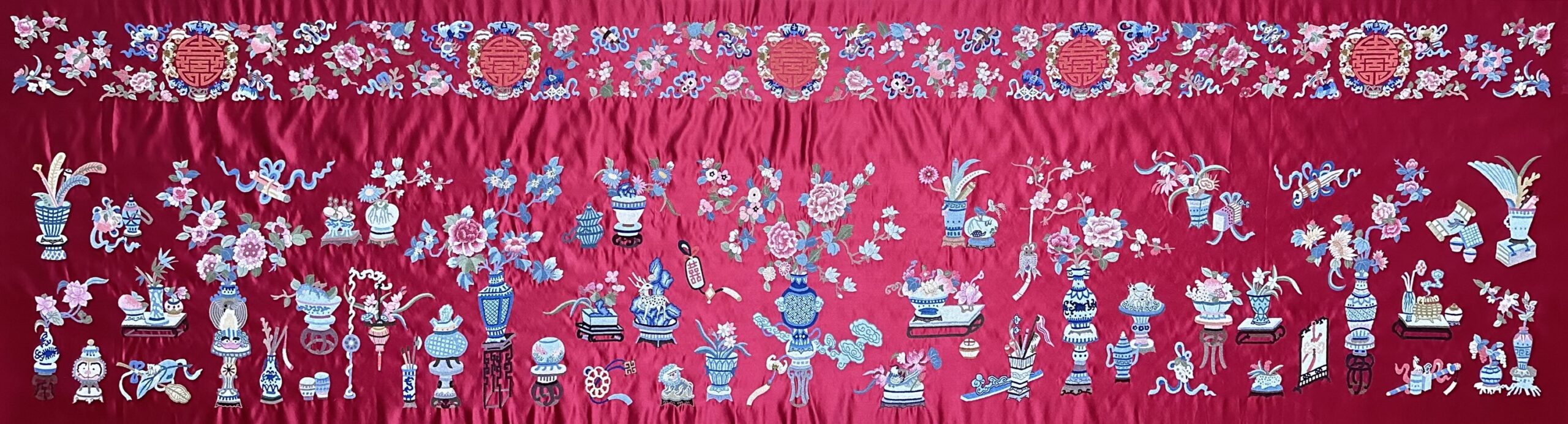
- 2025, Seventh Biennale: 喜庆吉祥, by Shao Xiaocheng and Xiao Yao.
The 2016 and 2025 entries remain identified as Institute project records unless a corresponding public institutional page is added. None of these entries is presented as an award or collection record.
Continue Exploring
Read more about the Institute’s restoration and reproduction work, explore the Digital Museum of Chinese Embroidery, or contact the Institute.
Follow Shao Xiaocheng’s embroidery practice and recent work on Facebook.