Chinese Embroidery Conservation & Restoration
When a historic embroidered textile needs careful attention
Historical Chinese embroidery and related textile works can raise questions about fragile silk, metallic thread, old mounting, previous treatment, or a surface that should not be disturbed. Chinese Embroidery Institute discusses these questions through research, long-term hand practice, and close attention to the object itself.
What we can discuss
- Conservation and restoration questions involving historical Chinese embroidery and woven textiles.
- Silk and metallic threads, traditional embroidery structures, older mounting, and signs of previous treatment.
- Research-based reproduction when a historical technique, image, or textile structure needs to be studied or explained.
- Documentation and teaching materials for collections, exhibitions, and cultural projects.
Our approach
We begin by looking carefully at the object and the information available about it. Historical context, materials, embroidery structure, surface condition, and the object’s intended future use all matter. The next step should follow what the textile can safely support.
Before seeing the object, we do not promise washing, stain removal, a return to “like-new” condition, or a particular treatment result. Fragile textiles should not be folded, lifted, dismantled, or otherwise disturbed just to obtain photographs.
Start with a Remote Initial Review
A Remote Initial Review is a first look based on photographs and basic information you already have. It helps us consider whether the object may fall within our professional scope and what a sensible next step might be. It is not a formal condition assessment, Professional Conservation Assessment, appraisal, detailed treatment proposal, or quotation.
Learn how to request a Remote Initial Review or contact the Institute with a short description of the object.
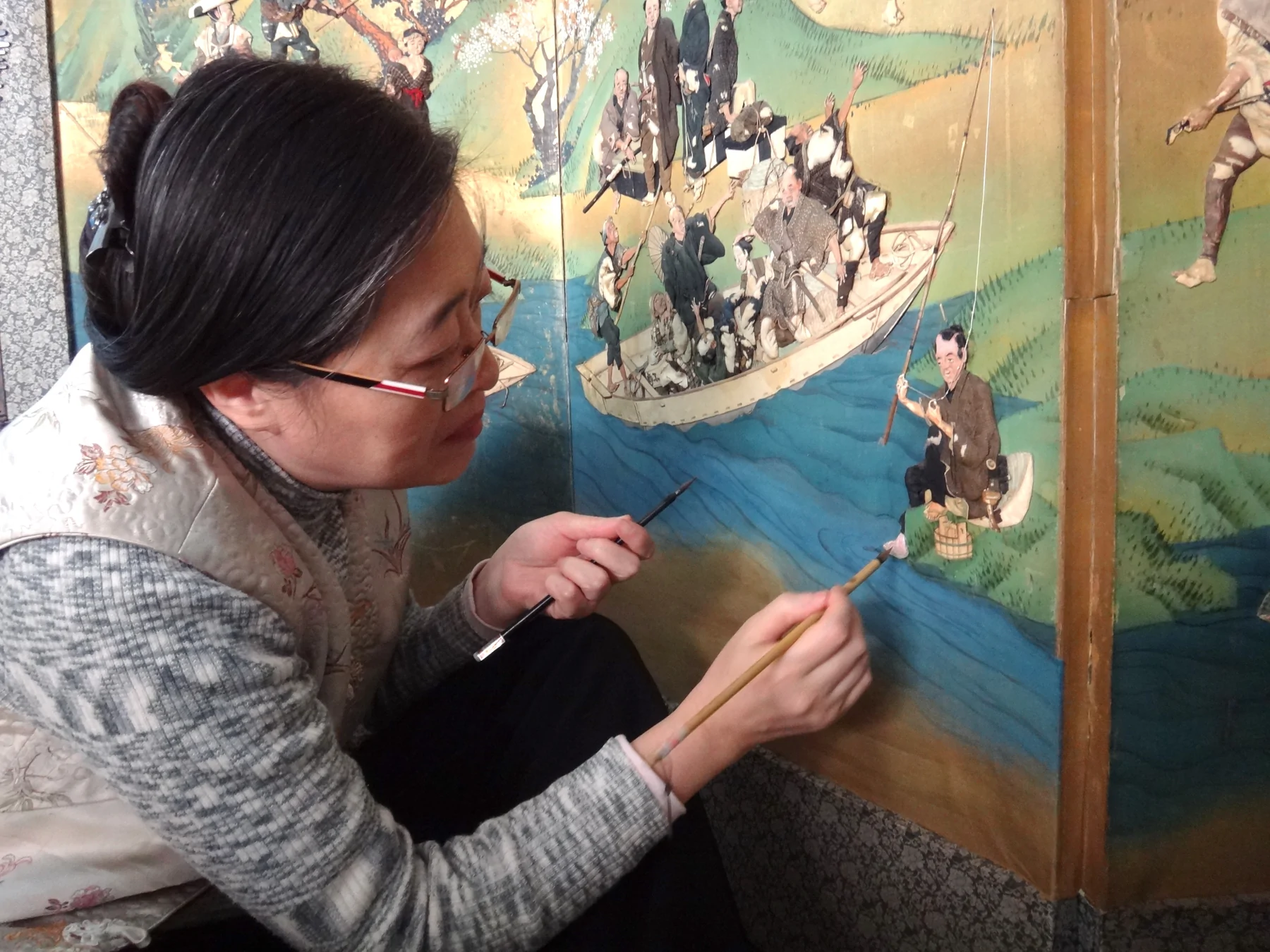
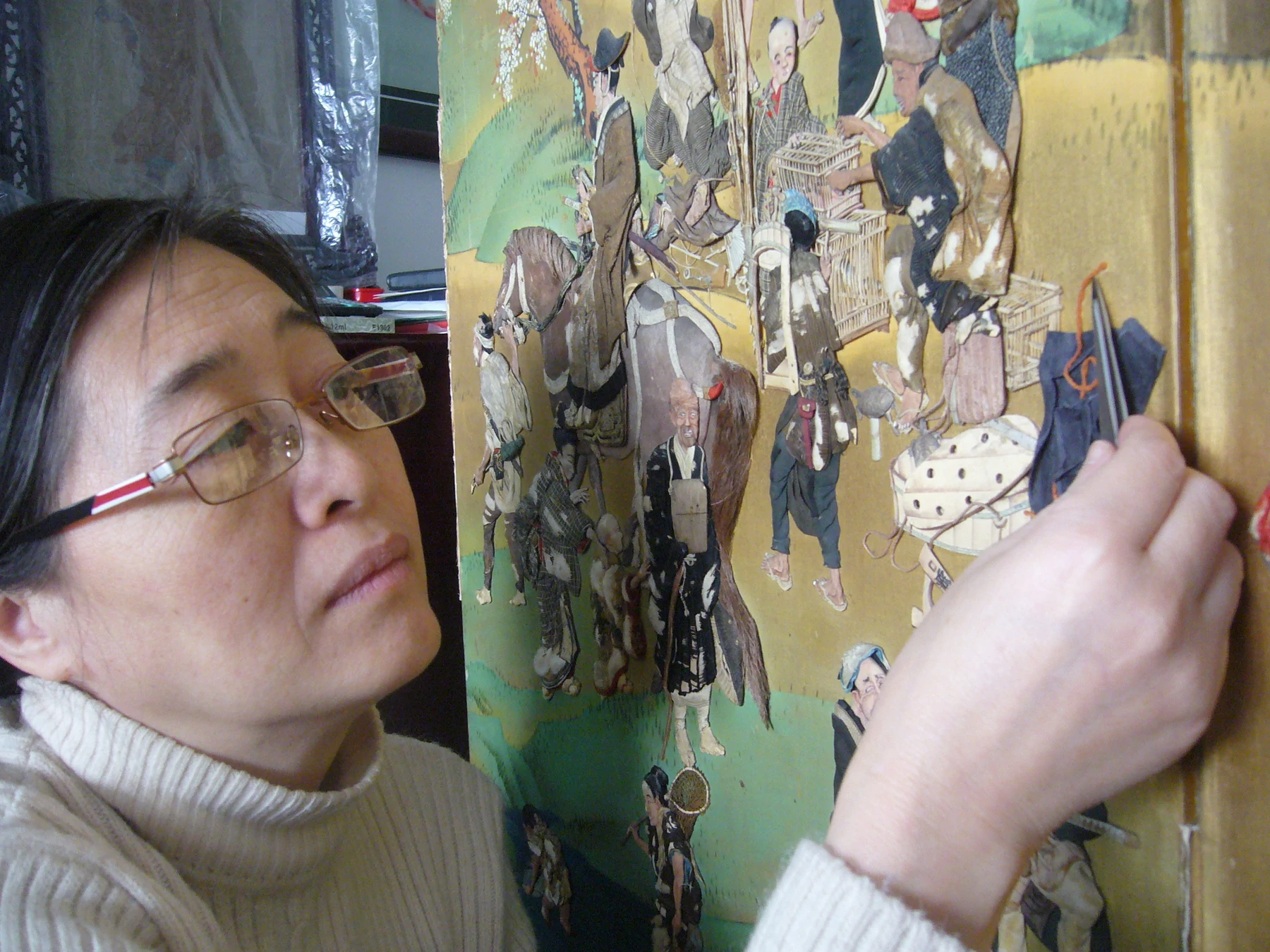
Selected case: an embroidered folding screen in a Private Collection
The Institute participated in the examination and conservation treatment of a privately held embroidered folding screen, including stabilization work.
Reproduction as research
A reproduction can be a way to study a historical image, stitch structure, material relationship, or visual rhythm. We distinguish research-based reproduction from conservation treatment and discuss the purpose, evidence, and practical scope of each project before work begins.
For collections, educators, and cultural projects
For an initial conversation, please share what you know about the textile, the question you are trying to resolve, and any existing photographs. We can then discuss whether a further professional assessment or a treatment and reproduction proposal is appropriate.