ABOUT CHINESE EMBROIDERY INSTITUTE

A Living Art of Silk, Thread, and Cultural Memory

Chinese Embroidery Institute studies, practices, teaches, restores, reconstructs, and shares traditional Chinese embroidery. Our work brings together silk, thread, imagery, stitch techniques, historical evidence, aesthetic judgment, hand knowledge, and cultural memory.

CEI-Chinese Embroidery Institute

Our Mission

Chinese embroidery is not only a set of stitches or a decorative surface. It is a system of knowledge shaped by materials, techniques, imagery, historical contexts, aesthetic judgment, hand practice, and cultural memory.

Our mission is to keep this knowledge active through research, making, teaching, restoration, research-based reconstruction, reproduction, publication, and cultural exchange.

• Research-led understanding of Chinese embroidery history, technique, and regional memory
• Teaching based on hand practice, materials, stitches, and image interpretation
• Preservation and cultural cooperation for textile heritage, collections, and public education

What We Do

Our work connects research, teaching, preservation awareness, and cultural cooperation, allowing Chinese embroidery to be studied, practiced, and shared with care.

Research & Documentation

We study Chinese embroidery through historical textiles, regional traditions, stitch structures, materials, imagery, documents, and cultural contexts. Our research connects textual and visual evidence with close observation and sustained hand practice.

Teaching & Courses

Our courses guide learners through materials, thread handling, stitch techniques, image interpretation, and disciplined hand practice. Our teaching focuses on traditional Chinese hand embroidery rather than machine embroidery or general garment construction.

Repair, Restoration, Reconstruction, and Reproduction

Chinese Embroidery Institute undertakes the repair, restoration, research-based reconstruction, and reproduction of Chinese embroidery. We distinguish among these forms of work because they involve different goals, degrees of intervention, and standards of evidence.

Our approach is grounded in close study of materials, textile structures, stitch techniques, imagery, historical evidence, and sustained hand practice. Each project is assessed according to the object’s condition, cultural context, and intended purpose. We document the methods, decisions, and scope of intervention used in the work.

Chinese embroidery artwork depicting a landscape with mountains and trees

Why Chinese Embroidery Matters Today

Chinese embroidery carries a long conversation between silk, thread, imagery, hand discipline, regional memory, and cultural meaning. To study it today is to understand how traditional knowledge can continue through teaching, restoration, artistic practice, publication, and cultural exchange.

• A living tradition shaped by material, image, and hand practice
• A cultural language connected with regional memory and historical continuity
• A field for teaching, preservation awareness, and contemporary cultural work

Founder and Intergenerational Collaboration

Chinese Embroidery Institute grows from Shao Xiaocheng’s long-term research, hand practice, teaching, restoration, and artistic work in traditional Chinese embroidery.

Her son, Xiao Yao, also known as Martin Xiao, extends this foundation through research planning, editorial and publishing work, visual documentation, digital platforms, English-language communication, international exchange, and participation in embroidery practice and project development.

Together, their work forms an intergenerational collaboration that connects traditional hand knowledge with research, publication, documentation, teaching, and international communication.

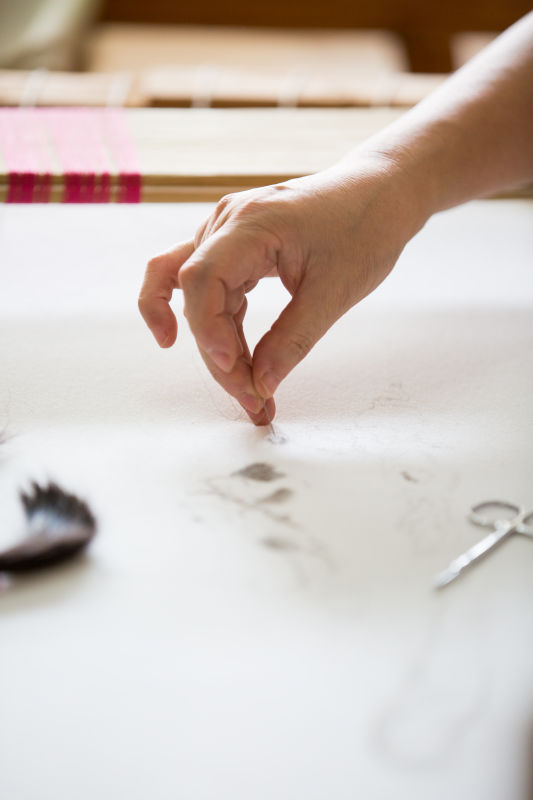
Shao Xiaocheng working on traditional Chinese embroidery in the studio

Start a Conversation with the Institute

Whether you would like to learn Chinese embroidery, discuss a repair or research-based reconstruction project, document a textile collection, explore publications and materials, or develop a cultural cooperation project, you are welcome to contact the institute.