Chuona Embroidery: Counted Stitch over Gauze in Chinese Embroidery
Quick answer
Chuona embroidery (戳纳), also called chuosha embroidery (戳纱绣), works with the visible grid of gauze or another mesh fabric. Shao Xiaocheng’s Chinese Embroidery: An Illustrated Stitch Guide calls the broad structure “counted stitch over gauze.” Chinese terminology distinguishes work that leaves gauze visible from nasha embroidery (纳纱绣), which fills larger areas with color. Vertical, horizontal, and slanted directions organize the surface and alter how silk reflects light.
Start with the Chinese name
The useful public name is chuona embroidery (戳纳). In The Illustrated Art of Embroidery, chuona is also called chuosha embroidery (戳纱绣) and is described as a traditional Chinese embroidery form worked on cloth or gauze with visible openings. The embroiderer follows the warp-and-weft grid rather than treating the ground as an unmeasured surface.
The English-language guide uses counted stitch over gauze. That phrase is a practical search bridge because it tells an English reader that the stitches are positioned by counting a mesh. It should not replace the Chinese terms, because the Chinese vocabulary also describes how much of the gauze remains visible and how the colored surface is organized.
These names therefore overlap without being perfectly interchangeable in every context:
- Chuona (戳纳) is the broader Chinese technical name used in Shao Xiaocheng’s book.
- Chuosha embroidery (戳纱绣) describes patterned stitching on gauze in which areas of the ground remain visible.
- Nasha embroidery (纳纱绣) describes the form in which larger colored areas fill or substantially cover the gauze.
- Counted stitch over gauze is the English guide’s structural description for this family of work.
The gauze grid is part of the design
In many embroidery techniques, the ground fabric recedes visually once the design is complete. In chuona, the grid remains an active part of the work. Its square openings provide a measured framework, and the relationship between covered and uncovered squares contributes to rhythm, spacing, and transparency.
Shao Xiaocheng’s book identifies real silk gauze as suitable for this kind of embroidery. It also notes that a mesh-like mixed fabric may provide a heavier ground. This difference matters visually: a light silk gauze can create delicacy and luminosity, while a heavier mesh can make the counted structure more emphatic.
Two surface systems: open gauze and filled color
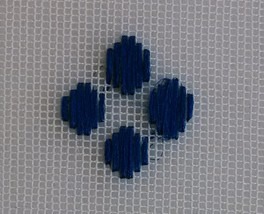
The Illustrated Art of Embroidery makes a clear distinction between two effects. In chuosha embroidery, the design is stitched while part of the gauze ground remains open. The visible mesh separates motifs and lets the fabric participate in the composition. In nasha embroidery, larger color fields cover the gauze more completely, producing a denser surface closer to counted satin filling.
This is not merely a difference in how much thread is used. It changes the balance between textile and image. Open areas can make a large composition feel airy even when the subject is complex. Filled areas can create weight, color concentration, and stronger contrast. A single object may use both impulses, but the terms help readers see which surface strategy dominates.
Direction changes geometry and light
Both books describe vertical, horizontal, and slanted directions. Because the stitches respond to the same grid, their orientation can create orderly edges and repeated units. The English guide also notes that changes in silk-thread direction alter reflected light. The result is not only a counted pattern but a surface whose brightness shifts as the viewer moves.
This is one reason chuona should not be reduced to “Chinese cross stitch.” Both methods may count a ground, but a crossed X is not the defining unit here. Chuona can use straight vertical, horizontal, or slanted spans, and its aesthetic depends on open gauze, filled fields, directional sheen, and the scale of the grid.
A Song-dynasty example: the Embroidery of the Five Relationships
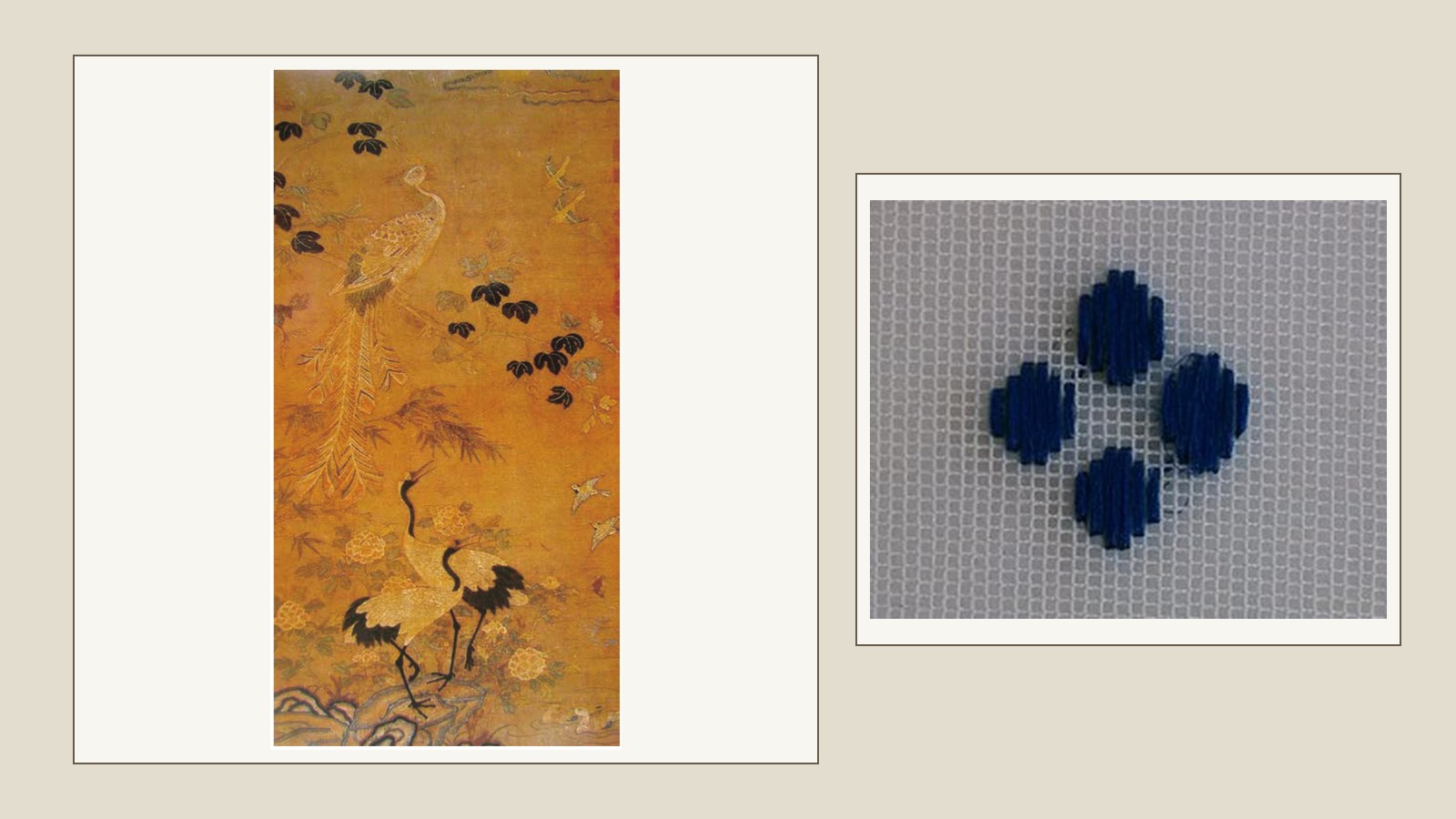
The Illustrated Art of Embroidery presents a Song-dynasty work titled Chuosha Embroidery of the Five Relationships (戳纱绣伦叙图), fig. 2-23. Shao records the work as 116.6 by 62.6 centimeters and describes a gauze ground with birds, plants, water, rocks, clouds, and other elements arranged in a large composition.
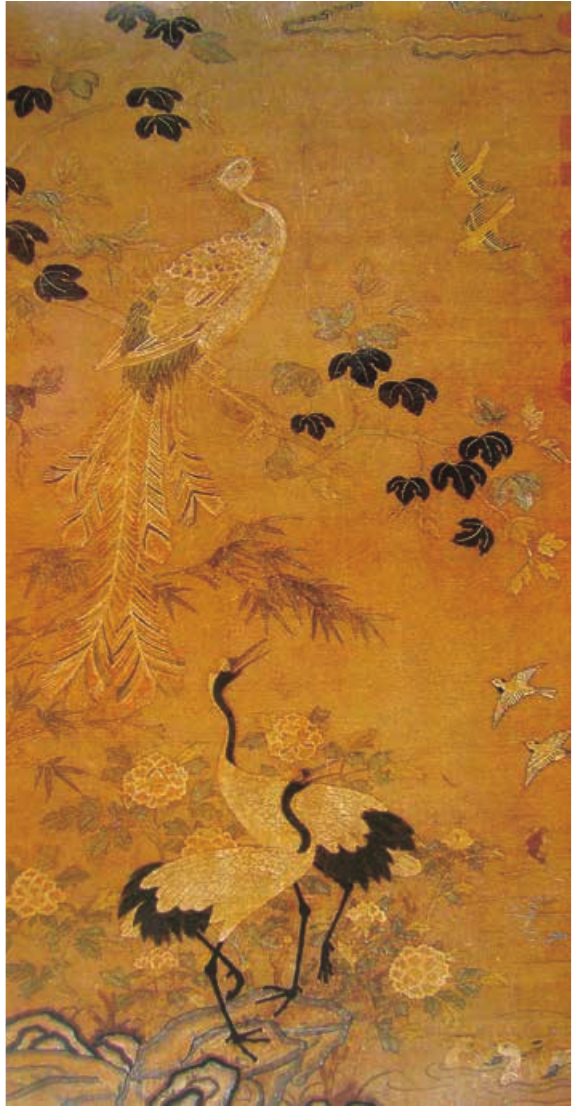
Shao Xiaocheng’s book describes regular counting through the gauze and identifies “two-thread intervals” as an important organizing method in the work. The public value of this example is not an exact reconstruction of the count. It is the evidence that counted gauze embroidery could support a large pictorial design rather than only a small geometric border.
The English guide describes counted stitch over gauze as mature by the Song dynasty. That statement is retained as the guide’s historical summary, not treated as a self-sufficient dating method for unidentified objects.
How to look at chuona embroidery
When viewing a finished work, begin with five questions:
- Is the ground a visible gauze or mesh with a regular warp-and-weft grid?
- Does the design leave open ground, fill large color areas, or combine both?
- Are the dominant stitches vertical, horizontal, slanted, or deliberately varied?
- Do changes in direction create different reflections in the silk?
- Does the grid remain even, or do tension and long spans distort the surface?
These questions help describe what is visible without turning observation into an unsupported attribution. Material, period, regional practice, repair, and later alteration still require separate evidence.
Why the terminology matters
“Counted stitch over gauze” helps international readers find the technique, but chuona, chuosha, and nasha preserve distinctions developed within Chinese embroidery. Using the Chinese names first keeps the textile structure and the cultural classification together. The English phrase can then explain the shared technical feature: counting and arranging stitches through a gauze grid.
Readers can place this technique within the broader family of Chinese embroidery stitches, compare its historical object with Chinese embroidery motifs and meanings, and use the workmanship guide for a wider visual assessment framework.
Institute publication and editorial basis
This article extends the Chinese Embroidery Institute’s existing research and editorial work. The Illustrated Art of Embroidery (《图说刺绣艺术》) was written by Shao Xiaocheng, with Martin Xiao (Xiao, Yao) as responsible editor. Chinese Embroidery: An Illustrated Stitch Guide was written by Shao Xiaocheng.
- Shao Xiaocheng, The Illustrated Art of Embroidery (《图说刺绣艺术》), book pp. 45-46, fig. 2-23; appendix book p. 195, “Chuona.”
- Shao Xiaocheng, Chinese Embroidery: An Illustrated Stitch Guide, Chapter Two, gauze materials section; Chapter Three, “Counted Stitch over Gauze,” listed at pp. 73-75 in the contents.
Leave your comment
Related posts