
Xingtai University Brings Xingtai Embroidery Research into Aesthetic Education
A Mentor Studio and New Courses Expand Pathways for Transmitting Local Traditional Crafts
Translated media report
Originally published in Chinese by China Culture Daily / Wenlv China.
Author: Qing Ming.
English translation published by EmbArts for reference.
Read the original Chinese article.
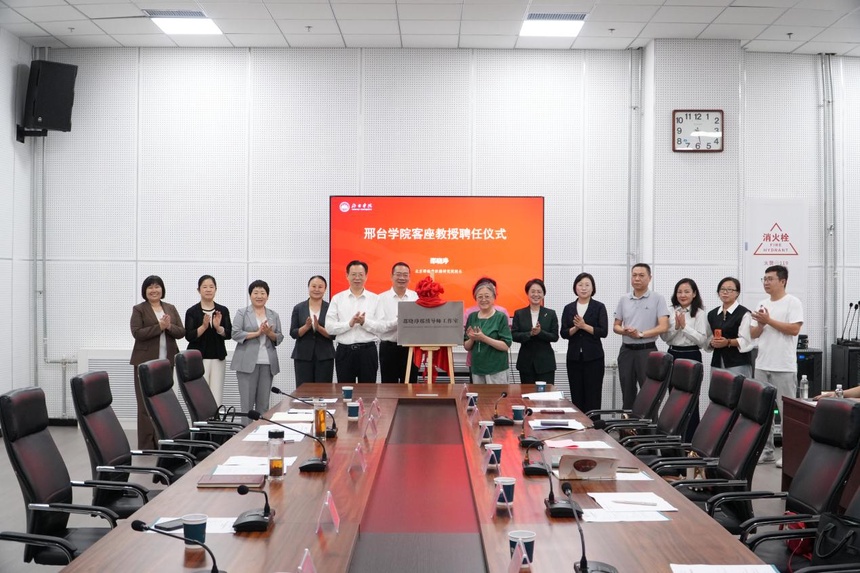
The appointment and mentor studio unveiling ceremony at Xingtai University. Photo courtesy of the event organizer.
On September 21, Xingtai University held a ceremony to appoint Xiaocheng Shao as a guest professor and unveil the Xiaocheng Shao Xingtai Embroidery Mentor Studio. Through the studio and course development, the initiative aims to bring research on Xingtai Embroidery (Xingxiu) into university aesthetic education and explore ways to combine the safeguarding and transmission of local traditional crafts with talent development.
Jia Yunxiao, secretary of Xingtai University’s Party Committee, said that appointing Xiaocheng Shao to guide the transmission of Xingtai Embroidery was intended to draw on her professional expertise to strengthen discipline development, talent cultivation, research innovation and cultural transmission, and to build a distinctive identity for the research and transmission of Xingtai Embroidery culture.
Xingtai Embroidery embodies thousands of years of aesthetic sensibility and creative ingenuity in the Xingtai region. Its stitches and patterns are closely connected with local work and daily life. As social life has changed, only some of its techniques remain within local communities, while related documentation is scattered. The research and revival work now being brought into the university stems from the sustained research that Xiaocheng Shao, director of the Beijing Shao Xiaocheng Textile and Embroidery Research Institute, began in 2011. She travelled repeatedly between Beijing and Xingtai, consulted documentary sources, visited Shahe, Julu, Ningjin, Qinghe, Lincheng, Longyao, Baixiang and Wei County, collected local embroidery pieces and sought out folk practitioners. Through repeated experiments and hands-on stitching, she researched, uncovered, revived and systematically organized Xingtai Embroidery stitches.
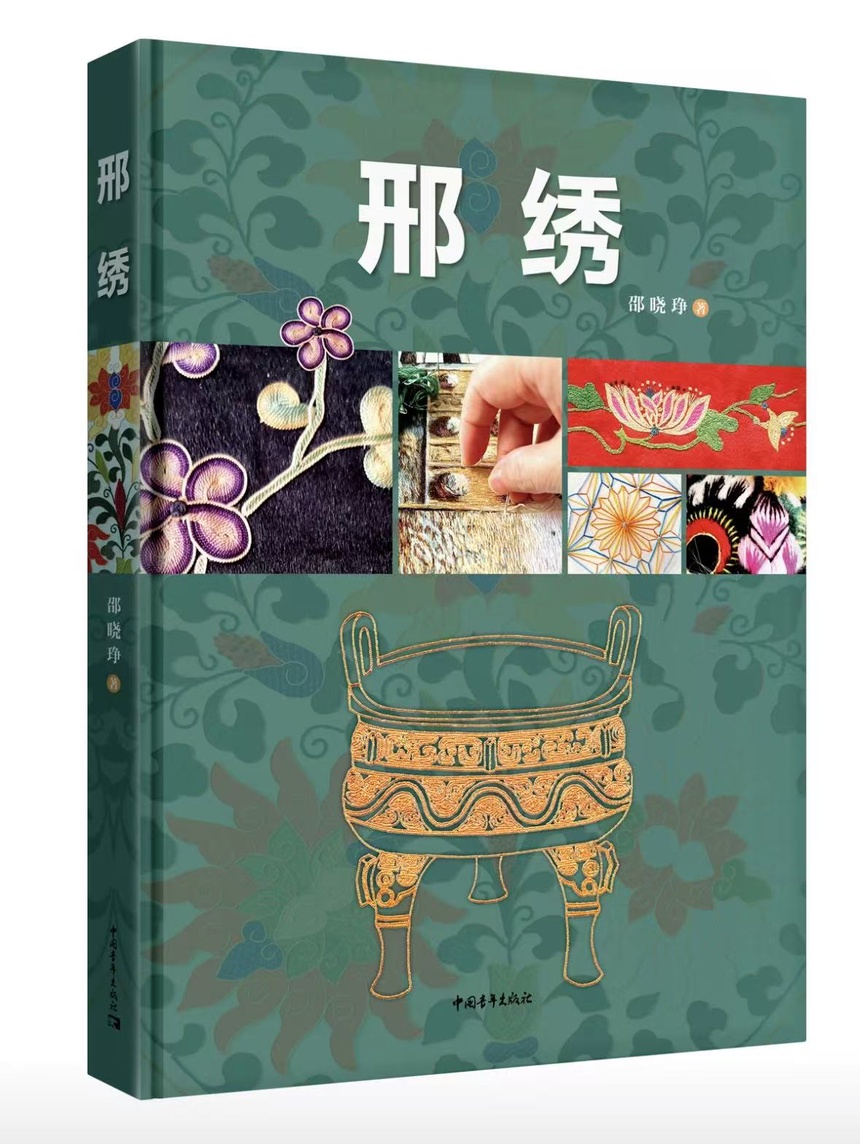
Xingtai Embroidery by Xiaocheng Shao, published by China Youth Press in 2024. Photo courtesy of the event organizer.
In 2024, Xingtai Embroidery, written by Xiaocheng Shao, was published by China Youth Press. Combining historical research with embroidery practice, the book uses stitch demonstrations, embroidered examples and learning cases to explain the characteristics and working methods of traditional Xingtai Embroidery techniques. It brings together factual knowledge, accessible explanation and technical detail, providing a reference for learning and transmitting the craft. Yao Xiao (Martin Xiao) participated in organizing related research materials, editing the manuscript, publishing and dissemination, and worked with Xiaocheng Shao on embroidery practice. Publication of the book systematically preserved research accumulated over many years and provided foundational materials for subsequent teaching and transmission.
Before this university collaboration, Xiaocheng Shao had already taught the revived and documented embroidery techniques to local learners through online training, lectures on Xingtai Embroidery history and teaching in Caozhang Village. These transmission activities connect with the new campus collaboration, further orienting Xingtai Embroidery safeguarding and research toward younger people and giving universities concrete material through which to take part in transmitting local culture.
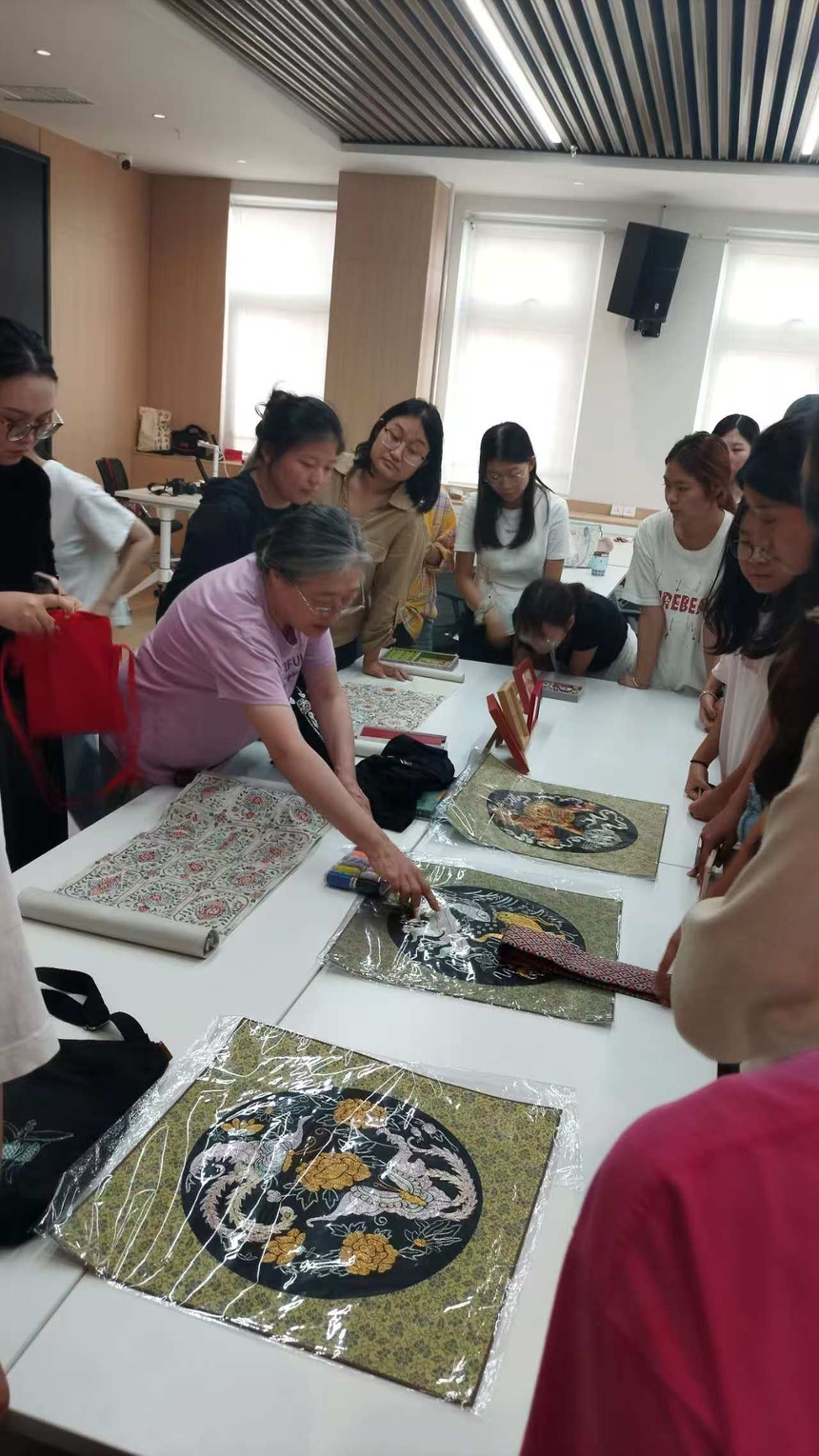
Embroidery works being demonstrated and discussed with participants. Photo courtesy of the event organizer.
Under the teaching arrangements, Xiaocheng Shao and Yao Xiao (Martin Xiao) will participate in teaching a general elective course in aesthetic education at Xingtai University. The course is planned to combine an introduction to Xingtai Embroidery’s history and culture, appreciation of traditional patterns and embroidery practice. It will help students recognize the connections between folk crafts and daily life, understand stitches, colour and composition through hands-on stitching, and develop their aesthetic abilities. The studio will provide space for related research, teaching and creative exchange, gradually nurturing a new generation of young people interested in understanding, researching and learning Xingtai Embroidery.
Long Sai, director of the Xingtai Municipal Bureau of Culture, Radio, Television and Tourism, said that the appointment and establishment of the studio explored a pathway for collaborative talent development among intangible cultural heritage safeguarding bodies, universities and specialist practitioners. He expressed the hope that all parties would work together through talent development and local collaboration to explore Xingtai Embroidery’s contemporary value and bring it into cultural and tourism development.
The initiative will build on existing documentary research and the organization of craft techniques, transmitting traditional crafts through teaching and deepening students’ understanding of local history and culture. “Please bring Xingtai Embroidery home,” Xiaocheng Shao wrote in the afterword to Xingtai Embroidery. That wish now has a new vehicle for transmission. The basis of this collaboration is to use courses and a studio at a local university to create conditions for sustained learning and practice in Xingtai Embroidery’s home region. As the courses develop, the craft may continue through young students’ learning and creative work, finding a home and flourishing in Xingtai.
Photos courtesy of the event organizer.
Source editor: Lu Na.