How to Examine and Preserve Embroidery Safely
Quick answer
Begin by observing the embroidery. Look for a weak ground fabric, broken or falling threads, painted or printed areas, earlier repairs, and anything you cannot identify. If the piece is historic, valuable, fragile, already damaged, or made from uncertain materials, stop before making changes and seek an assessment from a qualified textile conservator experienced in embroidered textiles.
This page is intended to help readers recognize visible risks and decide when to stop. It does not provide instructions for cleaning, pest treatment, remounting, or repair.
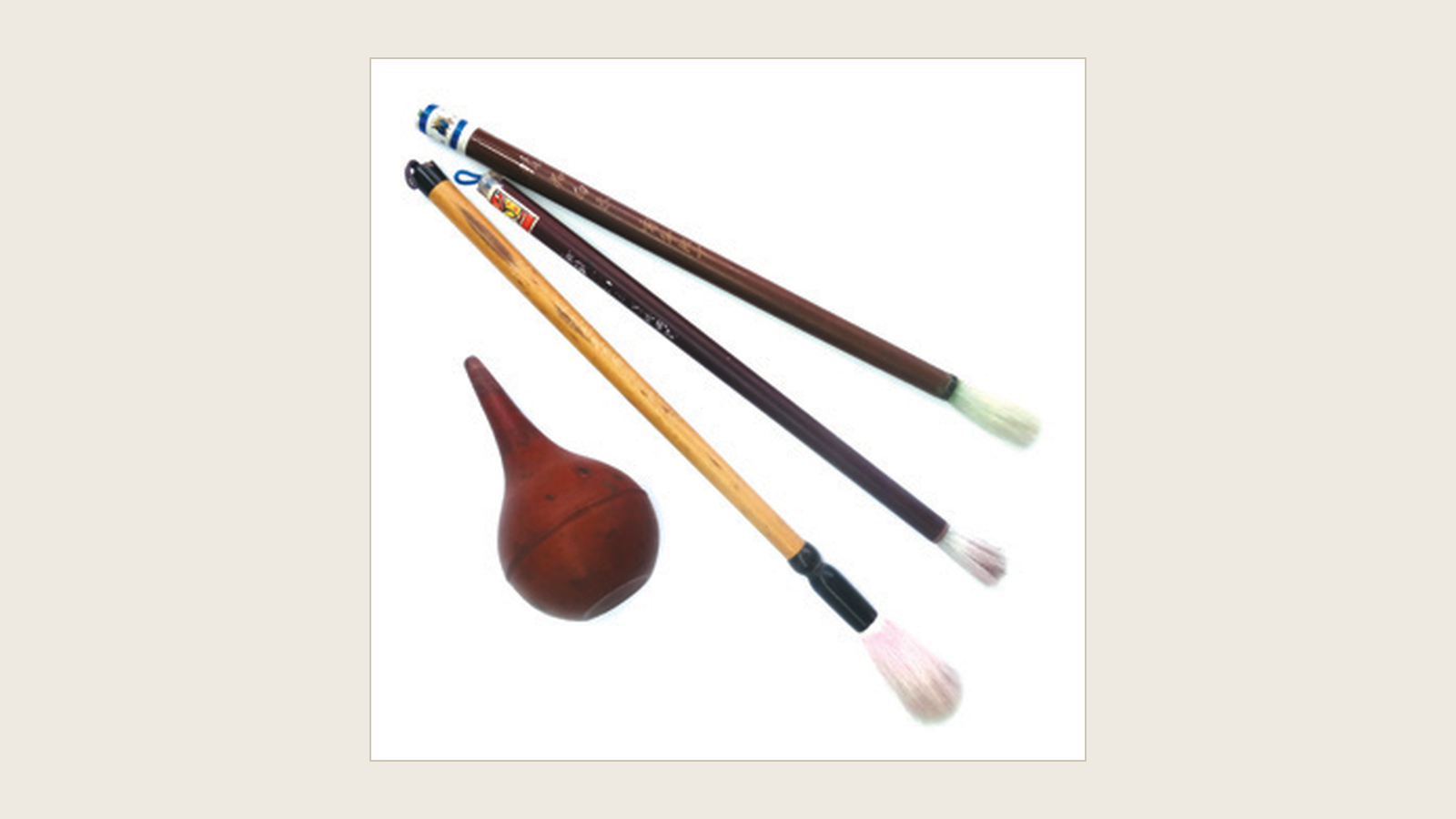
The illustrations below reproduce tools and protective arrangements documented by Shao Xiaocheng in Chinese Embroidery: An Illustrated Stitch Guide. They are included to clarify assessment and preservation questions, not as universal treatment instructions.
Observe the present condition
Start with what can be seen. Note the ground fabric, embroidery threads, backing, mount, and added materials. Look for broken or falling threads, visible weakness, color change, stains, and painted or printed areas. Record an uncertain feature as an observation rather than deciding what caused it or how it should be treated.
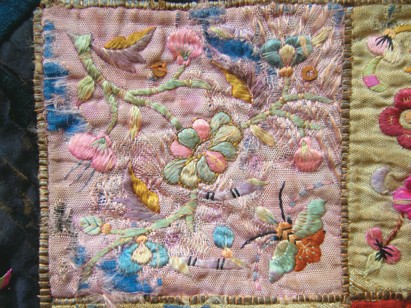
A stain, loose thread, weak area, or unfamiliar material is a reason to pause. When any part of the embroidery cannot be identified, or when a painted or printed area appears unstable, stop before taking action.
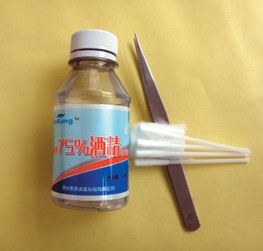
In the preservation chapter, Shao Xiaocheng documents a localized grease-removal setup using a small bottle, tweezers, and cotton swabs. The image is shown as documentary context: the presence of these materials does not mean that a stain or textile is safe to treat without material and condition assessment.
Limit unnecessary contact and movement
Handle or move an embroidery only when necessary. If it must be moved between places with noticeably different temperature or moisture conditions, consider that change before moving it. A fragile or damaged piece should be assessed by a textile conservation professional with experience in embroidered textiles before it is moved.
Treat display as a condition question
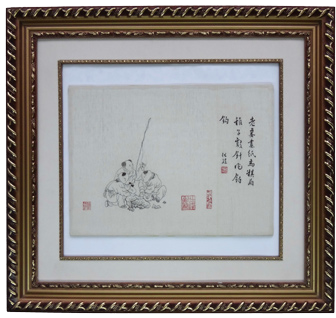
Framing may reduce casual touch and some dust, but it is not evidence that a mount is suitable for a particular embroidery. Chinese Embroidery: An Illustrated Stitch Guide cautions against leaving framed embroidery in direct sunlight for long periods and against gluing embroidery into a frame.
If a piece is fragile, damaged, or made from uncertain materials, ask a textile conservation professional with experience in embroidered textiles to assess it before changing its display.
Recognize storage risks
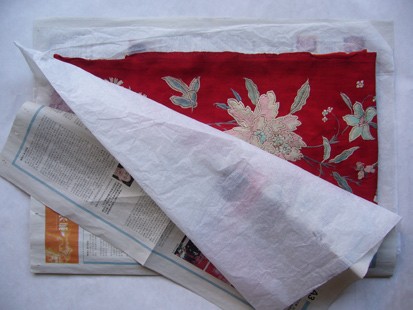
Chapter Six describes flat placement for embroidery that is not framed or hung. Whether that arrangement is appropriate for a particular piece depends on its construction, condition, and existing mount. Fragile, damaged, or materially uncertain embroidery should be assessed before its storage arrangement is changed.
When not to treat an embroidery yourself
Stop and seek an assessment when:
- the embroidery is historic, valuable, fragile, or difficult to replace;
- the ground fabric appears weak or the embroidery threads are broken, loose, or falling away;
- painted or printed areas are present, or another material cannot be identified;
- the piece already has damage, staining, an earlier repair, or an unfamiliar mount;
- the materials or previous treatments cannot be identified.
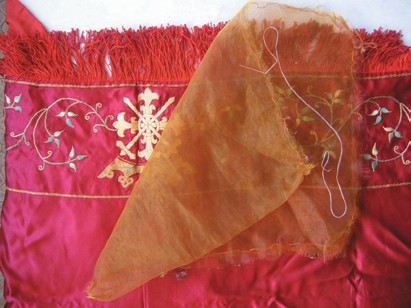
The same chapter also illustrates a gauze cover used during gentle washing. It is shown here to make the protective arrangement visible, not to suggest that washing is suitable for every embroidery.
In these situations, consult a qualified textile conservator experienced in embroidered textiles before making further changes to the piece.
Institute publication and editorial basis
This article extends the Chinese Embroidery Institute’s existing research and editorial work. Chinese Embroidery: An Illustrated Stitch Guide was written by Shao Xiaocheng.
Shao Xiaocheng, Chinese Embroidery: An Illustrated Stitch Guide, Chapter Six, “Selection, Collection, and Preservation of Embroidery,” pp. 163–175, especially the condition and preservation discussion on pp. 171–175.
Related reading and contact
For visual criteria used when examining workmanship, see How to Recognize Fine Chinese Embroidery. Use Contact to ask what information may be needed before requesting an assessment.
Leave your comment
Related posts