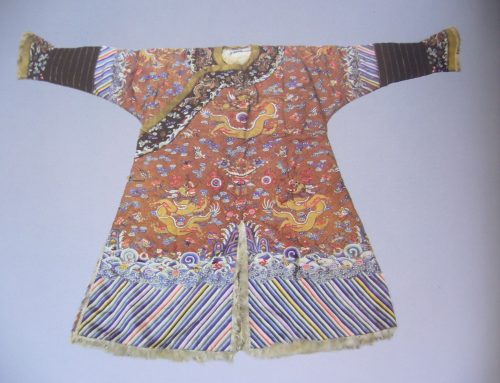
Yang Shouyu and Random-Stitch Embroidery: How Chinese Embroidery Learned to Paint Light
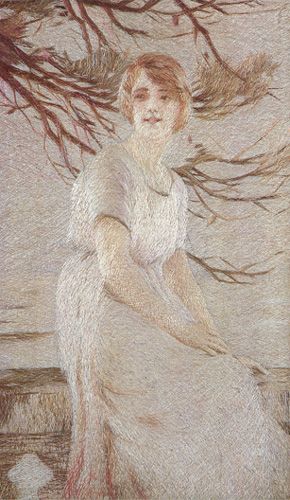
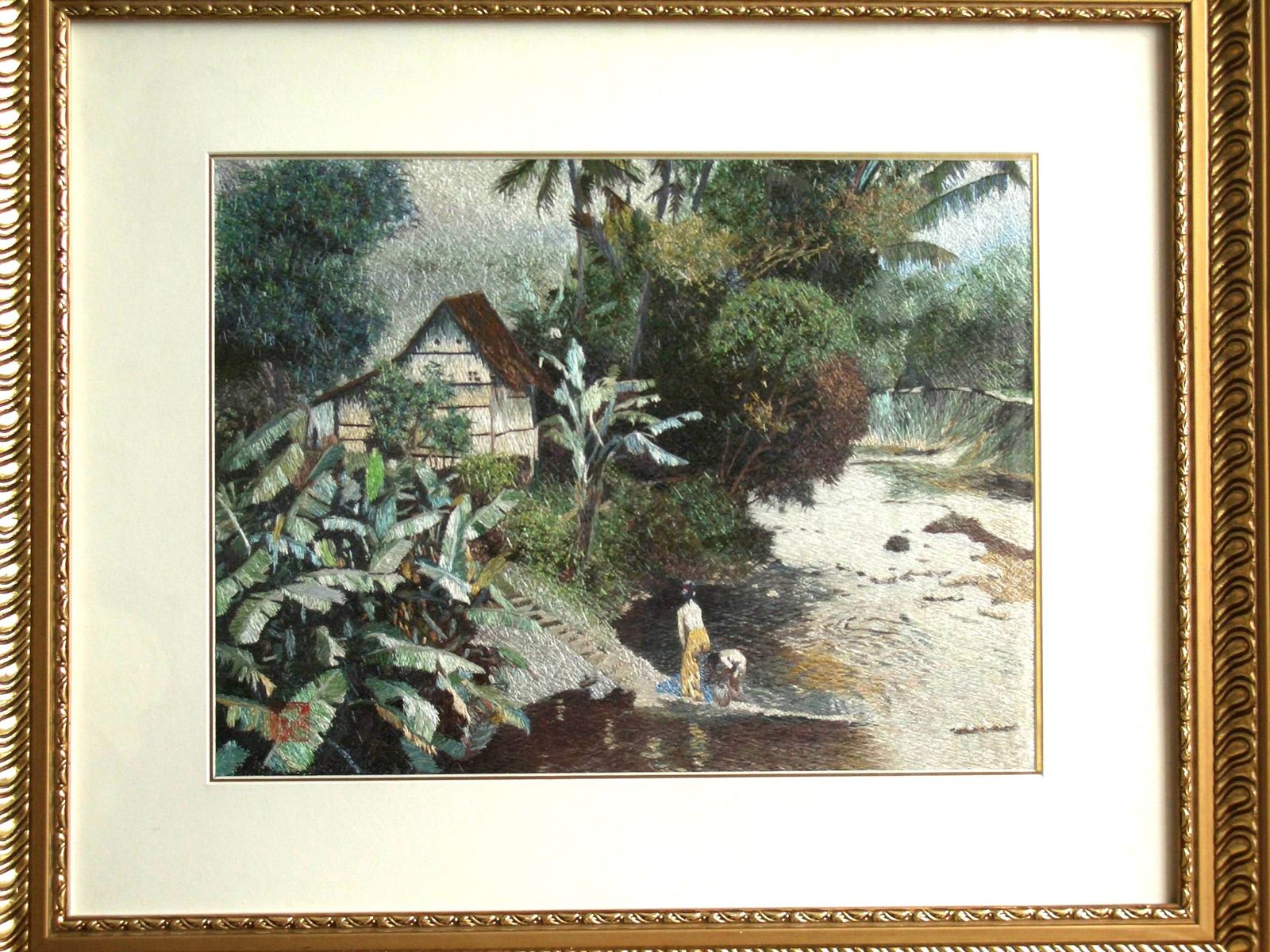
For centuries the ideal of Chinese embroidery was order: stitches laid side by side, edges crisp, the surface glossy with “not a single thread out of place”. Then, in the 1930s, a teacher in Danyang, Jiangsu, did something that looked like chaos. Our Institute’s book Treasury of Chinese Embroidery Appreciation (《中国刺绣鉴赏宝典》) calls her new method “a revolution in modern embroidery history”. Her name was Yang Shouyu, and the technique is random-stitch embroidery, luanzhen xiu (乱针绣).
Innovation before Yang: faces and tigers
The book reminds us that Chinese embroidery has always grown through invention. In early Xiang embroidery, Xiao Yongxia met the elderly writer Fan Zengxiang, wrinkled and balding, and wanted to capture his weary look. She invented the “face-opening stitch” (开脸子针), following the direction of the facial muscles and wrinkles. Because the changing thread directions reflected light unevenly, it looked right only from a distance and never spread, but it was an important experiment in portrait embroidery.
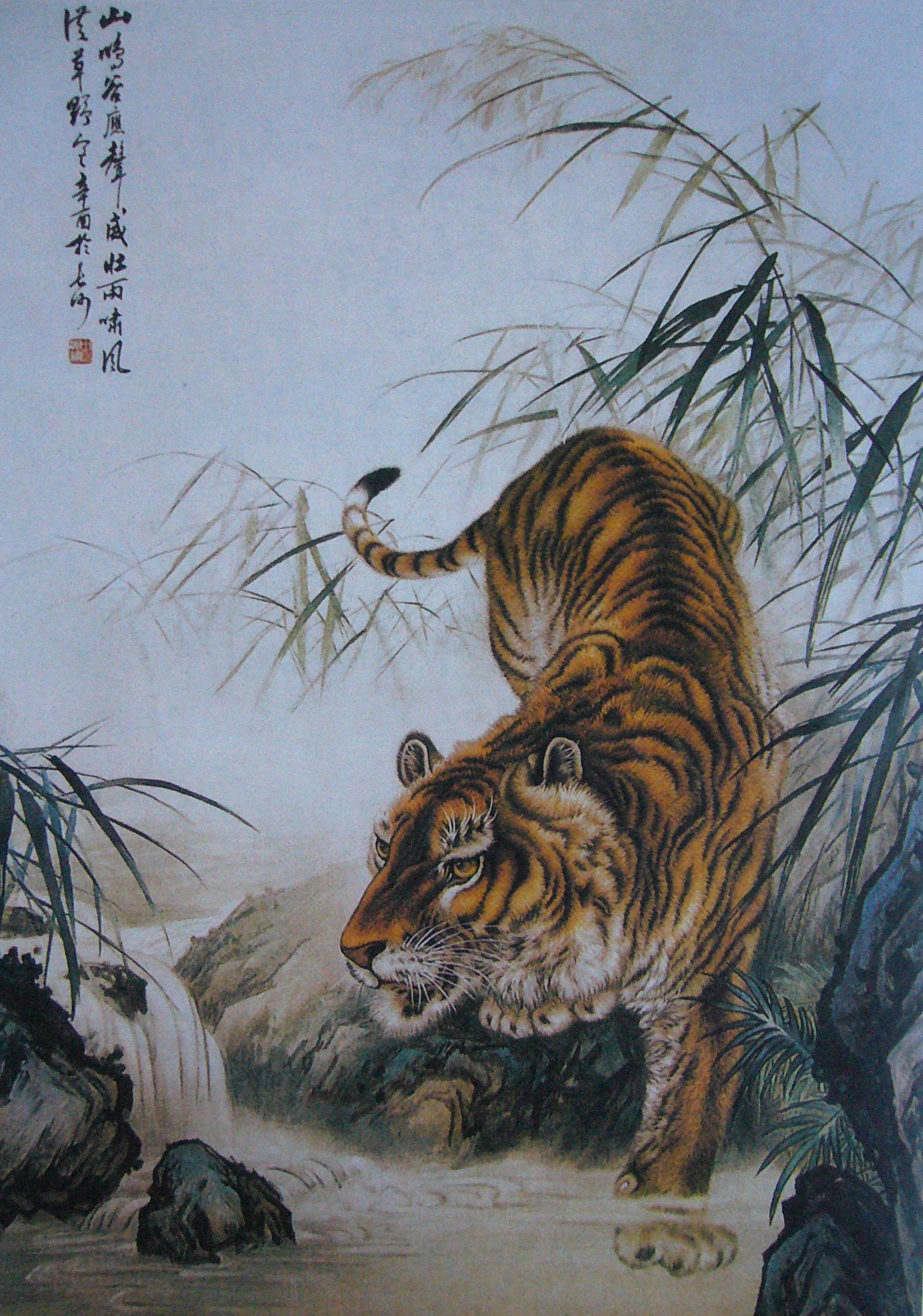
Xiang embroidery tigers were once flat and lifeless, nicknamed “rubber tigers”. Embroiderers developed the “bristling-hair stitch” (鬅毛针): threads fan out, coarser and sparser at one end, finer and denser at the other, so the fur seems rooted in the skin and standing up. The embroiderer Yu Zhenhui combined it with dozens of other stitches, and Xiang tigers became famous.
Then came Shen Shou. Her husband Yu Jue, a scholar, chose designs for her and explained the principles of painting. In 1905 the couple spent two months in Japan studying how Japanese embroidery had absorbed perspective and light from Western painting and photography. Back home, Shen Shou combined traditional Chinese stitches with Western light and shade to create “lifelike” embroidery (仿真绣), which the book calls a monument of late-Qing embroidery. Each of these steps moved embroidery closer to painting.
Hua Ji: raising the curtain
Hua Ji (1870–1940) of Wuxi went further. She took Western watercolours and oil paintings as her designs and let stitches run freely, in varied lengths and directions, using blended threads for light and shade. The book says she challenged the old idea that stitching must be flat, even and glossy, and “raised the curtain” for Yang Shouyu’s random stitch. She won a gold medal at the 1915 Panama-Pacific Exposition.
Yang Shouyu: painter, teacher, embroiderer
Yang Shouyu (1896–1981) came from a scholarly family in Wujin, Jiangsu, and learned embroidery from her cousin as a girl. She became a favourite student of the painter and educator Lü Fengzi, and taught painting and embroidery at the Zhengze girls’ school he founded in Danyang. That is why random stitch was first called Zhengze embroidery (正则绣).
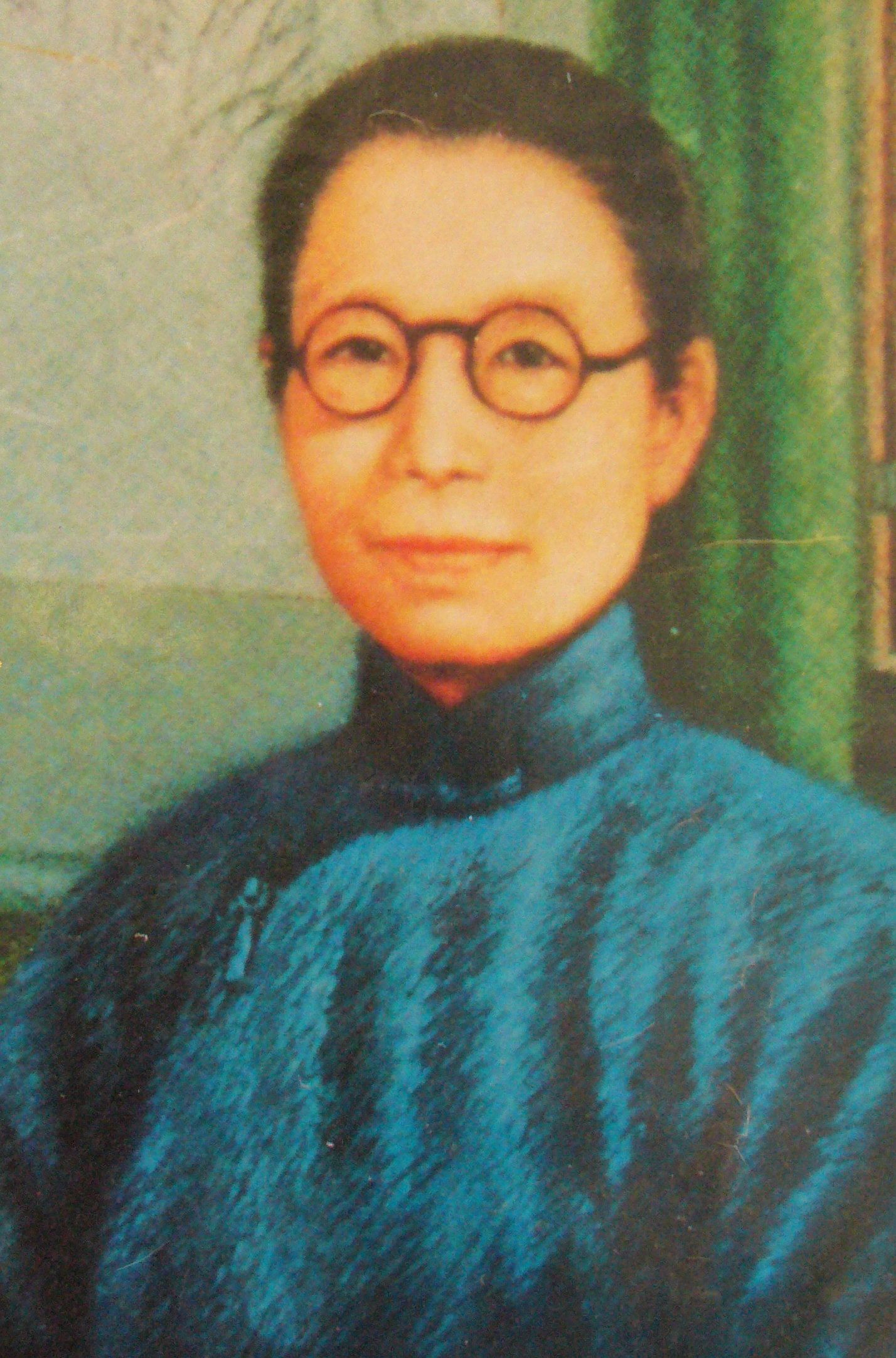
Drawing on sketching, oil painting and photography, she developed a method of long and short stitches that cross one another and are built up in layers of colour. Her first attempts, Portrait of an Old Man and Child, were immediately admired. The book calls it “new ideas carried out by new methods”. She taught for more than thirty years, though sadly most of her works have been lost.
How random stitch works
Traditional Chinese embroidery lays stitches close together in one direction. Random stitch does the opposite:
- Crossing lines: stitches of different lengths cross at angles, like pencil hatching.
- Layered colour: colours are built up in several layers, so they mix optically, as in oil painting.
- Light and shade: it can show the effects of oil painting, watercolour and photography.
- Visible texture: the surface is lively rather than glossy and smooth.
The book notes that the “randomness” is only apparent. Every stitch is placed for a reason, and the method demands strong drawing skills.
Breaking the old rules
To see how bold this was, compare it with the classical standard. In 1821 Ding Pei’s Xiu Pu (《绣谱》) summed up good embroidery in seven words: even, lustrous, straight, uniform, thin, smooth-flowing and dense. Stitches should lie in the same direction, edges should look “cut with sharp scissors”, and the surface should be “flat as spring water”.
Random stitch keeps the care and discipline behind those rules but abandons their look. Instead of a glossy, even surface, it builds an image from visible, crossing strokes. The book says its appearance “completely overturned” the traditional ideal of neatly arranged stitches and a smooth, shining surface, and that people found it refreshing and greatly admired it.
Three masterpieces
Young Girl (少女, 1947) shows a girl in a white dress against a pale background, with soft, hazy colour and luminous skin. The book calls it deeply sincere and moving.
Beauty and Goose (美女与鹅), based on a Greek myth, sets a young woman beside a white goose before a quiet forest. Her soft hair and fine skin, made of long and short stitches, have real texture and depth.
Beauty and Skull (美女与骷髅) contrasts a young woman full of life with a faint skull in the background, a meditation on life and death that the book says reveals Yang’s depth of thought.
Random stitch today
About eighty years on, random stitch is practised across China and used for a very wide range of subjects. The book holds it up as a model of innovation in Chinese embroidery. It also gives a practical warning for portrait work: one random-stitch portrait in the book uses more than thirty shades of grey-black thread on a hand-drawn outline, with no painted ground, so its colours will not change. The author advises never to embroider portraits over a computer-printed image, because printed inks fade and alter the likeness over time.
Frequently Asked Questions
What is random-stitch embroidery (luanzhen xiu)?
A technique created by Yang Shouyu in the 1930s, using crossing stitches of different lengths built up in layers of colour to show light and shade like a painting or photograph.
Why was it called Zhengze embroidery?
Because Yang Shouyu developed it while teaching at the Zhengze school in Danyang, founded by Lü Fengzi.
Is random stitch harder than traditional embroidery?
It is different. It needs strong drawing and colour skills, because the embroiderer builds the image like a painter.
Can I commission a random-stitch portrait?
The Institute accepts commissions, including portraits. Contact us to discuss your photo and size.
Random stitch rewards anyone who loves drawing. The Chinese Embroidery Institute teaches both traditional and modern techniques online and in Beijing, in Chinese with professional, embroidery-specialised AI translation, and accepts commissions, including portraits. Contact us to begin, and see our tools and materials (available by inquiry).
Leave your comment
Related posts