How to Spot Faked “Antique” Chinese Embroidery: A Collector’s Guide
As interest in collecting Chinese embroidery has grown, so has the number of pieces that have been artificially aged or faked. Our Institute’s book Appreciation and Investment of Chinese Embroidery and Kesi through the Dynasties (《中国历代刺绣缂丝鉴赏与投资》) devotes a whole section to these methods. Its authors note that the people who make them often know a good deal about historical textiles, so spotting a fake can be a real challenge.
The book’s advice begins with attitude: learn the common methods, observe carefully, don’t simply believe what you are told, and keep asking questions until every doubt is answered. This guide summarises its main points.
Older is not automatically better
The book warns that age alone does not make an embroidery more valuable. Embroidery from the Shang, Zhou, Han and Tang periods usually survives in poor condition, mostly as fragments. Its academic value is higher than its value for appreciation, and it needs research teams and demanding conservation that a private owner cannot provide. If you do collect early pieces, do not give up on condition.
Instead, collectors are advised to aim at the representative masterpieces of each period, such as Gu-style and Shandong embroidery of the Ming, works by noted embroiderers of the Ming, Qing and Republican periods, and Ming and Qing court embroidery. These follow recognisable rules of stitch, motif and colour, which can be compared with the historical context.
Clues in the ground fabric and wear
The weave of the ground fabric can help with dating. For example, the book notes that five-end satin is known from the Yuan dynasty at the earliest, and eight-end satin is generally not earlier than the Qing, more likely mid to late Qing. Identifying weaves precisely may need a textile specialist or laboratory tools, but reading about them helps.
Look at wear, too. Everyday objects show more wear than pieces for appreciation, and folk pieces more than court pieces. Mounted scrolls and albums are usually well kept, so their wear is low and uneven. Wear on a faked piece, by contrast, tends to be suspiciously even and unnatural.
Fake 1: smoke and colour staining
Smoking is a common way to make new work look old: the surface is yellowed to suggest age. Compare the colour of the front and back. If the back is brighter than the front and the piece smells clearly of smoke, it has been smoked.
Staining works like faking the age of a painting: plant liquids such as tea, or pigments such as ochre, indigo and red, are sprayed or brushed on to dull the colours and add spots. Check the threads: if they have lost their natural springiness, are stuck together, or are dried hard onto the fabric with no give, the piece has been stained. Smoke and stain are sometimes used together.
Fake 2: artificial insect damage
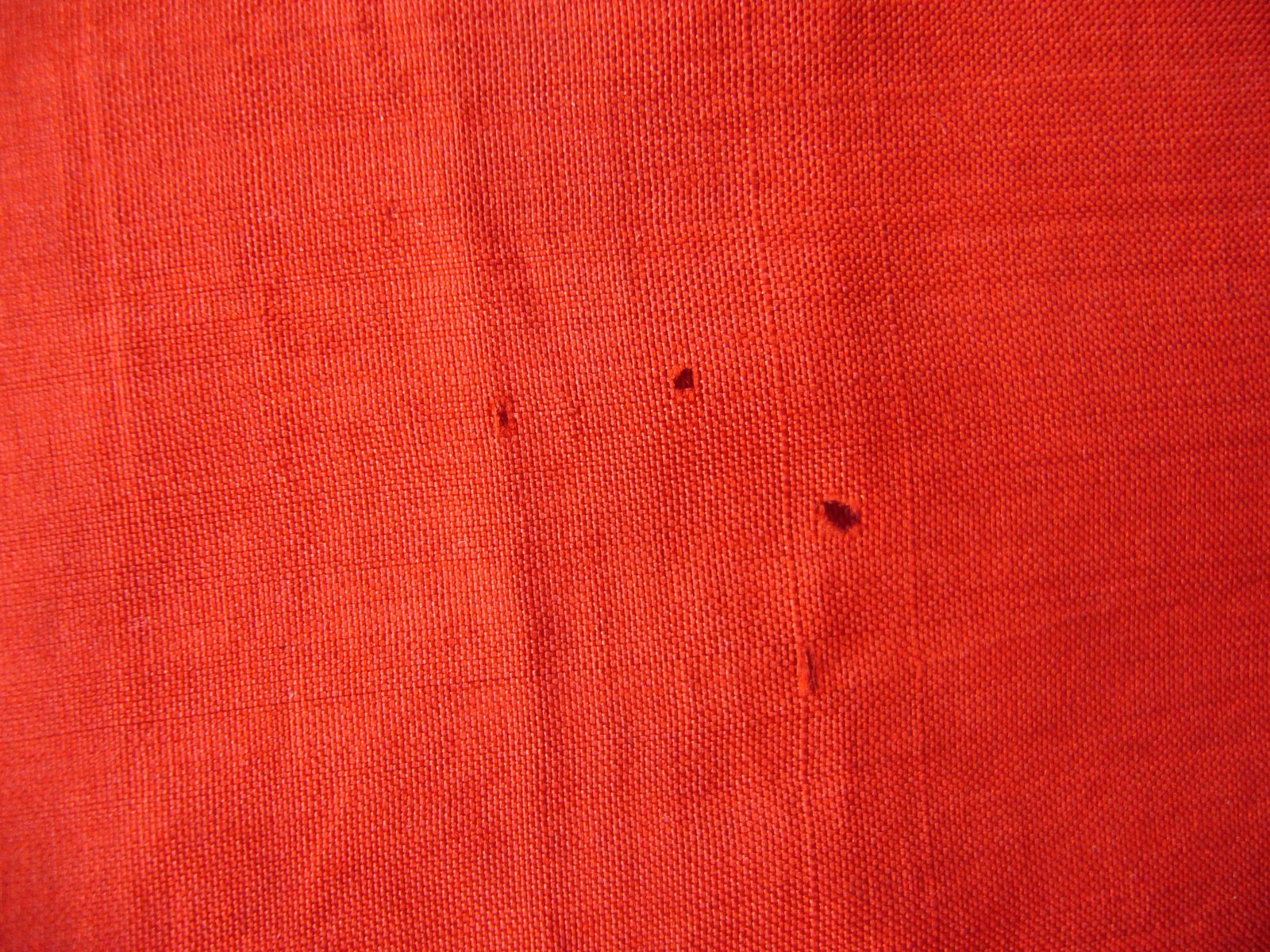
Old silk is easily eaten by insects, so some fakers deliberately let insects eat a piece. Ask whether the holes look natural. If there are too many, or they sit conveniently around the edges of the main design without spoiling it, they are probably man-made. Real insects do not choose only the unembroidered areas.
Fake 3: old fabric, new embroidery
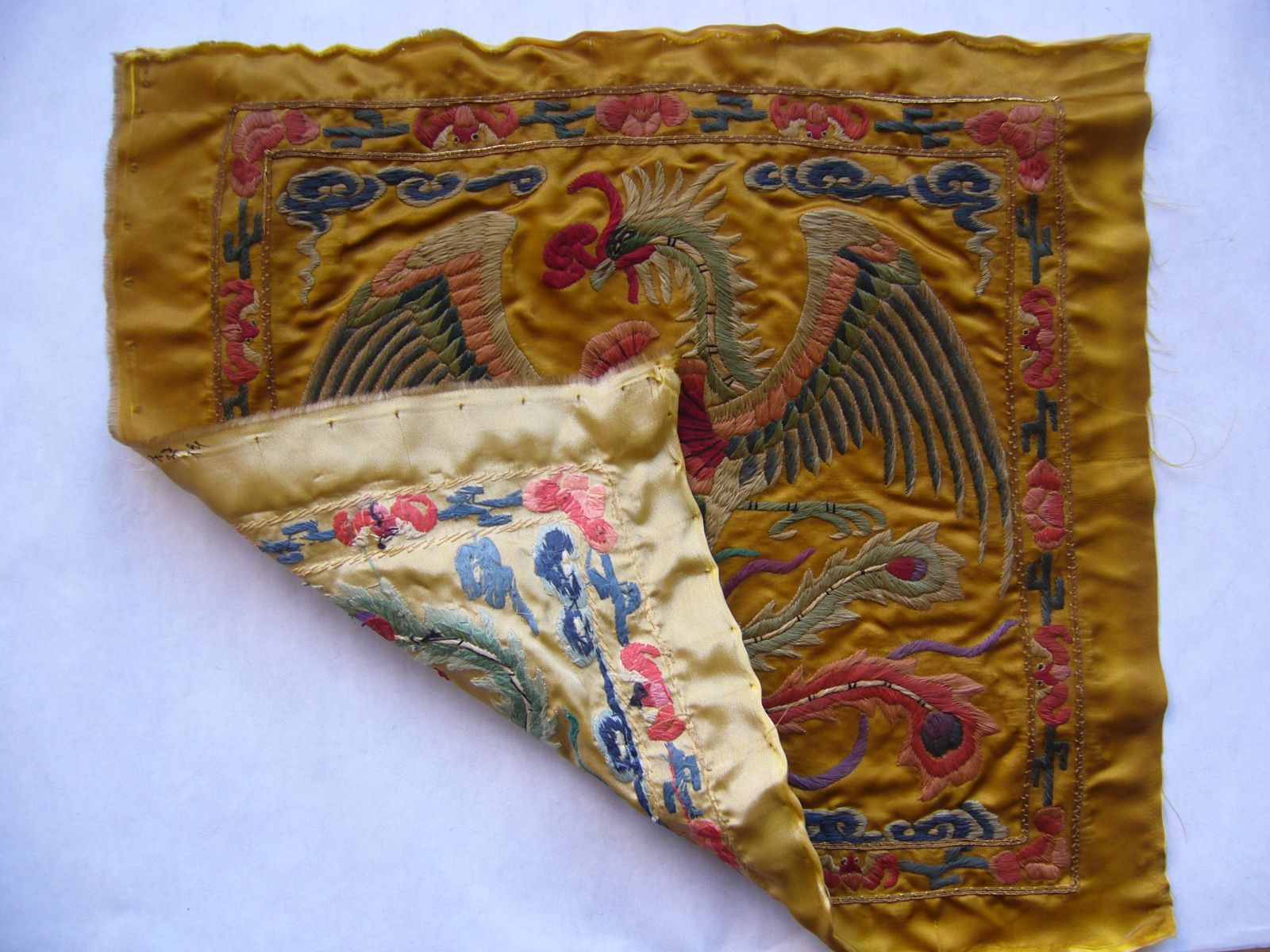
Higher-level fakes start with genuinely old silk, such as plain satin quilt covers collected from old households, which is then embroidered with a suitable design by a skilled embroiderer. A fake signature and collector’s seals may be added. The book notes that such pieces tend to appear at major auctions at startling prices.
The answer is to reconstruct the historical context. Know the silk materials, stitches and styles of each period; ask which school and region the piece belongs to; and check whether the ground and the threads share the same age and spirit. If you are still unsure, the book’s advice is simply to walk away for now.
The special case of dragon robes
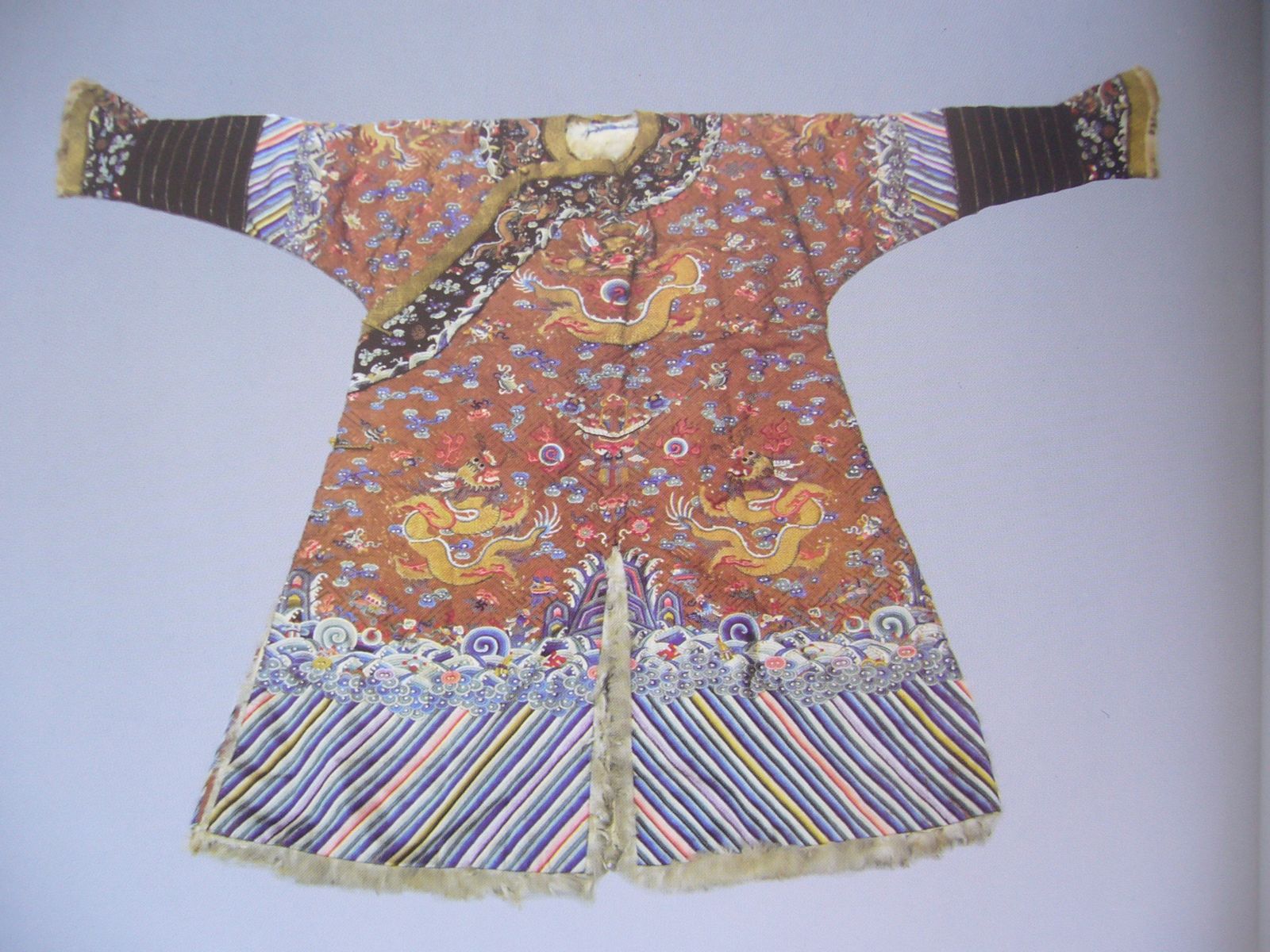
Dragon robes are often a collector’s first choice, but the book is cautious. Court robes were made under strict rules, and some emperors designed the patterns themselves. Collectors can ask the Palace Museum how many registered garments ever left the palace: if the number is tiny, the flood of embroidered dragon robes on the market is questionable. Informal court clothing, such as jackets and vests, is a more realistic target.
The book also describes how fake robes are produced today: embroiderers from different villages each make one part, gold couching or satin stitch, while others cut, sew or age the piece, under a supervisor with some technical knowledge.
More practical checks
- Always look at both sides if a piece is framed rather than mounted; flaws often show up when front and back are compared.
- Look for drawing marks. Traditional designs were traced with a brush. Pencil, ballpoint or marker lines show when the piece was made.
- Check for a printed ground. Many modern pieces are stitched over a computer-printed colour image, which simplifies colour work and weakens regional style.
- Judge the art, not only the craft. Fine historical works were made regardless of cost. Stiff, flat stitching or passages that make no sense in the painting are warning signs.
A note on prices
Our books include auction results from 1998 to 2011. These are historical records of what particular pieces fetched at particular sales, not a guide to what any piece is worth today. Condition, authenticity and provenance matter far more than any old price list.
Frequently Asked Questions
How can I tell if embroidery has been smoked to look old?
Compare the front and back. A back that is brighter than the front, together with a smoky smell, is a strong sign of smoke-aging.
Are insect holes a sign of genuine age?
Not necessarily. Holes that are very numerous or that conveniently avoid the main design may have been made on purpose.
Can I use old auction prices to value my piece?
No. Past results only record what certain pieces sold for at the time. Ask a specialist to assess your piece’s authenticity and condition.
Thinking of buying or already own a piece you are unsure about? Send us clear photos of the front, back and details for a remote initial review, or contact us.
Leave your comment
Related posts