How to Recognize Fine Chinese Embroidery: 8 Signs of Workmanship
How to Recognize Fine Chinese Embroidery: 8 Signs of Workmanship
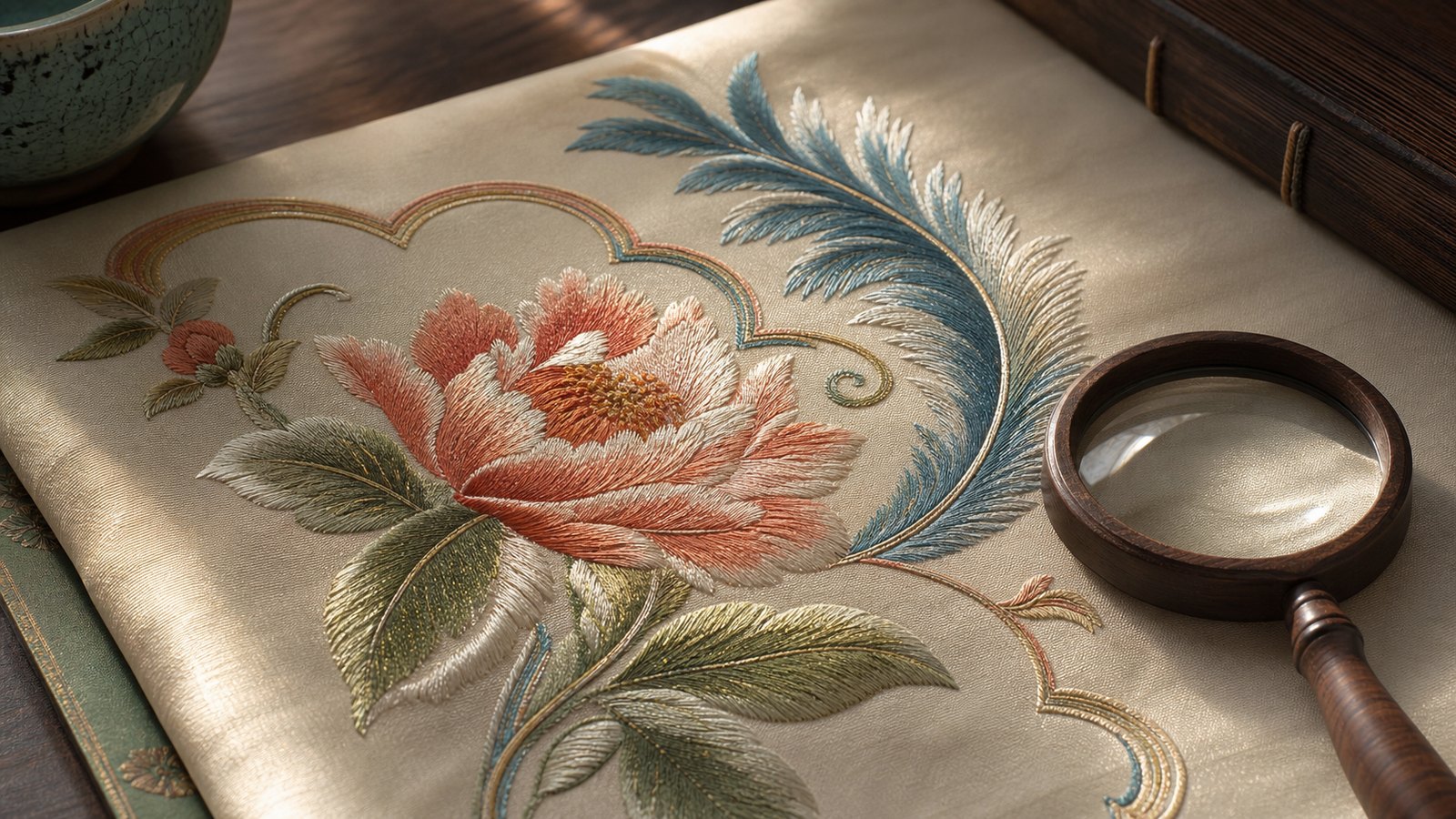
Fine Chinese embroidery is not defined by stitch count alone. A strong work brings design, thread, fabric, color, direction, density, sheen, and purpose into one coherent surface. The most useful way to look at it is therefore not to ask, “How many stitches were used?” but, “How well does every textile decision support the image or object?”
This guide offers eight signs that can help viewers examine workmanship. It is a framework for appreciation, not a method for authenticating age, authorship, regional origin, or market value.
Quick Answer
Look for a surface that lies flat, threads that are orderly without appearing mechanical, clear contours, purposeful stitch direction, harmonious color, controlled silk sheen, clean finishing, and a convincing relationship between technique and subject. Fine work should reward both distant viewing and close inspection.
The standard also depends on purpose. A washable household textile should be attractive and durable. A pictorial embroidery made for display may prioritize subtle color, fine silk, visual depth, and an exceptionally controlled surface.
1. Evenness Without Lifeless Uniformity
Evenness means that threads appear orderly and appropriately spaced. Areas intended to be covered should not look accidentally thin, congested, or inconsistent. Repeated elements should feel related to one another.
This does not mean every stitch must look identical. Natural subjects often require changes in length, angle, or spacing. The question is whether those changes look intentional and help describe the form.
At a normal viewing distance, uneven work may show as stripes, gaps, abrupt bands, or patches that reflect light differently for no pictorial reason.
2. A Flat, Stable Ground
The fabric ground should remain visually calm. Puckering, pulling, ripples, or distorted weave can interrupt the design and may indicate that thread, tension, fabric, or working order were not well coordinated.
Flatness is especially important in pictorial embroidery, where the surface acts like the field of a painting. Historic textiles may have creases, mounting strain, or later damage, so present condition must not be confused automatically with original workmanship.
3. Clear Contours and Convincing Forms
Good contours appear deliberate. A petal edge, bird wing, facial feature, or geometric boundary should not dissolve into accidental irregularity. Where a line is meant to be soft, the transition should still feel controlled.
The best embroidery does more than trace an outline. Thread direction and density help a form turn, overlap, recede, or come forward. When a subject looks stiff despite great effort, the problem may be structural rather than merely decorative.
4. Harmonious Color
Color harmony does not require a muted palette. A work may be quiet or brilliant, but its colors should support one another and serve the subject.
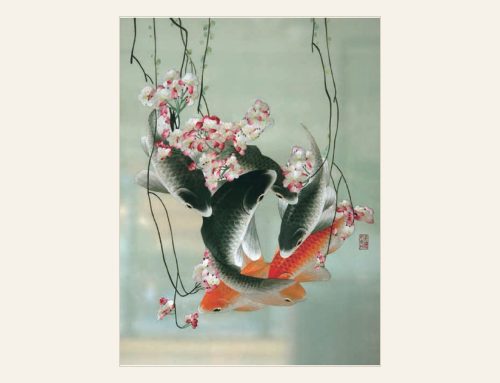
In pictorial work, tonal changes may model depth, light, fur, feathers, skin, water, or foliage. In decorative and festive textiles, stronger contrasts may create rhythm and visual energy. Strong work balances local detail with the effect of the whole composition.
5. Controlled Sheen and Light
Silk changes as the viewer or light source moves. This is not a side effect; it is one of embroidery’s most powerful visual resources.
Stitches placed in different directions reflect light differently. A skilled embroiderer can use this to clarify form or texture. View the work from more than one angle if conditions allow and ask whether the changing sheen strengthens the design.
6. Smooth Directional Flow
Thread direction should follow the visual movement of the subject. Curves ought to turn without obvious stiffness. Adjacent areas should meet in a way that feels planned rather than patched together.
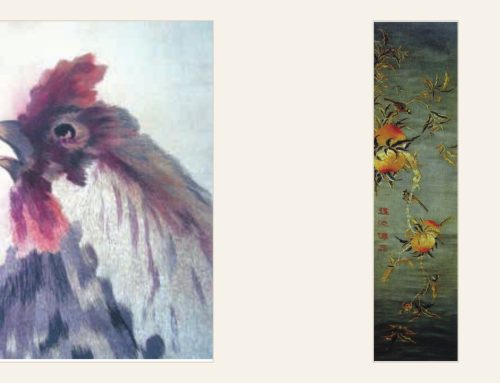
In a flower, direction may help petals open; in feathers or fur, it may suggest growth and layering. Knowing that direction matters is not the same as knowing the working order, hand movement, transition method, or correction strategy. Those practical skills require demonstration and feedback.
7. Fineness That Serves the Image
Very fine silk and dense stitching can produce remarkable detail, but fineness is valuable only when it improves the work. Tiny stitches cannot rescue a weak design, confused color, or rigid form.
Fine treatment should be selective. A face, feather edge, or distant detail may need a different scale from a broad leaf or border. A bolder household or ceremonial textile can be excellent without imitating the microscopic surface of pictorial silk embroidery.
8. Integration, Cleanliness, and Individual Character
The highest level of workmanship is integration. Different stitches and materials should not compete for attention. They should work together so that viewers first encounter a coherent image or object and then discover the craftsmanship.
The visible surface should also be clean. With older embroidery, however, condition must be described separately from artistic quality, and wear may be historically important. Finally, look for character: a work that imitates a popular image without understanding form, material, or regional language may appear impressive yet remain visually shallow.
Daily-Use Embroidery and Embroidery for Display
The same checklist should not be applied mechanically to every textile.
For daily-use embroidery, examine whether the object is attractive, structurally appropriate, durable, and suited to handling or wear. The ground, thread, edge treatment, and density should support its practical role.
For embroidery made primarily for appreciation, place more emphasis on pictorial coherence, subtle thread direction, color relationships, visual depth, controlled sheen, and fine finishing. The textile may be mounted or framed and viewed like a work of art.
Many objects sit between these categories: a garment, pouch, sleeve band, or furnishing may be practical and artistically ambitious at the same time.
What Visual Inspection Cannot Prove
Good workmanship does not by itself establish that a textile is old, made by a famous embroiderer, or produced in the region claimed by a seller. Authentication may require:
- reliable ownership and exhibition history;
- comparison with documented works;
- knowledge of period materials, construction, motifs, and inscriptions;
- examination of the front, reverse, ground, mounting, and later repairs;
- technical analysis or specialist conservation advice.
Be cautious when photographs, a regional label, a signature, or a story are offered as complete proof. For valuable or historically important embroidery, consult a qualified textile specialist, conservator, curator, or experienced appraiser. Do not clean, unmount, or test an old textile merely to investigate it.
A Simple Viewing Practice
Without touching the textile, begin at a distance and then move closer:
- Read the whole composition before focusing on technique.
- Notice where your eye travels and whether the main forms remain clear.
- Compare thread direction in two neighboring areas.
- Observe the surface under slightly different viewing angles.
- Separate workmanship from later condition or mounting problems.
- Record questions instead of making a premature attribution.
This practice develops visual attention while avoiding the false confidence of a quick “authentic or fake” checklist.
Continue Learning
The Chinese embroidery stitches guide explains the main stitch families and their visual roles. The Digital Museum and history overview provide additional material for comparison.
Seeing quality is the beginning; producing it requires a different level of knowledge. Thread preparation, working order, fine changes of direction, tension, transitions, starts and finishes, and error correction are deliberately not turned into a complete online recipe here. These practical systems belong in demonstration-led study and guided exercises. See Classes & Courses for deeper instruction.
Frequently Asked Questions
Is finer embroidery always better?
No. Fineness should serve the subject and purpose. A strong practical or ceremonial textile may use bolder materials and still show excellent design and workmanship.
Can I judge embroidery quality from a photograph?
Only partly. A photograph can show composition, color, and some surface details, but it may conceal sheen, texture, mounting strain, repairs, and the reverse.
Does a clean-looking textile mean it is new?
No. Condition depends on storage, use, mounting, restoration, light exposure, and many other factors. Clean appearance alone cannot determine age.
Should I clean old embroidery before examining it?
No. Water, detergents, solvents, pressure, and unmounting can cause irreversible damage. Historic or valuable textiles should be assessed by a qualified conservator.
Can these eight signs authenticate an embroidery?
No. They help viewers discuss workmanship. Authentication and valuation require additional historical, material, technical, and provenance evidence.
Editorial Source Notes
- Shao Xiaocheng, Chinese Embroidery: An Illustrated Stitch Guide, Introduction, pp. 15–20; Chapter Six, pp. 163–170.
- 邵晓琤,《图说刺绣艺术》,representative work discussions in Chapters Two and Three.
- This article reorganizes the Institute’s published research into a public viewing framework. It does not reproduce detailed diagnostic tests, full technique sequences, measurements, project instructions, or Shao Xiaocheng’s books’ illustrations.
Institute publication and editorial basis
This article extends the Chinese Embroidery Institute’s existing research and editorial work. The Illustrated Art of Embroidery (《图说刺绣艺术》) was written by Shao Xiaocheng, with Martin Xiao (Xiao, Yao) as responsible editor. Chinese Embroidery: An Illustrated Stitch Guide was written by Shao Xiaocheng.
Leave your comment
Related posts