Gu-Style and Shandong Embroidery: South and North in the Ming Dynasty
The Ming dynasty is often remembered for porcelain and painting, but it was also a turning point for Chinese embroidery. In the history chapter of our English book Chinese Embroidery: An Illustrated Stitch Guide, Shao Xiaocheng writes that there were no real “schools” of embroidery in the Ming dynasty yet. Instead, two styles stood out as representatives: Gu-style embroidery (gu xiu) in the south and Shandong embroidery (lu xiu) in the north.
They could hardly be more different. One is delicate, soft and painting-like; the other is bold, simple and robust. Looking at them side by side is one of the best ways to understand how varied Chinese embroidery can be.
Between the Song legacy and the Qing schools
To understand Gu-style and Shandong embroidery, it helps to see where they sit in history. Our book describes the Song dynasty as a high point of realism, when embroiderers divided threads extremely finely to copy paintings, such as an embroidered eagle close in spirit to the Imperial Eagle of Emperor Huizong. In the Yuan dynasty, research has found a rare “fishing-net” embroidery that later generations hardly knew.
By the Qing dynasty, embroidery spread across China in great numbers and variety, and the four major schools of art embroidery gradually took shape. The Ming dynasty stands between these two worlds: it carried forward the Song and Yuan legacy, and prepared the way for the Qing schools. For the wider timeline, see our history of Chinese embroidery; for the silk behind painting-like work, see Song and Gu embroidery threads.
Gu-style embroidery: painting with a needle
Gu-style embroidery inherited the delicate use of silk found in the embroidered calligraphy and paintings of the Song dynasty. It is marked by soft, tender colours and extremely thin threads produced by thread division, that is, splitting a silk thread into finer strands. Scholars and men of letters admired it greatly, and Gu-style embroidery influenced the style of embroidery throughout southern China. Influence does not make the historical names interchangeable; our Gu-versus-Su comparison distinguishes the family-associated tradition from the broader regional category.
In its early years Gu-style embroidery was made mainly for the family’s own collection or as gifts. For the women of the Gu family it was a pursuit of artistic achievement, the kind of accomplishment valued by upper-class women of the time.
Miao Ruiyun and Han Ximeng
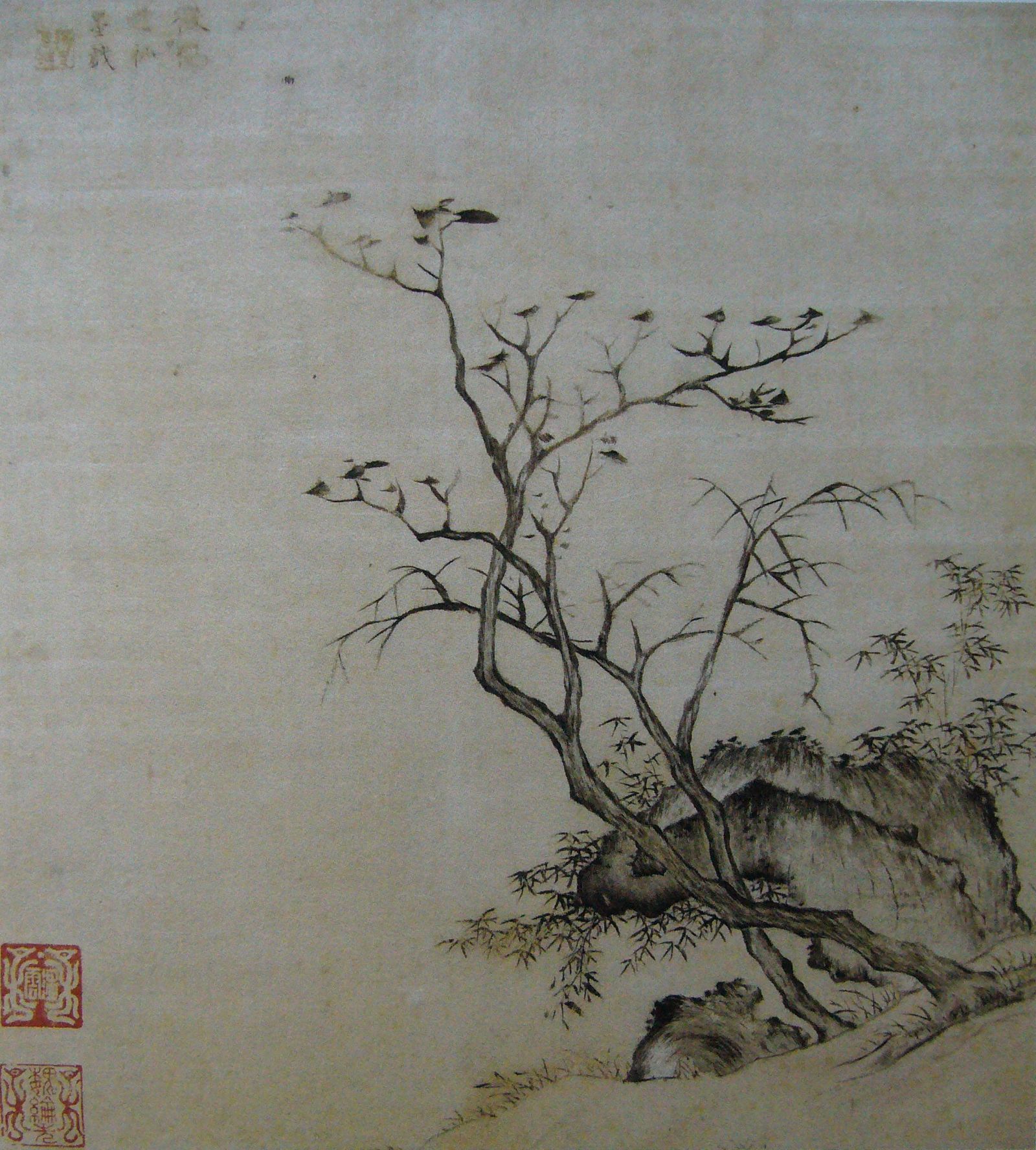
The founder of Gu-style embroidery was Miao Ruiyun, a concubine of the Gu family of the Luxiang Garden in Shanghai. She was already skilled in Song-style embroidery as a girl. Building on that tradition, she brought new ideas to needlework, colour matching and the choice of materials. People of the time said that “Gu-style embroidery started from Miao Ruiyun in Shanghai.”
Her work Withered Trees, Bamboos, and Rocks (枯木竹石图) is the only real object left as evidence of her art. Our books record it as the only surviving object that carries her seal.
Among the women of the Gu family, the most representative embroiderer was Han Ximeng, granddaughter-in-law of Gu Mingshi. Her embroidered landscapes, figures, flowers and birds were described as “exclusively exquisite”. From the beginning, Gu-style embroidery quietly led the way in ideas about art embroidery, opening new channels and new prospects for a folk craft that had lasted more than a thousand years.
Shandong embroidery: the strength of the north
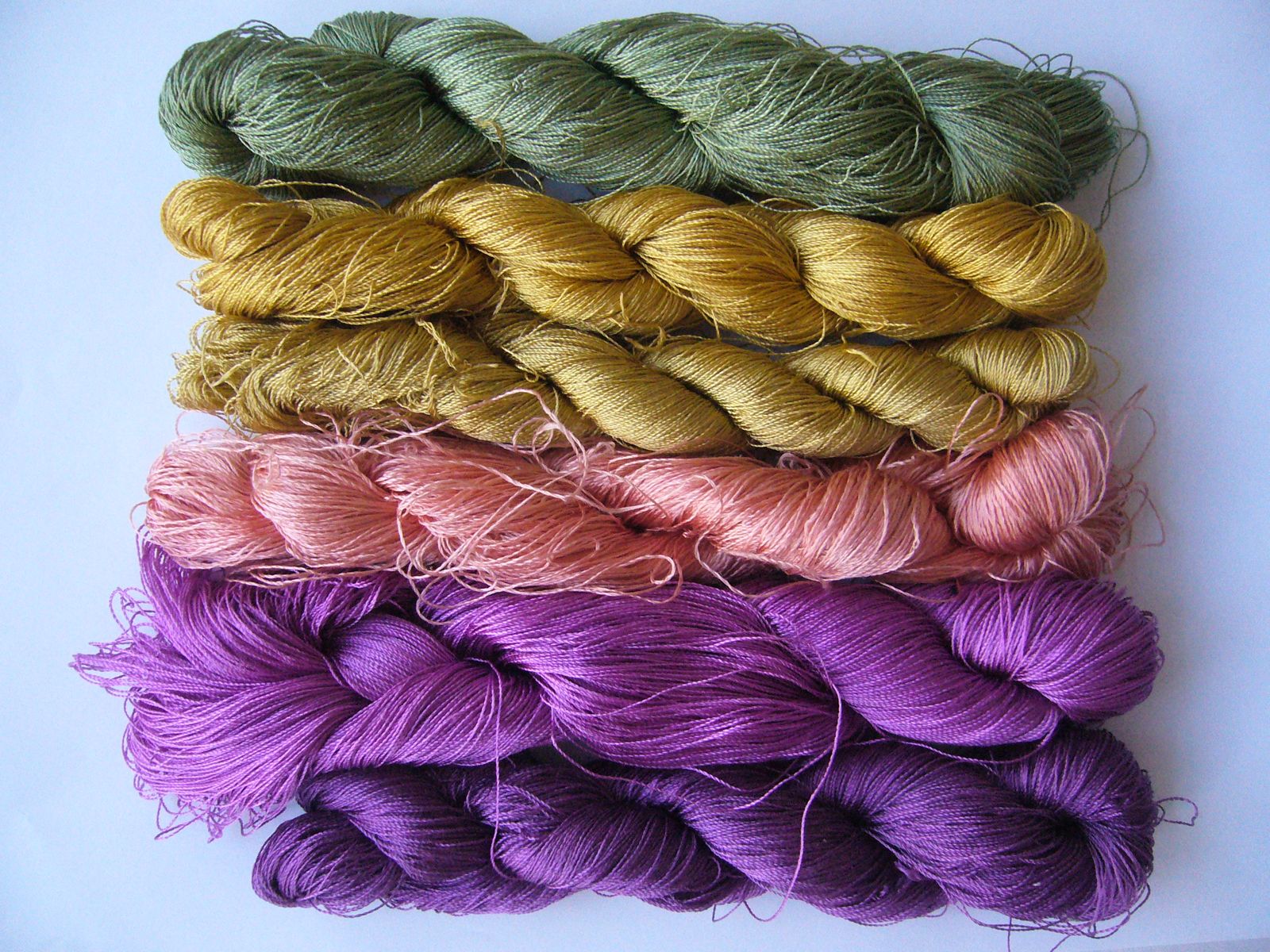
Shandong embroidery took a different path. It inherited the relatively rough and uninhibited features of Yuan-dynasty embroidery for appreciation and used double-ply threads. In most cases a whole, undivided thread was used. With bright colours applied directly, natural and vivid layouts, and a character of freedom and dignity, it became the best of all the embroidery of northern China.
Its long-standing classic works include Hibiscus and Two Ducks and Mandarin Ducks amidst the Lotus Pond.
Side by side: how they differ
- Thread: Gu-style splits silk into extremely fine strands; Shandong uses double-ply or whole threads.
- Colour: Gu-style favours soft, tender, elegant tones; Shandong applies bright colours directly.
- Character: Gu-style is refined and painting-like; Shandong is rough, simple and robust.
- Region: Gu-style represents the south; Shandong represents the north.
Shandong masterpieces in our books
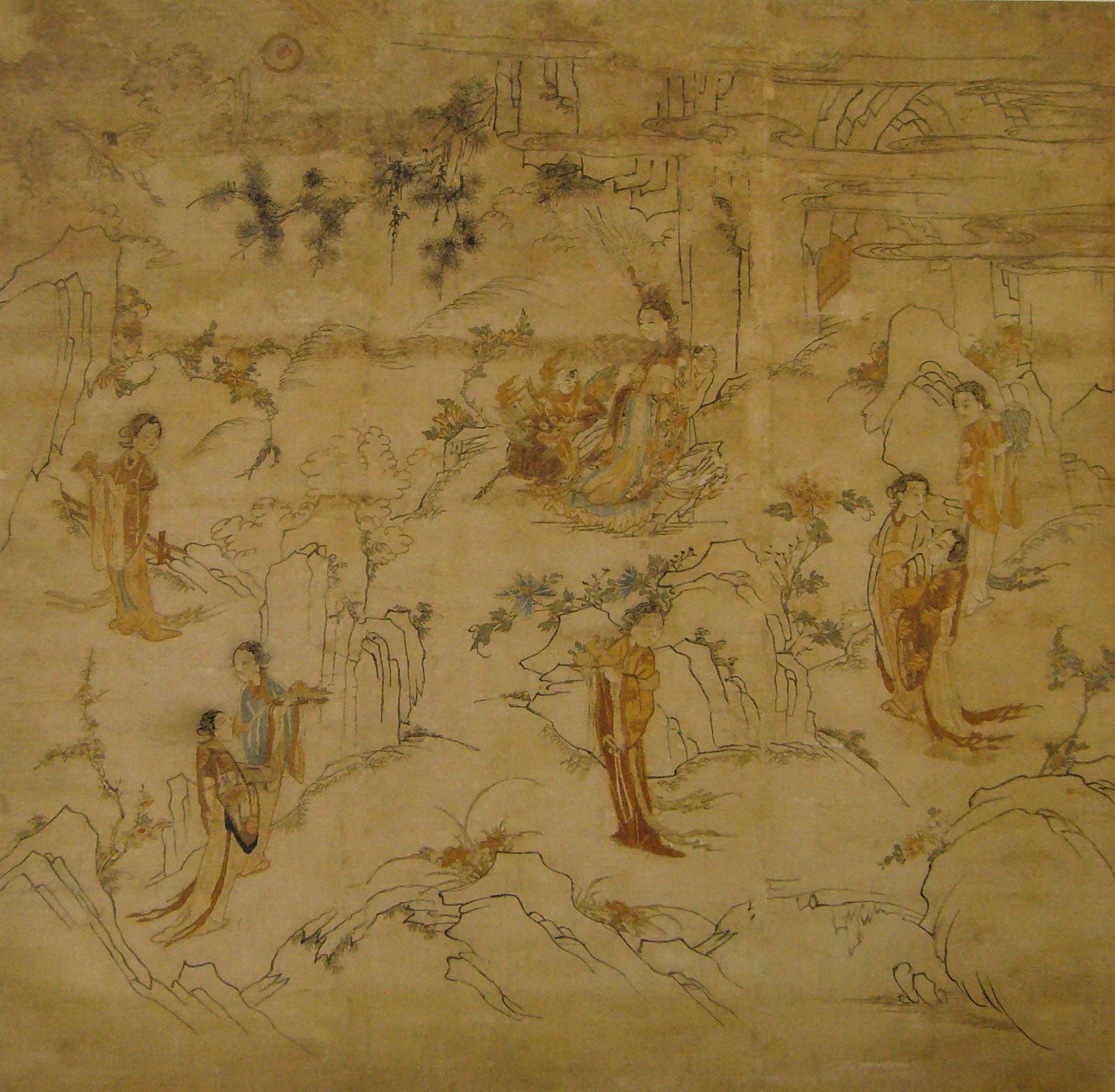
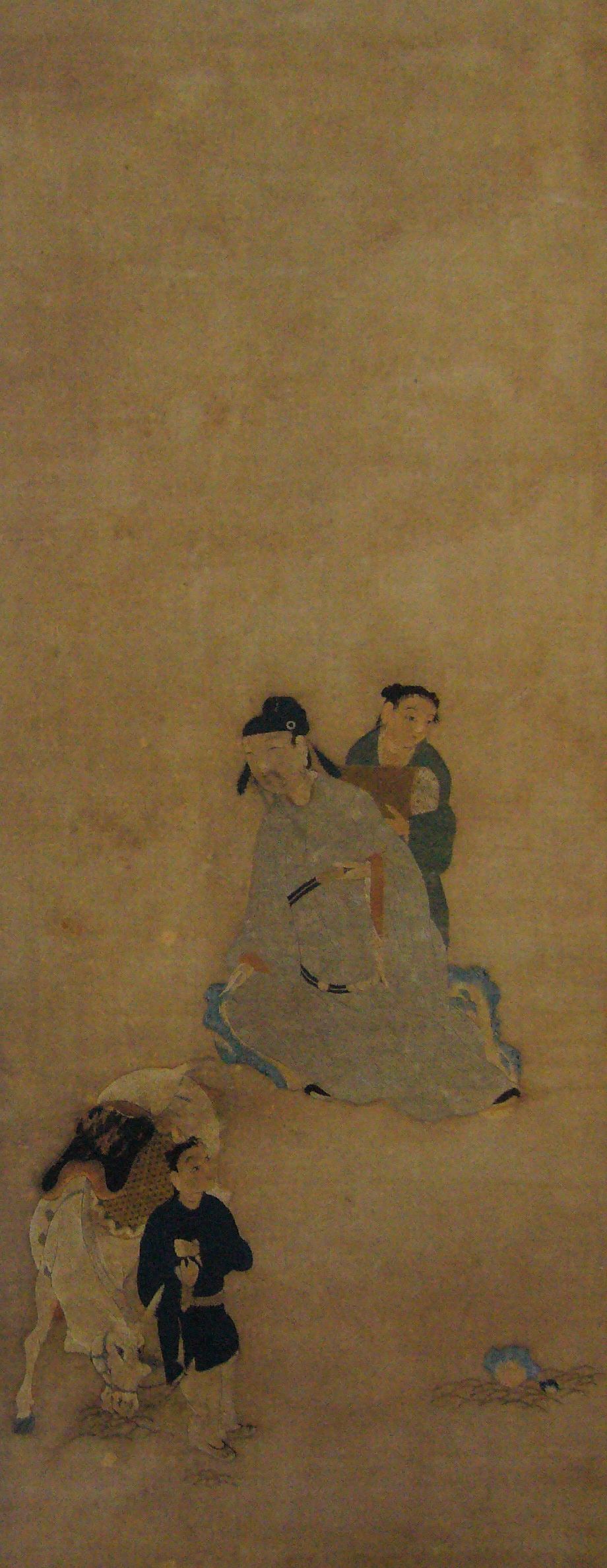
The Treasury of Chinese Embroidery Appreciation (《中国刺绣鉴赏宝典》) explains that Shandong embroidery is also called “clothing-thread embroidery” (衣线绣), because its thread is two strands twisted together like sewing thread. It describes several surviving works. The Ming Celebration at the Jade Pool (瑶池集庆图) shows the Queen Mother of the West on white satin, using couched stitches for rocks and clouds and satin stitch for figures. In the Ming Wenchang on a Journey (文昌出行图), the twisted thread was loosened and split for finer detail. Later pieces include Mountain Temple in Clear Mist from the Kangxi period and Peonies and Phoenixes from the Qianlong period.
Gu-style embroidery was just as selective about its designs. According to Appreciation and Investment of Chinese Embroidery and Kesi through the Dynasties, Han Ximeng chose only famous paintings, copying eight Song and Yuan masterpieces for her album, a task that took several years.
Reviving the styles today
Shao Xiaocheng has worked in both styles. Her Boating at Leisure (闲舟) was made in Ming-style Shandong embroidery, faithful to the craftsmanship of four hundred years ago. Hills, ripples and rocks are worked with simple couching and a feathering technique, using several strands of thread laid side by side, all in silk. The result has, in the book’s words, “softness in hardness”: a recluse fishing on a boat among hills and river, rendered with rough, unrestrained needlework.
The book adds a sobering note: Shandong embroidery is almost lost. Shao Xiaocheng embroiders in this style for preservation, because it has great value for research and protection.
Her Gu-style work, now in a private collection in Hong Kong, uses threads of medium colour rather than the darkest or lightest, to keep the colours soft and elegant. The faces of the beauties were embroidered with one fine thread and a half, and their eyes and hair with a quarter of a thread, so they appear faintly on the fabric like traces of painting. Historically, fine Gu-style embroidery was often painted before or after stitching. This piece uses needlework alone, yet achieves the spirit of a painting.
Frequently Asked Questions
What is Gu-style embroidery?
Gu-style embroidery is a Ming-dynasty style from the Gu family of Shanghai, founded by Miao Ruiyun. It uses very finely divided silk threads and soft colours to create painting-like works.
What makes Shandong embroidery different?
Shandong embroidery uses double-ply or whole threads, bright colours and bold, free needlework. It represented northern Chinese embroidery in the Ming dynasty.
Is Shandong embroidery still practised?
According to our book it is almost lost. Shao Xiaocheng continues to embroider in the Ming Shandong style to help preserve it.
Want to learn thread division or the satin stitches used in painting-like embroidery? Explore our classes and courses, read more about Shao Xiaocheng, or find her stitch guide on our books page.
Leave your comment
Related posts