Ming Dynasty Embroidery: Gu, Lu and the Path to the Qing Schools
Quick answer: Ming dynasty embroidery (1368–1644) did not yet have the later Qing “schools,” but our books treat two styles as its representative faces: painting-like Gu embroidery (顾绣) in the south and bold, twisted-thread Lu / Shandong embroidery (鲁绣) in the north. Court robes and rank badges show a third face of Ming needlework. The dynasty sits between Song artistic embroidery and the Qing four famous embroideries.
When people search for Ming dynasty embroidery, they often meet a long list of objects with little explanation. This hub gathers what our Institute books and live guides already say, and points you to the deeper articles on Gu-style and Shandong work, court dress, stitches and history.
Where Ming embroidery sits in Chinese history
Our timeline of Chinese embroidery places the Song dynasty (960–1279) as the moment artistic embroidery took clear form: a court Embroidery Office, and under Emperor Huizong an Embroidered Painting specialty. The Yuan dynasty left rarer techniques, including a “fishing-net” embroidery later generations hardly knew. By the Qing (1644–1911), embroidery spread widely and the four major schools — Su, Xiang, Shu and Yue — took shape.
The Ming stands between those worlds. In the history chapter of Chinese Embroidery: An Illustrated Stitch Guide, Shao Xiaocheng writes that there were not yet real “schools” of embroidery in the Ming. Instead two styles stood out as representatives: Gu-style embroidery in the south and Shandong embroidery in the north. Ming craft life was lively in furniture, carving and pewter as well; late-Ming scholars wrote inscriptions on fine embroideries and treated artistic needlework as one way cultivated people compared taste. For the wider chronology, see our origin and development timeline; for the silk behind painting-like work, see Song and Gu embroidery threads.
Gu embroidery in the south
Gu embroidery is the only artistic embroidery in Chinese history named after a family. Gu Mingshi (顾名世) passed the highest imperial examination in 1559 and later lived in the Lu Xiang Yuan (露香园) garden in Shanghai, so the work is also called Lu Xiang Yuan embroidery. The women of the family painted and embroidered. Miao Ruiyun (缪瑞云) is credited with establishing the style; her Withered Tree, Bamboo and Rock is the only Ming Gu embroidery that carries her seal, as our books record. The best-known Gu embroiderer was Han Ximeng (韩希孟), whose landscapes, figures and birds were praised as “all exquisite.” The painter Dong Qichang was a guest of the family and admired the work highly.
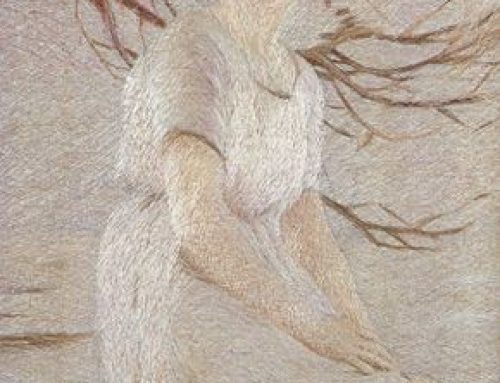
Gu embroidery inherited the Song habit of dividing silk into extremely fine strands, soft colours, and a close relationship with painting and calligraphy. Early pieces stayed in the family or were given as gifts; later many works used the Gu name and, our books warn, are often only superficially similar to the real thing. Gu embroidery sometimes adds light brushwork beside the stitches — part of the style, not necessarily a later repair. The full comparison of Gu-style with Shandong work, including recognition points and revival notes, is in our article Gu-Style and Shandong Embroidery: South and North in the Ming Dynasty.
Lu embroidery in the north
Lu embroidery comes from Shandong. It is also called yixian embroidery (衣线绣), “clothes-thread embroidery,” because its thread is two strands twisted together like sewing thread and cannot be split into finer filaments. Compared with southern embroidery it is bolder, its colours stronger, and its compositions natural and lively. According to our books, the main way to recognise Lu embroidery is the thread.
Our books describe classic Ming Lu embroideries in detail. Celebrating Longevity at the Jade Pool shows the Queen Mother of the West among immortals, cranes, lingzhi, peaches and pines, worked on white satin with couched clouds and rocks, satin-stitched figures and seed-stitch outlines. Lotus and Mandarin Ducks uses twisted thread in red, ochre, pink and grass green on lake-blue patterned silk. In Wenchang Travelling, the embroiderer loosened and separated the twisted thread for finer stitches — what our books call “fine within the coarse.” Lu embroidery declined in the Qing; from the late Qing, Western drawn-thread work spread in Shandong and the old twisted-thread Lu style became hard to find. Side-by-side differences with Gu-style are again in the Gu-style and Shandong guide. For a dedicated northern-style overview, see our article on Lu embroidery.
Court embroidery: robes and rank badges
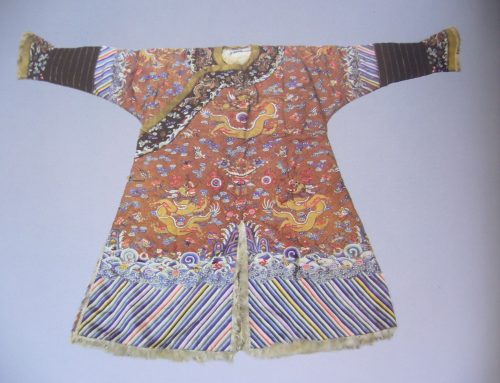
Not all Ming embroidery was pictorial art for the study. Court dress used embroidery for dragons, clouds and rank animals. Our books contrast the wide robes and broad sleeves of the Ming with the closer-fitting Qing style. A Ming example in our books is a green gauze jacket associated with the Wanli court: a dragon chasing a pearl over the shoulder, children among flowers, the dragon’s head in couched gold, horns and faces in layered satin stitch (qiang zhen), and the dragon’s belly in couched peacock-feather thread. Rank badges (buzi) from the Ming are typically whole squares, often without borders, and frequently show paired birds. For dragon robes, Qing comparisons and how to tell embroidered court dress from woven kesi, see our upcoming guide, Ming and Qing Court Embroidery: Dragon Robes and Rank Badges.
Other Ming pieces worth knowing
Not every Ming embroidery fits neatly into Gu or Lu. Our books also note Snow on Streams and Mountains, worked on ivory silk in ochre and ink-coloured thread; parts of the cliffs are left unstitched to suggest snow. Another example is a Guanyin image signed by Jin Shufang (金淑芳) and dated to the Wanli reign, in which the rocks are painted in ink and the figures are embroidered in many stitches.
A note on kesi: the Ming also produced fine kesi, but kesi is woven silk tapestry, not embroidery. Both court garments and pictorial hangings can appear in either technique. Our upcoming guide to embroidery vs. kesi explains how to tell them apart.
How to look at a Ming piece
- Look at the thread first: split, hair-fine silk points toward the southern, painting-like tradition; twisted, unsplit thread is the mark of Lu embroidery.
- Look at the subject: Gu embroidery often followed Song and Yuan paintings; Lu embroidery favoured traditional patterns rather than scholars’ paintings.
- Look for painting: light brushwork beside Gu stitching can be original to the style.
- Be careful with the Gu name: many later pieces used it.
- For court pieces, check whether the surface is needlework or woven kesi before attributing an embroidery school.
For more on judging workmanship, see how to recognize fine Chinese embroidery and our overview of Chinese embroidery stitches.
From Ming styles to the four famous embroideries
The Ming prepared the ground for the Qing regional schools. Su, Xiang, Shu and Yue became famous later; they are a late, useful map rather than the whole of Chinese embroidery. Reading Ming Gu and Lu work first makes those Qing labels easier to place. Start with our Qing dynasty embroidery hub, then the four famous embroideries overview and the regional guides linked from that page. Our comparison of Gu and Su embroidery explains how a Ming family-associated tradition differs from a broader regional name.
Study Ming techniques with the Institute
Thread division, satin shading and looking at museum photographs are all skills you can practise. Explore our classes and courses — lessons are taught in Chinese with professional, embroidery-specialised AI translation — and the English stitch guide on our books page. Have a textile you would like us to look at? Send clear photos through our remote initial review, or simply contact us.
Frequently Asked Questions
What is Ming dynasty embroidery?
Embroidery made in China during the Ming dynasty (1368–1644). Our books do not treat it as one school; they highlight Gu embroidery in the south and Lu embroidery in the north as representative styles, alongside court dress.
What are the two main styles of Ming embroidery?
Gu embroidery (southern, Shanghai, painting-like fine silk) and Lu embroidery (northern, Shandong, twisted “clothes-thread”). See the Gu-style and Shandong article for a full comparison.
Why is Gu embroidery named after a family?
It was made by the women of the family of Gu Mingshi, a Ming official who lived in Shanghai. It is the only artistic embroidery in Chinese history named after a family.
How can I recognise Lu embroidery?
Mainly by the thread: two strands twisted together like sewing thread, which cannot be split. The style is bold, colourful and hard-wearing.
Did the four famous embroideries already exist in the Ming?
No. Our timeline places the four major schools — Su, Xiang, Shu and Yue — as taking shape in the Qing dynasty. The Ming sits earlier, with Gu and Lu as representative styles rather than those four labels.
Is Ming kesi a kind of embroidery?
No. Kesi is woven silk tapestry, not embroidery. Both were used for court dress and pictorial work.
Leave your comment
Related posts