Lu Embroidery: Shandong’s Twisted-Thread “Northern Embroidery”
Quick answer: Lu embroidery (鲁绣), also called yixian embroidery (衣线绣, “clothes-thread embroidery”), is the northern Chinese style associated with Shandong. Its hallmark is a thread of two strands twisted together like sewing thread, which cannot be split into finer filaments. In the history chapter of Chinese Embroidery: An Illustrated Stitch Guide, Shao Xiaocheng (邵晓琤) writes that there were not yet real “schools” of embroidery in the Ming; Gu-style work in the south and Shandong work in the north stood out as the two representative faces.
Most readers know the later Qing four famous embroideries. Lu embroidery is less often named in English, yet our Institute books place it, with Gu embroidery, at the centre of Ming northern and southern needlework. This article gathers what those books already say: the thread, classic works, how Lu differs from Gu, why the old style became rare, and how to recognise it.
Why it is called clothes-thread embroidery
The Treasury of Chinese Embroidery Appreciation (《中国刺绣鉴赏宝典》) explains that Shandong embroidery is also called clothing-thread embroidery (衣线绣), because its thread is two strands twisted together like sewing thread. Unlike the silk of southern pictorial embroidery, that twisted thread is not divided into hair-fine filaments. Our English stitch guide and our Gu-style and Shandong article use the same point: double-ply or whole threads, applied with bright colour, give a bolder, more robust surface than painting-like southern work.
According to the same guides, Shandong embroidery inherited the relatively rough and uninhibited features of Yuan-dynasty embroidery for appreciation. With natural and vivid layouts, and a character of freedom and dignity, it became the best of the embroidery of northern China. For the dynasty overview, see the Ming dynasty embroidery hub.
Classic works described in our books
Our books name long-standing classic works of Shandong embroidery, including Hibiscus and Two Ducks and Mandarin Ducks amidst the Lotus Pond. The Treasury of Chinese Embroidery Appreciation also describes several surviving Ming and Qing pieces in more detail:
- Celebration at the Jade Pool (《瑶池集庆图》): the Queen Mother of the West on white satin, using couched stitches for rocks and clouds and satin stitch for figures; our Ming hub, following the Institute guides, also notes seed-stitch outlines.
- Lotus and Mandarin Ducks (《荷花鸳鸯》): twisted thread in red, ochre, pink and grass green on lake-blue patterned silk (as summarised from the same book tradition on our Ming hub).
- Wenchang on a Journey (《文昌出行图》): here the twisted thread was loosened and split for finer detail — what our books call “fine within the coarse.”
Later pieces named in the same guides include Mountain Temple in Clear Mist from the Kangxi period and Peonies and Phoenixes from the Qianlong period. Our books note that the Kangxi piece follows the manner of the Ming Jade Pool work, but that many areas were finished with brush colour instead of stitching, which weakens the embroidery as needlework; the Qianlong peony-and-phoenix piece closely resembles the Ming lotus-and-ducks type.
How Lu embroidery differs from Gu embroidery
Set the two Ming representatives side by side — the comparison at the heart of our Gu-style and Shandong guide:
- Thread: Gu-style splits silk into extremely fine strands; Shandong uses double-ply or whole threads.
- Colour: Gu-style favours soft, tender, elegant tones; Shandong applies bright colours directly.
- Character: Gu-style is refined and painting-like; Shandong is rough, simple and robust.
- Region: Gu-style represents the south; Shandong represents the north.
Reading both styles also makes the later Qing map of the four famous embroideries easier to place: those four labels took shape after the Ming, as our origin and development timeline explains.
Into the Qing, and why the old style became rare
Lu embroidery continued into the Qing, as the Kangxi and Qianlong pieces above show. From the late Qing, Western drawn-thread work spread in Shandong, and the old twisted-thread Lu style became hard to find. Our books also point to the rise of Gu embroidery’s fame and the loss of the special twisted thread as reasons why the old Lu embroidery was gradually forgotten.
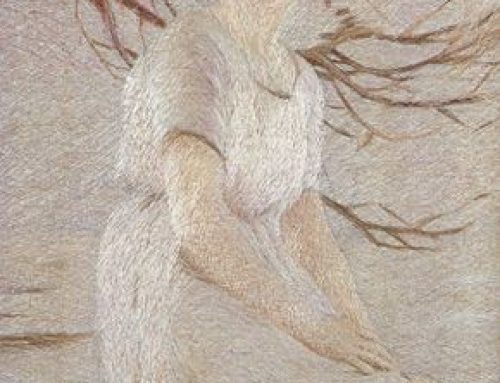
Shao Xiaocheng’s guides describe the Ming Shandong style as almost lost. She has embroidered in that manner — for example Boating at Leisure (《闲舟》) — faithful to the craftsmanship of four hundred years ago, so the technique can still be studied and protected. Hills, ripples and rocks in that work are worked with simple couching and a feathering technique, using several strands of thread laid side by side, all in silk: what the book calls “softness in hardness.” For stitches that appear across these traditions, see our overview of Chinese embroidery stitches.
How to recognise Lu embroidery
- Thread first: two strands twisted together like sewing thread, not split into hair-fine silk — according to our books, the main test.
- Colour and character: bright colour applied more directly; a bold, robust, northern feel rather than soft painting-like finesse.
- Subject: traditional patterns and auspicious scenes more often than copies of scholars’ paintings (the Gu preference).
- Do not confuse with kesi: kesi (缂丝) is woven silk tapestry, not embroidery. Kesi must be told apart from embroidery by structure before assigning a needlework school.
For judging workmanship more generally, see how to recognize fine Chinese embroidery. For Song silk that feeds the southern painting-like line, see Song and Gu embroidery threads.
Study northern and Ming techniques with the Institute
Looking at the works our books describe, reading thread structure and practising the satin and couching families are skills you can build step by step. Explore our classes and courses — lessons are taught in Chinese with professional, embroidery-specialised AI translation — and the English stitch guide on our books page. Have a textile you would like us to look at? Send clear photos through our remote initial review, browse tools in the CEI shop (showcase; available by inquiry), or simply contact us.
Frequently Asked Questions
What is Lu embroidery?
Lu embroidery (鲁绣) is Shandong’s traditional embroidery, also called yixian or clothes-thread embroidery. Our books treat it as the northern counterpart to Ming Gu embroidery, marked by twisted, unsplit thread, strong colour and robust compositions.
What is yixian embroidery?
Another name for Lu / Shandong embroidery. The Treasury of Chinese Embroidery Appreciation explains the name from the thread: two strands twisted together like sewing thread, which cannot be split the way southern pictorial silk is divided.
Where does Lu embroidery come from?
Shandong province in northern China. Our books also call the same body of work Shandong embroidery or clothing-thread embroidery.
How is Lu embroidery different from Gu embroidery?
Gu embroidery uses finely divided silk and soft, painting-like effects; Lu embroidery uses twisted clothes-thread, brighter colour and a bolder northern character. See our Gu-style and Shandong guide.
Which classic Lu works do our books describe?
Among others: Hibiscus and Two Ducks, Mandarin Ducks amidst the Lotus Pond, the Ming Celebration at the Jade Pool and Wenchang on a Journey, and later Mountain Temple in Clear Mist (Kangxi) and Peonies and Phoenixes (Qianlong), as summarised in 《中国刺绣鉴赏宝典》 and on our Gu/Shandong and Ming hub pages.
Is Lu embroidery one of the four famous embroideries?
No. The four famous embroideries — Su, Xiang, Shu and Yue — are a later Qing regional map. Our books place Gu and Lu as Ming representative styles that sit earlier on the timeline.
Is Lu embroidery still made?
According to our books the Ming Shandong style is almost lost as a living practice, and the old twisted-thread Lu embroidery became hard to find after drawn-thread work spread in Shandong from the late Qing. Shao Xiaocheng continues to embroider in the Ming Shandong manner so the technique can still be studied and protected.
Is Ming kesi a kind of Lu embroidery?
No. Kesi is woven silk tapestry, not embroidery. Both appear in Ming pictorial and court textiles and must be told apart by structure.
Leave your comment
Related posts