Yue Embroidery (Cantonese Embroidery): Guang and Chao Styles
Yue embroidery (粤绣), often called Cantonese or Guangdong embroidery, is the collective name for two regional schools: Guang embroidery (广绣) from Guangzhou and the surrounding Pearl River Delta, and Chao embroidery (潮绣) from the Chaozhou region in eastern Guangdong. It is one of the Four Famous Embroideries of China, together with Su, Xiang and Shu embroidery.
Quick answer
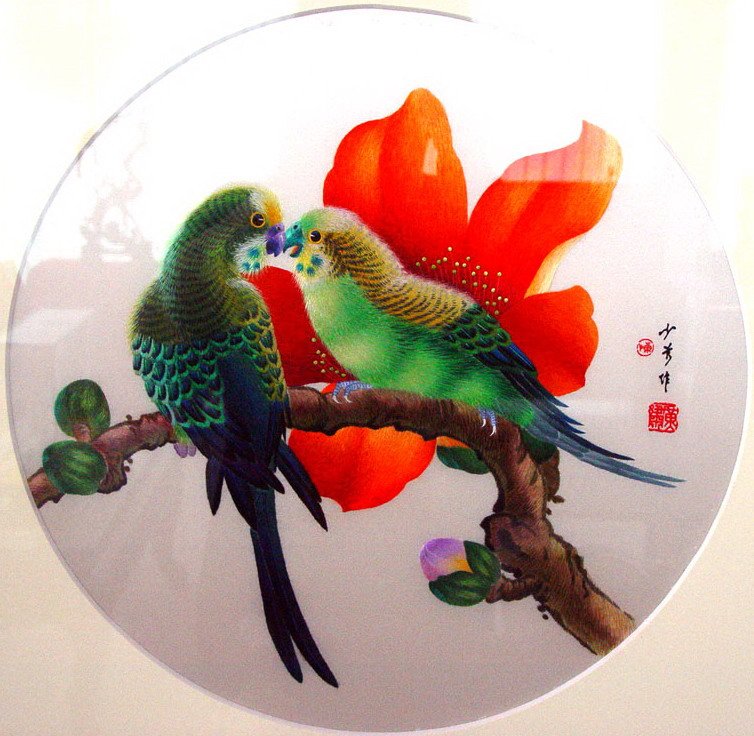
Of the four famous embroideries, Yue embroidery is the most decorative. Shao Xiaocheng describes it as brilliant in colour, crowded and lively in composition, and rich and splendid in style. Guang embroidery is known for strong red-green contrasts and the narrow unstitched lines called water paths; Chao embroidery is known for raised, padded gold and silver work. Favourite subjects include a hundred birds paying homage to the phoenix, antique vessels (bogu), and dragons and phoenixes.
Guang and Chao: two schools under one name
According to the Institute’s books, embroidery from Guangzhou, Shunde, Panyu and Nanhai is generally grouped as Guang embroidery, while embroidery from the Chaozhou area is called Chao embroidery. Yao Xiao (Martin Xiao, 肖尧) notes that “Chaozhou” here is a cultural and community term, not limited to today’s Chaozhou city. The two names, and the umbrella term Yue embroidery, became fixed from the mid-to-late Qing dynasty, when the four famous embroideries were first classified by region.
The two schools share materials and many stitches, but they feel different. Guang embroidery favours strongly contrasting colour and a festive, bustling atmosphere. Chao embroidery is famous for padding motifs so that gold and silver thread stands up from the ground like relief carving, with auspicious meanings and a warm, celebratory mood.
How to recognise Yue embroidery
- Water paths (水路). Where motifs meet or overlap, the embroiderer leaves a fine line of ground fabric unstitched, so each shape reads clearly.
- Bright, contrasting colour. Reds and greens are set against each other; the overall effect is brilliant rather than quiet.
- Full, crowded compositions. Many birds, flowers and objects fill the picture, giving a busy, decorative surface.
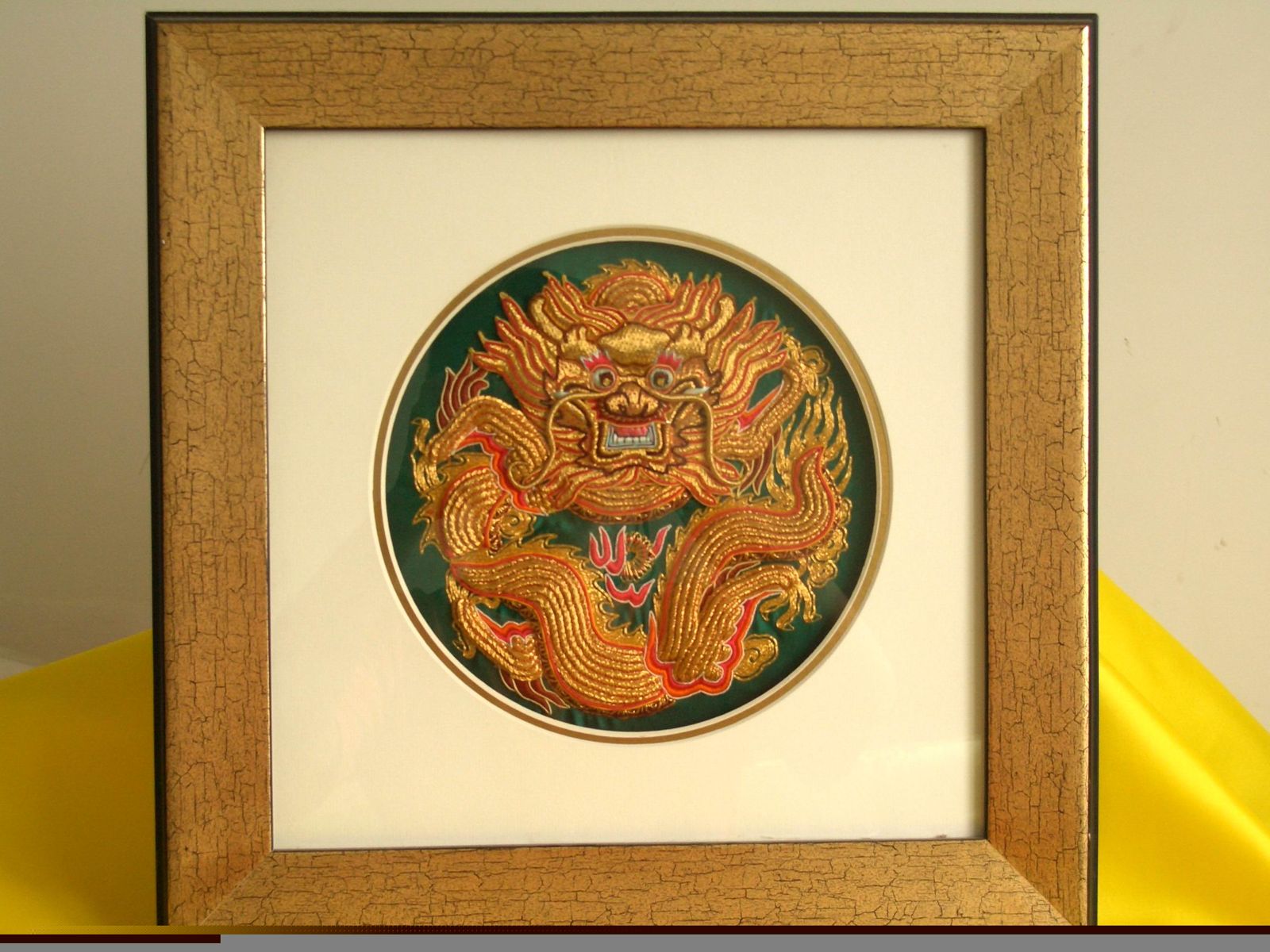
- Raised gold and silver (Chao). Padding under metal-thread couching creates a three-dimensional effect.
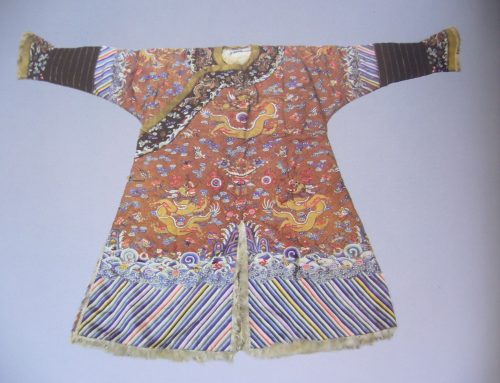
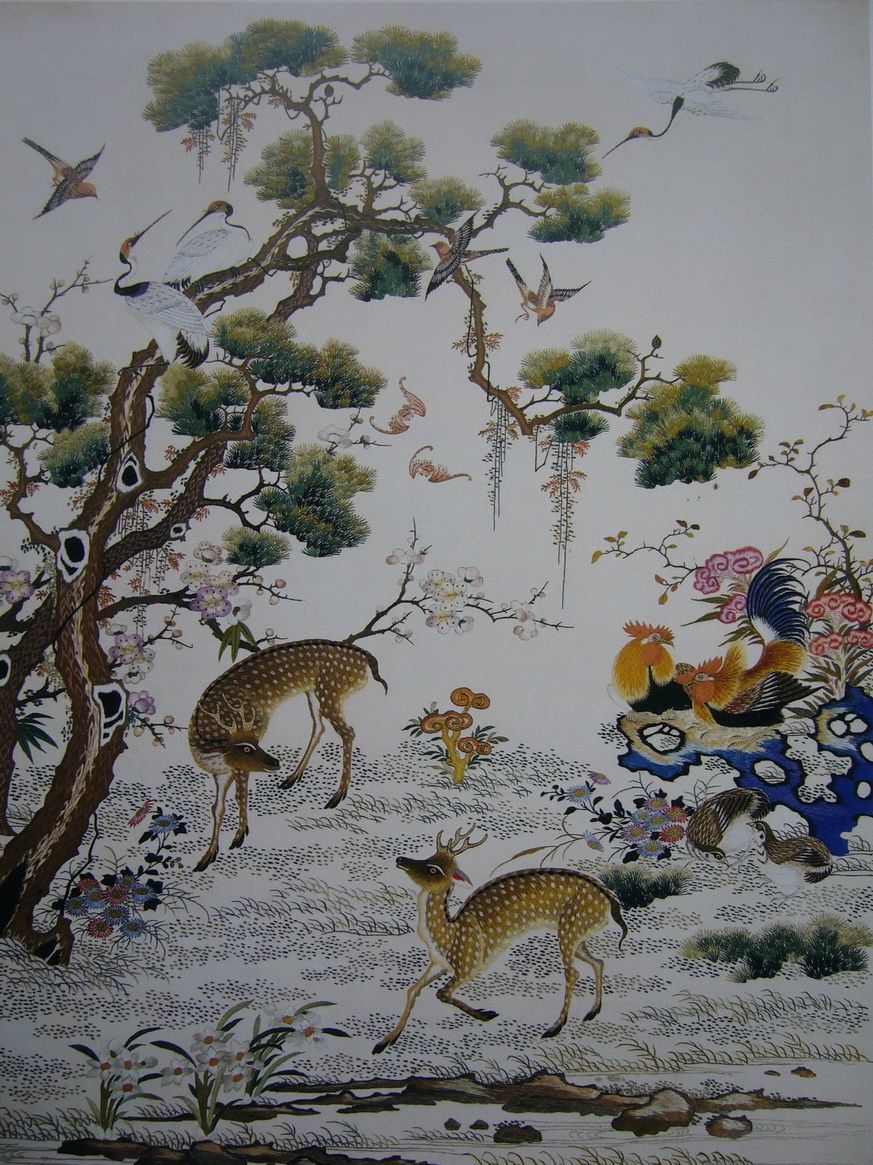
- Auspicious subjects. A hundred birds and the phoenix, peacocks spreading their tails, three rams bringing spring, cranes, deer, pines, and golden dragons and silver phoenixes.
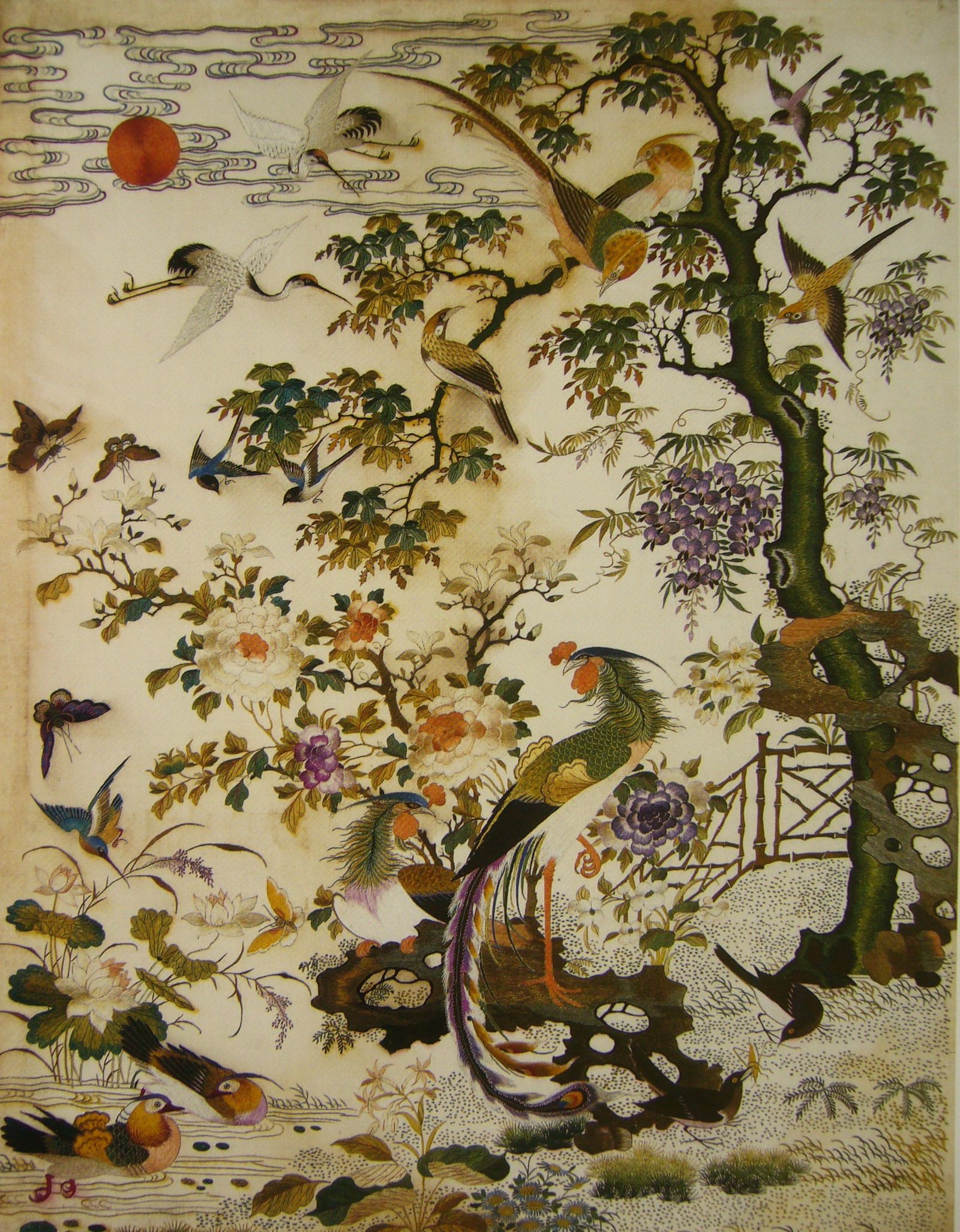
These are reference points, not a formula. Shao Xiaocheng warns that modern pieces stitched over computer-printed designs have blurred the differences between the four famous embroideries, so style alone cannot date or attribute a piece. Compare Yue work with the quieter, painterly surfaces of Su embroidery and the shaded animal pictures of Xiang embroidery.
Unusual materials: peacock feathers, horsehair and gold
The Qing-dynasty book Guangdong Xinyu (广东新语) records that Guangdong embroiderers twisted peacock feathers into thread to embroider garments, with a dazzling gold-and-green effect. They also wrapped silk around horsehair to make outlining thread, couched along the edges of motifs. Both techniques suit Yue embroidery’s rich, decorative style.
Shao also describes 18th-century Guang work in which gold-coated leather (羊皮金, locally called pijin embroidery) was laid underneath as a backing, so the surface glitters. Gold thread itself is attached by couching; see our guide to gold thread couching.
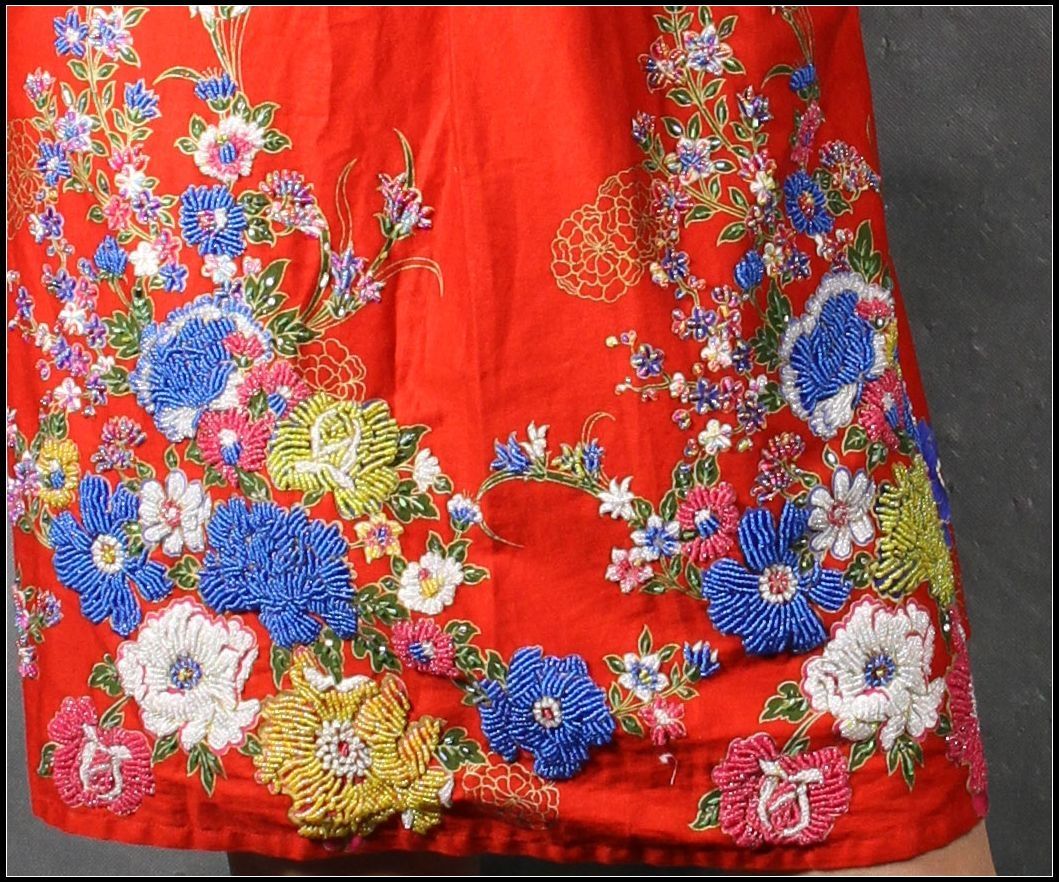
Bead embroidery is another Guangdong strength. The Institute’s books record that Qing-dynasty shops in Guangzhou’s Zhuangyuanfang sold beaded headbands and slippers, and that beaded Cantonese opera costumes shimmered on stage.
A history that reaches back to the Tang
Embroidery in Guangdong was already highly skilled by the Tang dynasty. The Institute’s books retell the story of Lu Meiniang, a Tang embroiderer from the south said to have stitched the seven scrolls of the Lotus Sutra on a single foot of silk, with characters no bigger than grains of millet. Yao Xiao suggests this may be the earliest recorded example of micro-embroidery in China. Another account says that Zhang Jiugao, a Lingnan military governor under Emperor Xuanzong, presented fine embroidery to Yang Guifei and was promoted.
Material evidence comes from the Ming. In 1957, gold- and silver-thread embroidered garments from the Zhengde period, discussed in our books, show that Yue embroidery’s rich style was already formed in the Ming dynasty.
Trade with the West
Guangdong’s coast made Yue embroidery the Chinese embroidery best known abroad. The books record that in 1514 a Portuguese merchant bought a dragon-robe panel in Guangzhou and presented it to his king. From 1757, when the Qing court restricted Western trading ships to the port of Canton (Guangzhou), export trade grew further. In the 18th century Yue embroidery became fashionable among the British royal family and upper classes, and it was called a “Chinese gift to the West”. Museums in Britain, France, Germany and the United States hold examples.
Alongside ordinary embroidered goods made in quantity for export, there were high-grade commissions bearing the family crests of European aristocrats. Our English book also records that in the Qianlong reign Chinese embroidery hoops spread to Britain, France and other countries, where they replaced iron and wooden slate frames and encouraged the making of small embroidered pieces.
Our books note that Chaozhou embroidery, together with gold-inlaid painting on Chinese lacquerware, influenced European painting and handicrafts in the 17th and 18th centuries: court paintings used gold to draw outlines and suggest bright light, and the gold-rich Rococo style has been linked to it.
The Qing golden age: guilds, male embroiderers and prize-winners
The Qing dynasty was Yue embroidery’s peak. Yao Xiao (Martin Xiao, 肖尧) notes that Qing embroiderers in Guangzhou and Chaozhou were men, which was rare elsewhere in China. A Guangzhou embroidery guild was founded in 1793 with more than three thousand professional embroiderers, and embroidery shops and workshops spread through Guangzhou and Chaozhou. A Chaozhou folk rhyme even names the West Gate as the place for embroidery, showing that the craft was organised by district.
Under the Guangxu emperor, Guangzhou set up a crafts bureau with an embroidery workshop, and the Binhua art school taught embroidery under Gao Jianfu, founder of the Lingnan school of painting. In 1910 Lin Xinquan and twenty-three fellow Chaozhou embroiderers worked together on large pieces, including Su Wu Herding Sheep and Phoenix Facing the Sun, which won awards at the Nanyang Industrial Exposition in Nanjing. They became known as the “twenty-four embroidery champions” of Chaozhou.
Why collectors meet Yue embroidery often
Because Yue embroidery was exported widely, produced in large quantities and made by many professionals, a relatively large amount survives. Its distinct style also makes it easier to identify than the other famous embroideries. Whether everyday objects or display pieces, its subjects carry wishes for good fortune, celebration and blessing, which helps explain its wide appeal. For assessing an individual piece, see how to assess Chinese embroidery.
Learning Yue embroidery stitches
Water paths, padded relief and metal-thread couching are easiest to understand with a teacher watching your hands. The Institute’s classes and courses are taught live in Chinese with professional AI translation backed by the Institute’s embroidery data, so international students can ask detailed questions. For questions about classes or studying Yue techniques, contact the Chinese Embroidery Institute.
Frequently Asked Questions
What is Yue embroidery?
Yue embroidery (粤绣), also called Cantonese or Guangdong embroidery, is the collective name for Guang embroidery from Guangzhou and nearby areas and Chao embroidery from the Chaozhou region. It is one of the Four Famous Embroideries of China.
Is Cantonese embroidery the same as Yue embroidery?
Yes. Yue is the traditional name for Guangdong, so Yue embroidery, Cantonese embroidery and Guangdong embroidery refer to the same tradition. Strictly, Guang embroidery is the Guangzhou school within it.
What is the difference between Guang and Chao embroidery?
Guang embroidery uses strongly contrasting colour, water paths and lively, crowded scenes. Chao embroidery is best known for padded, raised gold and silver work with auspicious meanings.
What is a water path in embroidery?
A water path (水路) is a fine line of unstitched ground fabric left where two motifs meet or overlap. It separates the shapes and is a hallmark of Yue embroidery.
Can I learn Yue embroidery online?
Yes. The Chinese Embroidery Institute teaches live online classes in Chinese with professional AI translation backed by the Institute’s embroidery data. See the classes and courses page.
Sources and editorial basis
Basis: Shao Xiaocheng, 中国刺绣鉴赏宝典 (Shanghai Scientific & Technical Publishers, 2011), sections on the Yue embroidery and the four famous embroideries; and Yao Xiao (Martin Xiao, 肖尧), 中国历代刺绣缂丝鉴赏与投资 (Anhui Fine Arts Publishing House, 2012), chapter 1, “Yue embroidery”; and Shao Xiaocheng, Chinese Embroidery: An Illustrated Stitch Guide, history chapter. See our books page.
Leave your comment
Related posts